
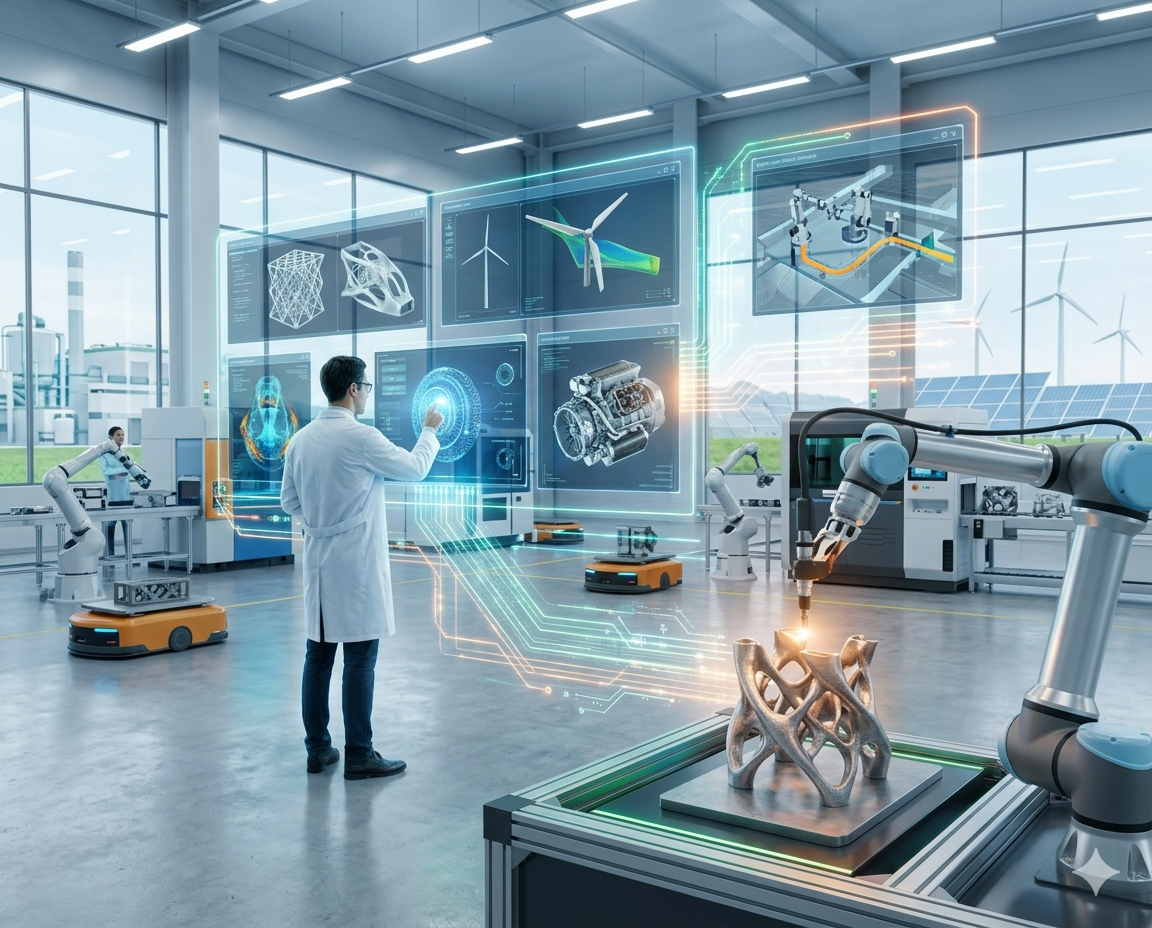

The rapid advancement of artificial intelligence is transforming industries worldwide, and Generative AI in Engineering is emerging as one of the most influential technologies driving this change. Engineers and manufacturers are increasingly using AI-powered systems to create innovative designs, optimize production processes, and solve complex technical challenges. Unlike traditional software that follows predefined rules, generative AI can analyze vast amounts of data, generate multiple design options, and recommend solutions that human designers may not have considered. As industries continue embracing digital transformation, Generative AI in Engineering is expected to play a critical role in shaping the future of industrial innovation and technological progress.
What Is Generative AI in Engineering?
Generative AI in Engineering refers to the use of artificial intelligence systems that can create, optimize, and improve engineering designs and processes. These AI models analyze project requirements, performance goals, and operational constraints before generating multiple design alternatives automatically.
Instead of manually creating every design iteration, engineers can use AI to explore thousands of possibilities within a short period. The technology can evaluate materials, structural performance, manufacturing requirements, and cost considerations simultaneously. This allows teams to identify highly efficient solutions that balance performance, durability, and affordability.
Generative AI is being applied across multiple engineering disciplines, including mechanical engineering, civil engineering, aerospace engineering, automotive development, and industrial manufacturing. Its ability to accelerate innovation is making it an essential tool for modern organizations.
How Generative AI in Engineering Is Transforming Product Design
One of the most significant impacts of Generative AI in Engineering is its ability to revolutionize product design. Traditional design processes often require multiple rounds of testing, revisions, and prototyping before a final product is approved. This can consume substantial amounts of time and resources.
Generative AI dramatically reduces this burden by automatically generating optimized design concepts based on specific objectives. Engineers can define requirements such as weight reduction, material efficiency, strength, and cost targets, and the AI system produces designs that meet those criteria.
This approach encourages creativity and innovation because AI can identify unconventional solutions that human designers may overlook. In industries such as aerospace and automotive manufacturing, generative design is helping create lighter and stronger components that improve performance while reducing production costs.
The ability to explore countless design possibilities quickly is transforming how products are developed and brought to market.
The Role of Generative AI in Industrial Innovation
Industrial innovation depends on continuous improvement, and Generative AI in Engineering is helping companies achieve that goal more effectively than ever before. Manufacturers are using AI-powered systems to optimize workflows, improve production efficiency, and enhance product quality.
AI can analyze operational data from factories and identify opportunities to reduce waste, minimize downtime, and improve resource utilization. By predicting potential issues before they occur, generative AI helps organizations maintain smooth production processes and avoid costly disruptions.
The technology is also accelerating research and development efforts. Engineers can test virtual prototypes, simulate performance under different conditions, and evaluate manufacturing feasibility before physical production begins. This shortens development cycles and enables faster innovation.
As industries become increasingly competitive, organizations that leverage generative AI are gaining significant advantages in productivity and operational excellence.
Benefits of Generative AI in Engineering
The growing adoption of Generative AI in Engineering is driven by numerous benefits that improve both technical and business outcomes. One major advantage is increased efficiency. AI can perform complex calculations and design evaluations much faster than traditional methods, allowing teams to complete projects more quickly.
Cost reduction is another important benefit. Optimized designs often use fewer materials while maintaining or improving performance. This helps organizations lower manufacturing costs and improve sustainability.
Generative AI also enhances accuracy by reducing human errors and providing data-driven recommendations. Engineers can make more informed decisions based on detailed analysis and predictive insights.
Innovation is perhaps the most significant advantage. AI enables engineers to explore creative solutions and push the boundaries of traditional design approaches. This capability is helping companies develop products that are more advanced, efficient, and competitive in global markets.
Challenges Facing Generative AI in Engineering
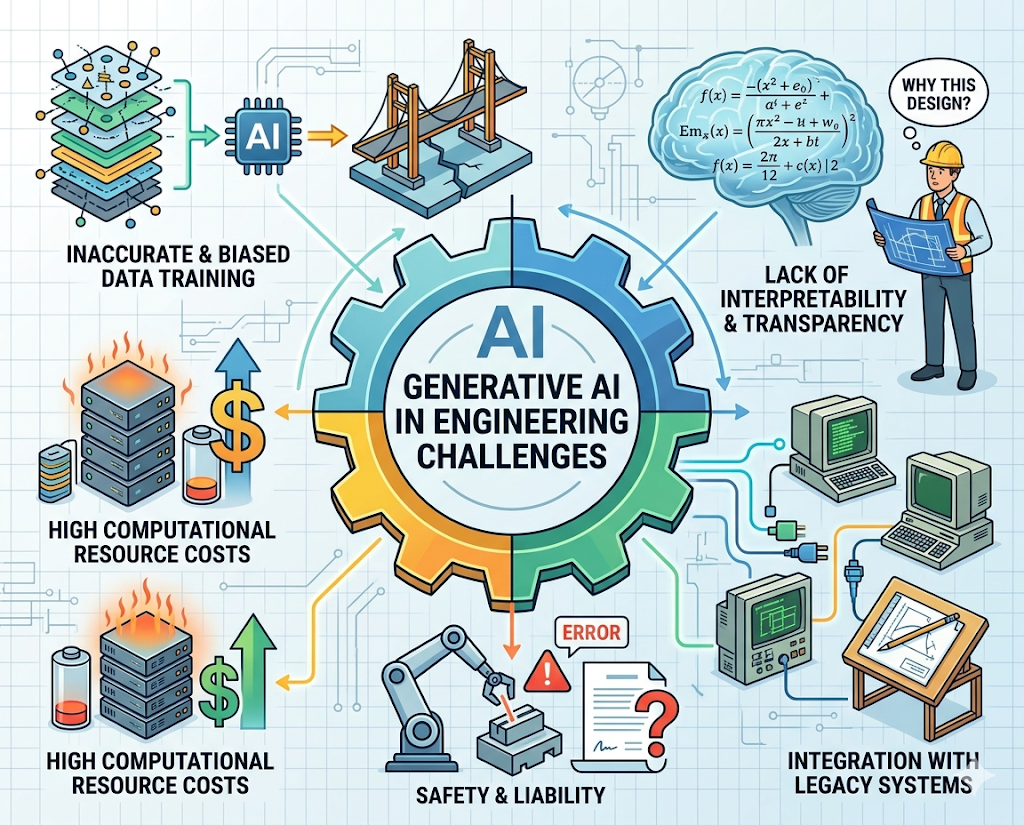
Despite its potential, Generative AI in Engineering also presents several challenges. One concern is the quality and availability of data. AI systems rely on large datasets to generate accurate recommendations, and poor-quality data can lead to unreliable results.
Another challenge involves integration with existing engineering workflows. Organizations may need to invest in new software, infrastructure, and employee training to fully utilize generative AI technologies.
There are also concerns regarding intellectual property and design ownership. As AI-generated solutions become more common, companies must establish clear guidelines for managing and protecting innovative designs.
Additionally, while AI can generate valuable recommendations, human expertise remains essential. Engineers must review, validate, and refine AI-generated outputs to ensure safety, compliance, and practical feasibility.
Generative AI and the Future of Smart Manufacturing
The future of manufacturing is closely connected to the advancement of Generative AI in Engineering. Smart factories are increasingly using AI-driven systems to automate decision-making, monitor production lines, and optimize operations in real time.
Generative AI supports predictive maintenance by analyzing equipment performance and identifying potential failures before they occur. This reduces downtime and improves productivity. The technology can also optimize supply chains by forecasting demand and recommending efficient inventory strategies.
As industrial automation continues expanding, generative AI will become a key component of intelligent manufacturing ecosystems. Organizations will be able to produce customized products more efficiently while maintaining high quality standards.
The integration of AI with robotics, IoT devices, and advanced analytics will further strengthen the capabilities of smart manufacturing environments.
The Future Outlook for Generative AI in Engineering
The future of Generative AI in Engineering looks incredibly promising. As AI models become more sophisticated, they will be capable of handling increasingly complex engineering challenges. Future systems may generate fully optimized designs that account for performance, sustainability, cost, and regulatory requirements simultaneously.
Collaboration between human engineers and AI systems will continue evolving. Rather than replacing professionals, generative AI will serve as a powerful tool that enhances creativity, productivity, and decision-making.
Industries such as renewable energy, transportation, healthcare, and infrastructure development are expected to benefit significantly from AI-driven innovation. The technology will enable organizations to solve problems more efficiently and develop solutions that were previously impossible to achieve.
Companies that invest in generative AI today are positioning themselves for long-term success in an increasingly technology-driven world.
Conclusion
Generative AI in Engineering is reshaping the future of industrial innovation by enabling smarter design processes, faster development cycles, and more efficient manufacturing operations. Its ability to generate optimized solutions, reduce costs, and accelerate innovation is making it a valuable asset across numerous industries.
As technology continues advancing, generative AI will play an even greater role in engineering and manufacturing. Organizations that embrace this transformation will gain a competitive advantage through improved productivity, enhanced creativity, and faster innovation. The future of engineering is increasingly intelligent, and generative AI is at the center of that evolution.
FAQs
1. What is Generative AI in Engineering?
Generative AI in Engineering uses artificial intelligence to create, optimize, and improve engineering designs and industrial processes.
2. How does generative AI help engineers?
It generates multiple design options, automates analysis, improves efficiency, and supports data-driven decision-making.
3. Which industries use generative AI in engineering?
Industries such as aerospace, automotive, manufacturing, construction, healthcare, and energy use generative AI technologies.
4. Can generative AI replace engineers?
No, generative AI is designed to assist engineers by enhancing productivity and creativity rather than replacing human expertise.
5. What is the future of generative AI in engineering?
The technology is expected to drive smarter product design, advanced manufacturing, predictive maintenance, and greater industrial innovation.