
In today’s rapidly evolving business environment, organizations must continuously adapt to new technologies to remain competitive. Digital transformation has become a strategic priority for companies across every industry, but successful transformation requires more than simply adopting new tools. A clear IT Mandate provides the direction, structure, and accountability needed to guide technology initiatives effectively. By establishing clear objectives and governance frameworks, an IT Mandate helps organizations align technology investments with business goals, ensuring that digital transformation efforts deliver measurable results. Companies that implement a strong IT mandate are often better positioned to innovate, improve efficiency, and achieve long-term growth.
What Is an IT Mandate?
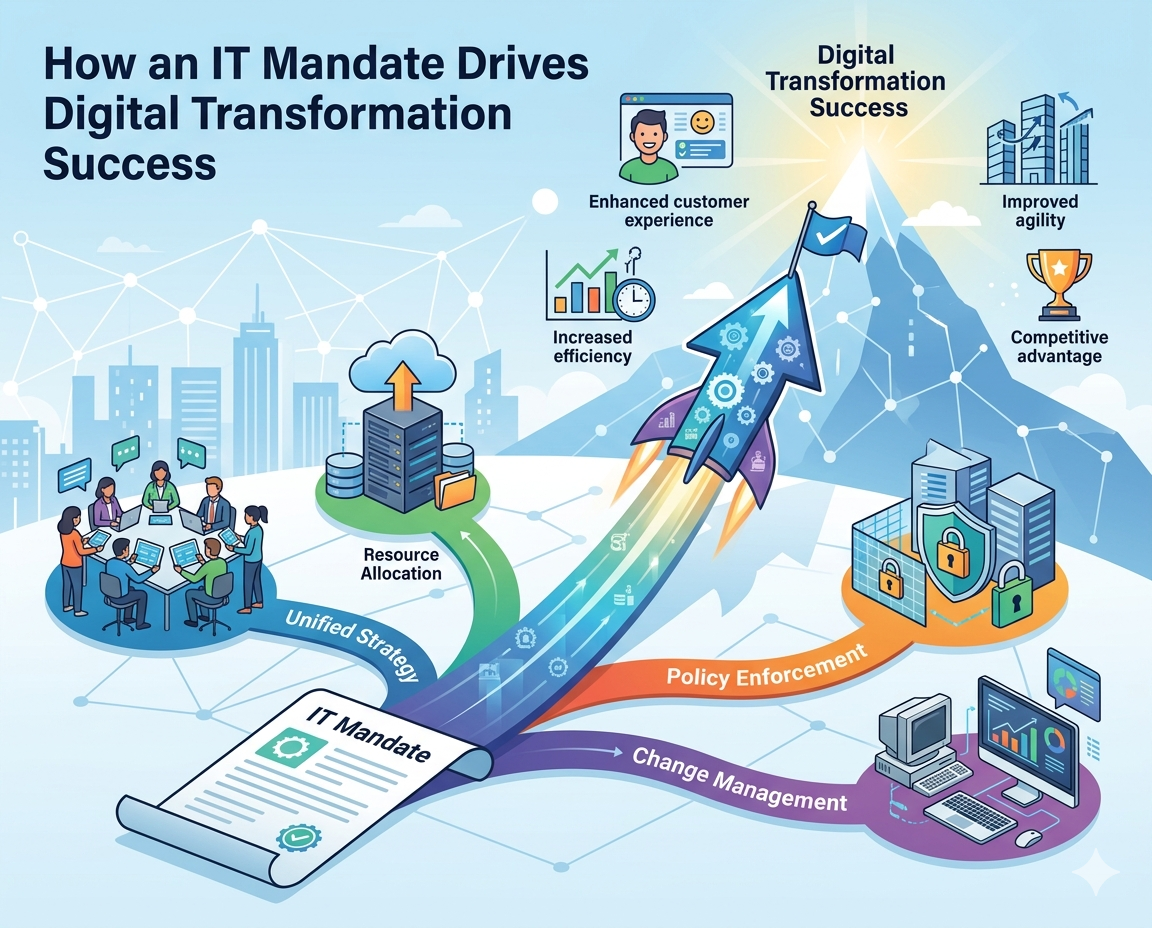
An IT Mandate is a formal directive that defines how technology should support an organization’s strategic objectives. It establishes policies, priorities, responsibilities, and standards for technology implementation and management. Rather than allowing departments to pursue separate technology initiatives independently, an IT mandate creates a unified approach that aligns all digital efforts with business goals.
The purpose of an IT mandate is to ensure consistency, reduce inefficiencies, and provide clear guidance for decision-making. It acts as a roadmap that helps organizations navigate complex digital transformation projects while maintaining compliance, security, and operational effectiveness. With a well-defined mandate, businesses can avoid confusion and focus resources on initiatives that generate the greatest value.
Why an IT Mandate Is Essential for Digital Transformation
Digital transformation involves significant changes to processes, systems, and organizational culture. Without a clear strategy, technology projects can become fragmented, leading to wasted resources and missed opportunities. An IT Mandate provides the framework needed to coordinate these efforts and maintain alignment across departments.
One of the biggest advantages of an IT mandate is improved strategic focus. Organizations can prioritize projects that support business objectives while avoiding unnecessary technology investments. This focused approach helps maximize return on investment and accelerates transformation outcomes.
An IT mandate also promotes accountability. By clearly defining roles and responsibilities, organizations ensure that technology initiatives are properly managed and monitored. Teams understand their objectives and can work together more effectively toward common goals.
How an IT Mandate Aligns Technology with Business Goals
A successful digital transformation strategy requires technology initiatives to support broader business objectives. An IT Mandate helps bridge the gap between technical teams and business leaders by establishing shared priorities and expectations.
When technology investments are aligned with organizational goals, businesses can improve operational efficiency, enhance customer experiences, and drive innovation. For example, if a company’s goal is to improve customer service, the IT mandate may prioritize investments in customer relationship management systems, automation tools, and data analytics platforms.
This alignment ensures that every technology project contributes to measurable business outcomes. Instead of implementing technology for its own sake, organizations focus on solutions that create value and support long-term growth.
The Role of an IT Mandate in Cybersecurity and Compliance

As organizations adopt more digital technologies, cybersecurity and regulatory compliance become increasingly important. A strong IT Mandate establishes security standards and governance practices that protect sensitive information and reduce risk.
Cyber threats continue to evolve, making it essential for businesses to maintain consistent security policies across all systems and departments. An IT mandate can define requirements for data protection, access controls, risk management, and incident response procedures.
Compliance is another critical area where an IT mandate provides value. Many industries must follow strict regulations regarding data privacy and information security. A clear mandate helps organizations implement standardized processes that support compliance requirements while reducing the risk of costly penalties and reputational damage.
Benefits of an IT Mandate for Organizational Efficiency
Organizations that implement a clear IT Mandate often experience significant improvements in efficiency and productivity. Standardized technology practices reduce duplication of effort and streamline operations across departments.
A unified technology strategy also improves resource allocation. Businesses can invest in solutions that serve multiple teams and objectives rather than maintaining separate systems for different departments. This reduces costs and simplifies management.
Another important benefit is improved collaboration. When teams follow consistent processes and technology standards, communication becomes easier and projects move forward more smoothly. Employees gain access to the tools and information they need to perform their work effectively.
An IT mandate also supports scalability. As organizations grow, standardized systems and governance frameworks make it easier to expand operations and integrate new technologies without disrupting existing processes.
Common Challenges in Implementing an IT Mandate
While the benefits are significant, implementing an IT Mandate can present challenges. Resistance to change is one of the most common obstacles. Employees and departments may be hesitant to adopt new processes or technologies, especially if they are accustomed to existing systems.
Another challenge involves balancing flexibility with standardization. Organizations must establish clear guidelines while still allowing teams to innovate and adapt to changing business needs. Achieving this balance requires effective leadership and ongoing communication.
Budget constraints can also impact implementation efforts. Technology investments often require significant resources, and organizations must carefully prioritize initiatives to maximize value. A well-planned IT mandate helps address these challenges by providing a structured framework for decision-making and resource allocation.
Best Practices for Creating an Effective IT Mandate
Developing a successful IT Mandate starts with strong leadership support. Executive teams must clearly communicate the importance of technology initiatives and demonstrate commitment to digital transformation goals.
Organizations should also involve key stakeholders throughout the planning process. Input from business leaders, IT professionals, and end users helps ensure that the mandate addresses both strategic and operational needs.
Clear objectives and measurable performance indicators are essential. Businesses should define specific goals and establish metrics to evaluate progress. Regular reviews help identify areas for improvement and ensure that technology initiatives remain aligned with organizational priorities.
Training and change management programs are equally important. Employees need the knowledge and support required to adapt to new systems and processes successfully.
The Future of IT Mandates in Digital Transformation
As technology continues to evolve, the role of the IT Mandate will become even more important. Emerging technologies such as artificial intelligence, cloud computing, automation, and advanced analytics are creating new opportunities and challenges for organizations.
Future IT mandates will likely place greater emphasis on agility, innovation, and data-driven decision-making. Businesses will need governance frameworks that support rapid technology adoption while maintaining security and compliance standards.
Organizations that establish strong IT mandates today will be better prepared to navigate future changes and capitalize on emerging opportunities. A clear strategic approach to technology management will remain a key factor in achieving digital transformation success.
Conclusion
A well-defined IT Mandate serves as the foundation for successful digital transformation. By aligning technology initiatives with business objectives, establishing governance frameworks, and promoting accountability, organizations can maximize the value of their digital investments. An effective IT mandate improves efficiency, strengthens cybersecurity, supports compliance, and enables innovation across the enterprise.
As digital transformation continues to reshape industries worldwide, businesses that implement a strong IT mandate will be better positioned to adapt, grow, and compete in an increasingly technology-driven marketplace.
FAQs
1. What is an IT Mandate?
An IT Mandate is a formal framework that defines how technology supports business goals through policies, governance, and strategic priorities.
2. Why is an IT Mandate important for digital transformation?
It ensures technology initiatives are aligned with business objectives, improving efficiency, accountability, and project success.
3. How does an IT Mandate improve cybersecurity?
It establishes security standards, risk management practices, and compliance requirements that protect organizational data.
4. What are the benefits of implementing an IT Mandate?
Benefits include better resource allocation, improved collaboration, stronger governance, enhanced security, and greater operational efficiency.
5. Can small businesses benefit from an IT Mandate?
Yes, organizations of all sizes can use an IT mandate to align technology investments with business goals and support sustainable growth.