

Introduction
Software-as-a-Service (SaaS) companies operate in a highly competitive digital environment where sustainable growth depends on more than simply gaining new customers. Businesses need to understand how effectively they acquire, retain, and generate value from their users. SaaS Metrics That Matter provide the data companies need to evaluate performance, identify weaknesses, and make smarter decisions. From revenue and customer acquisition to customer retention and churn, the right measurements can reveal whether a SaaS company is building a healthy business. Understanding these SaaS growth metrics is especially important in 2026 as subscription-based companies continue to focus on profitability, long-term relationships, and efficient growth.
Why SaaS Metrics That Matter Are Important
A SaaS business can have thousands of users and still struggle financially if customers cancel subscriptions quickly or acquisition costs become too high. This is why tracking the right KPIs is essential.
SaaS Metrics That Matter help business leaders understand what is happening behind headline revenue numbers. Instead of relying on assumptions, companies can use measurable data to evaluate their performance.
Important metrics can answer questions such as:
- Are customers staying with the company?
- How quickly is recurring revenue growing?
- How much does it cost to acquire a customer?
- How much revenue does each customer generate?
- Is the company growing efficiently?
- Are subscription cancellations increasing?
These insights help SaaS businesses prioritize their resources and improve their strategies.
Customer Retention
Customer retention is one of the most important indicators of SaaS business health. Retaining existing customers is generally important because SaaS companies depend on recurring payments over time.
A high retention rate indicates that customers continue finding value in the product. A declining retention rate may signal problems with product quality, pricing, customer support, onboarding, or competition.
Businesses can improve retention by offering responsive customer support, regularly improving their products, monitoring user engagement, and providing customers with useful resources.
Customer retention should not be viewed as a single number. Companies should also investigate why customers leave and identify patterns among cancelled accounts.
Monthly Recurring Revenue
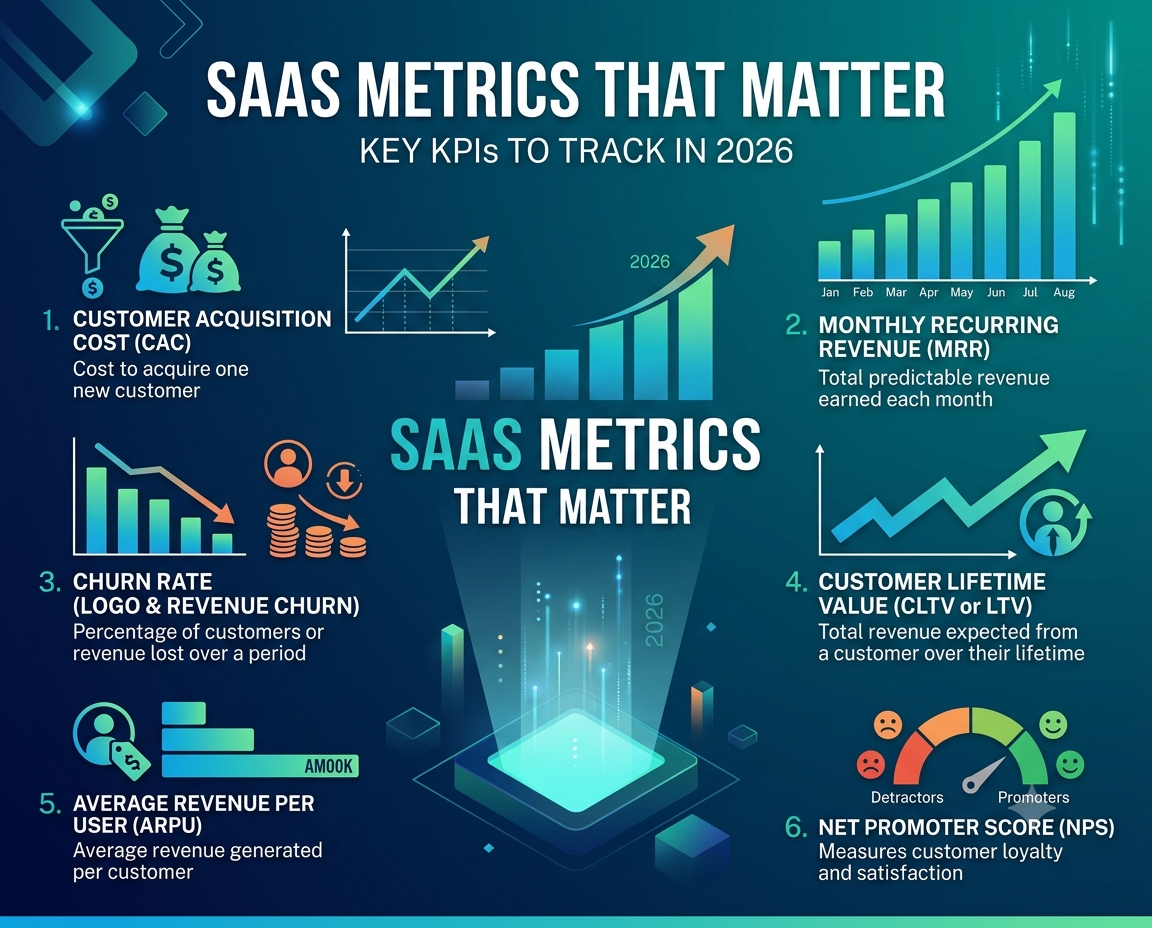
Monthly Recurring Revenue, commonly called MRR, measures predictable subscription revenue generated during a month.
MRR can help SaaS businesses understand their recurring revenue base and monitor changes over time. Companies can analyze MRR growth by considering new customers, upgrades, downgrades, and cancellations.
For subscription companies, MRR is particularly useful because it focuses on recurring revenue rather than one-time payments.
Annual Recurring Revenue
Annual Recurring Revenue, or ARR, provides a longer-term view of recurring subscription revenue. It is particularly useful for SaaS companies selling annual plans or organizations that want to evaluate long-term revenue potential.
Tracking both MRR and ARR can give management teams a clearer understanding of revenue trends and business growth.
SaaS Growth Metrics
Modern SaaS growth metrics go beyond simple customer counts. They help businesses understand whether growth is efficient, sustainable, and profitable.
Useful growth indicators include:
- MRR growth rate
- ARR growth rate
- Customer growth
- Conversion rate
- Expansion revenue
- Customer retention
- Churn rate
- Net revenue retention
A company may be adding customers quickly while losing existing customers at the same time. Looking at multiple metrics together provides a more accurate picture of business performance.
Customer Acquisition Cost
Customer Acquisition Cost (CAC) measures how much a company spends to acquire a new customer.
Marketing campaigns, sales salaries, advertising, software, and other expenses may contribute to acquisition costs.
A SaaS company should compare CAC with the value generated by customers over their relationship with the business. If acquisition costs increase faster than customer value, growth may become difficult to sustain.
Companies can improve CAC efficiency by targeting better customer segments, optimizing marketing channels, improving conversion rates, and strengthening sales processes.
Customer Lifetime Value
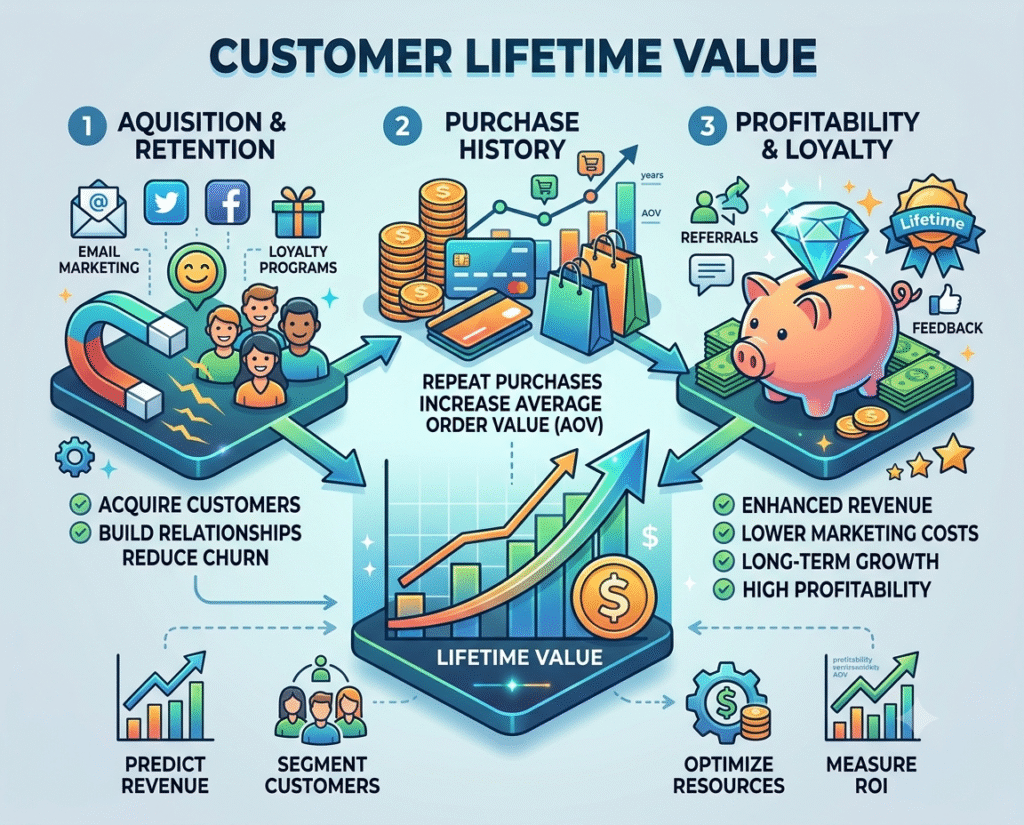
Customer Lifetime Value (CLV or LTV) estimates the total value a customer may generate during their relationship with a SaaS company.
A strong customer lifetime value can support sustainable growth because customers generate recurring revenue over a longer period.
Businesses can increase customer lifetime value by improving retention, encouraging upgrades, offering additional services, and consistently delivering product value.
Comparing LTV with CAC is particularly useful for evaluating the efficiency of customer acquisition strategies.
Churn Rate
Churn measures the percentage of customers or recurring revenue lost during a specific period.
A high churn rate can significantly affect SaaS growth because the company must continuously replace lost customers just to maintain its existing customer base.
There are different ways to calculate churn, including customer churn and revenue churn. Monitoring both can help businesses understand whether cancellations are concentrated among smaller customers or higher-value accounts.
Net Revenue Retention
Net Revenue Retention (NRR) measures how recurring revenue from an existing customer group changes over time, taking into account expansions, upgrades, downgrades, and cancellations.
NRR is a valuable metric because it shows whether the existing customer base is becoming more or less valuable.
A strong NRR can indicate that customers are expanding their use of the product or purchasing additional services. A weaker NRR may suggest that businesses need to focus more heavily on retention and customer success.
Conversion Rate
Conversion rate measures how effectively a SaaS business turns prospects into paying customers.
For example, a company may track how many website visitors sign up for a trial and how many trial users eventually become paying subscribers.
Improving conversion rates can increase revenue without requiring the company to increase traffic by the same amount. Businesses can improve conversions by simplifying signup processes, strengthening product demonstrations, improving onboarding, and communicating value more clearly.
Subscription Business Model
The subscription business model is at the heart of most SaaS companies. Instead of selling software through a single large purchase, businesses typically charge customers regularly for continued access to their products or services.
This model creates predictable recurring revenue, but it also creates an ongoing responsibility to deliver value.
Customers can often cancel or downgrade when they no longer see sufficient benefits. Therefore, SaaS businesses must continuously improve their products, customer experience, and support.
Understanding the economics of the subscription business model makes SaaS KPIs more meaningful because recurring revenue depends on maintaining long-term customer relationships.
Customer Engagement
Customer engagement can provide early signals about future retention.
If users stop logging in, reduce product usage, or fail to use important features, they may be at greater risk of cancelling their subscriptions.
SaaS companies can monitor product usage, feature adoption, active users, and customer interactions to identify opportunities for engagement.
Improving engagement can contribute to stronger customer retention and long-term customer value.
How to Use SaaS Metrics for Better Decisions
Tracking KPIs is only useful when businesses actually act on the information.
Companies should establish clear measurement periods, assign ownership to important metrics, and compare current performance with historical results.
It is also important to avoid focusing on one number. Revenue growth may look strong while churn is increasing, or customer acquisition may be rising while profitability declines.
The best approach is to evaluate multiple connected KPIs and understand how changes in one metric affect others.
Common SaaS Measurement Mistakes
One common mistake is tracking too many metrics without identifying which ones actually influence business outcomes.
Another mistake is focusing entirely on acquisition while ignoring retention. A company can spend heavily on marketing and still struggle if customers do not remain subscribed.
Businesses should also avoid comparing their metrics with companies that have completely different customer segments, pricing models, or product categories.
Context matters when interpreting SaaS performance.
SaaS Metrics That Matter in 2026
In 2026, SaaS companies are increasingly focused on efficient growth rather than growth at any cost. This makes metrics related to retention, profitability, recurring revenue, customer value, and acquisition efficiency especially important.
SaaS Metrics That Matter should therefore be connected to the company’s broader business goals. Startups may prioritize customer growth and product-market fit, while established SaaS companies may focus more heavily on profitability, expansion revenue, retention, and operational efficiency.
The right KPI strategy should evolve as the business grows.
Conclusion
SaaS Metrics That Matter give companies a practical way to understand business performance and make data-driven decisions. Metrics such as MRR, ARR, CAC, LTV, churn, NRR, conversion rate, and customer retention reveal different aspects of a SaaS company’s financial and operational health. By monitoring these indicators alongside broader SaaS growth metrics, businesses can identify opportunities, detect problems earlier, and build stronger long-term customer relationships. The subscription business model makes consistent measurement particularly important because sustainable success depends on continuously delivering value to customers. In 2026, SaaS companies that focus on the right KPIs can make more informed decisions and build more efficient, resilient businesses.
Frequently Asked Questions
What are the most important SaaS metrics?
Important SaaS metrics include MRR, ARR, customer acquisition cost, customer lifetime value, churn rate, net revenue retention, conversion rate, and customer retention.
Why is customer retention important for SaaS companies?
Customer retention is important because SaaS businesses depend on recurring revenue. Keeping existing customers can help maintain predictable revenue and reduce the pressure to continuously replace cancelled subscriptions.
What are SaaS growth metrics?
SaaS growth metrics are KPIs used to measure the growth and performance of subscription-based software companies. They can include recurring revenue growth, customer growth, conversion rates, retention, and expansion revenue.
What is the subscription business model?
The subscription business model allows customers to pay regularly, such as monthly or annually, to access a software product or service rather than making a single purchase.
How can SaaS companies reduce churn?
Companies can reduce churn by improving product quality, onboarding, customer support, user engagement, pricing strategies, and the overall customer experience.
Which SaaS metric should startups track first?
Startups should focus on metrics that match their current business stage. Customer growth, activation, retention, recurring revenue, and acquisition efficiency can provide useful insights as the company develops its product and customer base.