

Introduction
Artificial intelligence has transformed content creation by helping writers produce articles, emails, reports, and marketing copy faster than ever before. However, AI-generated text can sometimes sound repetitive, overly formal, or robotic. This is where AI Humanizers Work: The Technology Behind Human-Like AI Writing becomes important. AI humanizers use advanced language models and linguistic techniques to make AI-generated content read more naturally, improving content readability while preserving the original meaning. Whether you’re a blogger, marketer, student, or business owner, understanding how AI humanizers function can help you create engaging content. Combined with effective AI content editing and modern AI writing, these tools are shaping the future of digital communication.
AI Humanizers Work: The Technology Behind Human-Like AI Writing
Understanding AI Humanizers Work: The Technology Behind Human-Like AI Writing begins with recognizing the strengths and limitations of AI writing systems. While artificial intelligence can generate accurate and informative content within seconds, it sometimes lacks the natural flow, emotional tone, and stylistic variation found in human writing.
AI humanizers bridge this gap by refining AI-generated text to make it feel more conversational, engaging, and authentic without changing the core message.
What Are AI Humanizers?
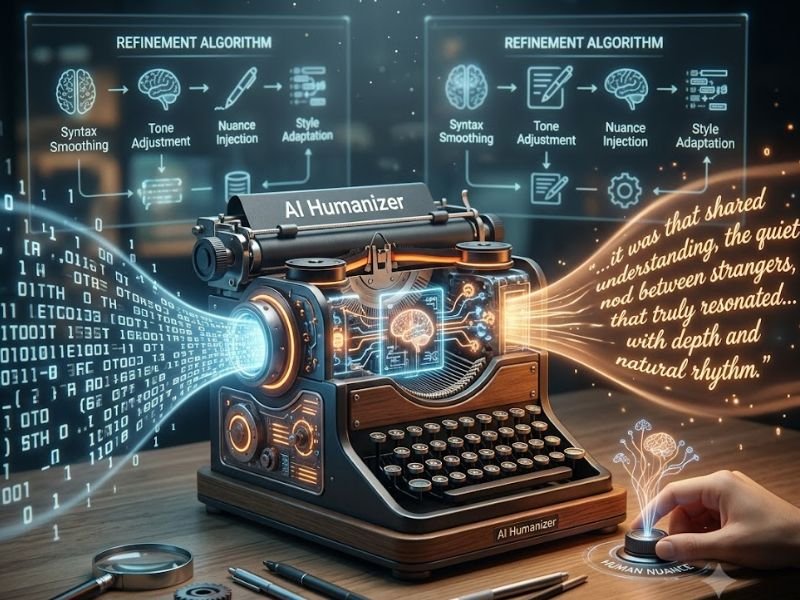
AI humanizers are software tools designed to improve AI-generated content by making it sound more natural and easier to read.
These tools typically:
- Rewrite awkward sentences
- Improve grammar and flow
- Add natural transitions
- Reduce repetitive wording
- Enhance sentence variety
- Adjust tone and readability
The goal is not to replace human creativity but to improve the quality of AI-assisted writing.
How AI Humanizers Work
Modern AI humanizers rely on advanced natural language processing (NLP) and machine learning algorithms.
Their process generally includes:
- Analyzing sentence structure.
- Identifying repetitive language.
- Improving word choice.
- Rewriting unnatural phrases.
- Enhancing readability.
- Preserving the original meaning.
The result is content that feels more fluent and engaging while maintaining accuracy.
The Role of Artificial Intelligence Writing
Today’s artificial intelligence writing tools have become valuable assistants for content creators.
They help produce:
- Blog posts
- Product descriptions
- Marketing copy
- Email campaigns
- Website content
- Social media posts
- Technical documentation
Although these tools generate content quickly, human review remains essential for accuracy, clarity, and originality.
Why Content Readability Matters
Strong content readability keeps readers engaged from beginning to end.
Readable content offers several benefits:
- Easier understanding
- Better user experience
- Higher engagement
- Lower bounce rates
- Improved accessibility
- Stronger audience trust
Simple sentence structure, logical organization, and natural language all contribute to better readability.
AI Content Editing
Professional AI content editing goes beyond correcting grammar mistakes.
It focuses on:
- Improving tone
- Enhancing sentence flow
- Removing repetitive language
- Correcting inconsistencies
- Optimizing keyword placement
- Refining paragraph structure
Editing ensures that AI-generated content meets professional publishing standards.
Benefits of AI Humanizers
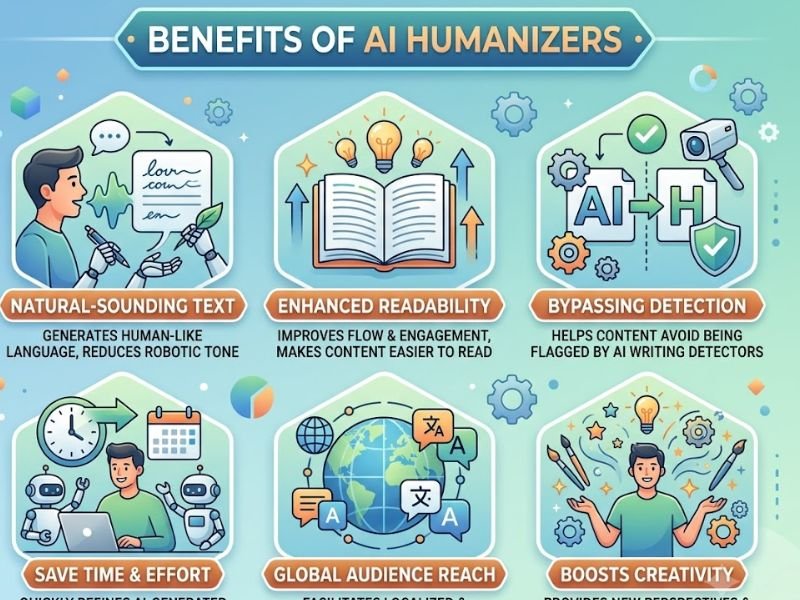
Using AI humanizers provides several advantages for writers and businesses.
Key benefits include:
- Faster content improvement
- More natural writing style
- Better reader engagement
- Consistent tone
- Improved SEO performance
- Enhanced readability
- Reduced editing time
These benefits make AI humanizers useful across many industries.
AI Humanizers and SEO
Search engines prioritize helpful, well-written, and user-focused content.
Humanized content often performs better because it:
- Reads naturally
- Keeps visitors engaged
- Improves user satisfaction
- Reduces repetitive wording
- Supports better keyword integration
While AI tools assist with content creation, quality and relevance remain essential for long-term SEO success.
Common Use Cases
AI humanizers are widely used by:
- Bloggers
- Digital marketers
- Students
- Freelance writers
- Copywriters
- Businesses
- Content agencies
- E-commerce companies
These users rely on AI tools to improve writing quality while saving time.
Limitations of AI Humanizers
Although AI humanizers are powerful, they are not perfect.
Potential limitations include:
- Occasional factual errors
- Loss of intended tone
- Over-editing
- Reduced technical precision
- Inconsistent style across long documents
Human review is still recommended before publishing important content.
Best Practices
To get the best results:
- Start with high-quality AI content.
- Review every paragraph carefully.
- Verify factual information.
- Maintain your own writing style.
- Optimize keywords naturally.
- Edit for audience needs.
- Avoid excessive rewriting.
- Proofread before publishing.
Combining AI assistance with human expertise produces the strongest content.
Future of Human-Like AI Writing
Artificial intelligence continues evolving rapidly.
Future improvements may include:
- Better emotional understanding
- Personalized writing styles
- Context-aware editing
- Real-time collaboration
- Multilingual optimization
- More accurate tone adaptation
These advancements will make AI writing even more useful while supporting—not replacing—human creativity.
Why Human Oversight Still Matters
Even with advanced AI humanizers, human judgment remains valuable.
Writers provide:
- Creativity
- Critical thinking
- Industry expertise
- Emotional intelligence
- Brand consistency
- Ethical decision-making
The best results come from combining AI efficiency with human experience.
Conclusion
AI Humanizers Work: The Technology Behind Human-Like AI Writing demonstrates how modern language technology is improving the quality of AI-generated content. By enhancing content readability, supporting effective AI content editing, and refining artificial intelligence writing, AI humanizers help create more engaging, natural, and user-friendly content. While these tools significantly improve efficiency, successful content creation still depends on careful editing, fact-checking, and human creativity. Used responsibly, AI humanizers are valuable tools that help writers produce high-quality digital content for today’s online audience.
Frequently Asked Questions (FAQs)
What are AI humanizers?
AI humanizers are software tools that improve AI-generated text by making it sound more natural, conversational, and easier to read while preserving its original meaning.
How do AI humanizers improve content readability?
They enhance content readability by rewriting awkward sentences, reducing repetition, improving transitions, and creating a smoother flow for readers.
What is AI content editing?
AI content editing involves reviewing and refining AI-generated content to improve grammar, tone, structure, clarity, keyword placement, and overall writing quality.
Is artificial intelligence writing replacing human writers?
No. Artificial intelligence writing assists with drafting and editing content, but human writers remain essential for creativity, fact-checking, strategy, and maintaining authentic communication.
Are AI humanizers useful for SEO?
Yes. Humanized content is generally more engaging and easier to read, which can improve user experience and support SEO when combined with accurate information and natural keyword placement.