

Introduction
The global automotive industry is experiencing one of the biggest transformations in its history. From Combustion Engine to EV Motor: Why the Automotive Industry Is Changing is no longer just a trend—it represents a major shift toward cleaner, smarter, and more efficient transportation. Governments, automakers, and consumers are increasingly embracing electric vehicles (EVs) to reduce carbon emissions, improve energy efficiency, and lower operating costs. As clean energy vehicles become more popular, innovations in battery technology, charging infrastructure, and vehicle performance are accelerating the transition. Understanding the future of electric cars and the importance of EV charging infrastructure is essential for anyone interested in the future of mobility.
From Combustion Engine to EV Motor: Why the Automotive Industry Is Changing
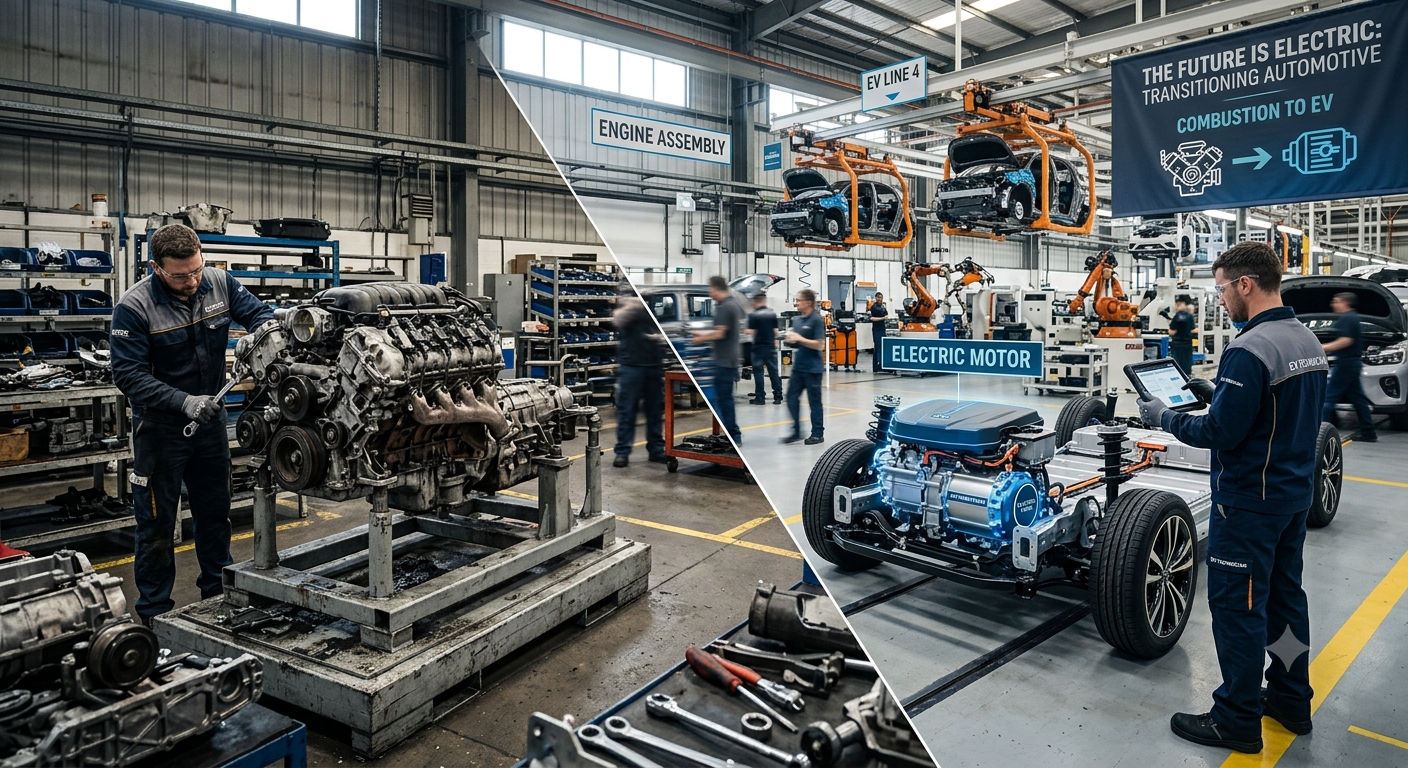
The transition From Combustion Engine to EV Motor: Why the Automotive Industry Is Changing reflects a global effort to create more sustainable transportation systems. Traditional internal combustion engine (ICE) vehicles rely on gasoline or diesel to generate power, producing emissions that contribute to air pollution and climate change. Electric vehicles, on the other hand, use electric motors powered by rechargeable batteries, offering a cleaner and more energy-efficient alternative.
This shift is driven by environmental concerns, technological advancements, supportive government policies, and increasing consumer demand for sustainable transportation.
Understanding Internal Combustion Engines
For more than a century, internal combustion engines have powered cars, trucks, and commercial vehicles around the world.
An ICE vehicle works by:
- Burning fuel inside the engine
- Converting combustion into mechanical energy
- Driving the transmission and wheels
Although combustion engines have become more efficient over time, they still produce greenhouse gas emissions and require regular maintenance.
What Is an EV Motor?
An electric vehicle motor converts electrical energy from a battery directly into mechanical power.
Unlike combustion engines, EV motors have:
- Fewer moving parts
- Instant torque
- Quiet operation
- Higher energy efficiency
- Lower maintenance requirements
These characteristics make electric vehicles attractive for both consumers and fleet operators.
Why the Automotive Industry Is Changing
Several factors are accelerating the move from combustion engines to electric motors.
Environmental Concerns
Reducing greenhouse gas emissions has become a major global priority. Transportation contributes significantly to carbon emissions, making vehicle electrification an important part of climate strategies.
Government Policies
Many countries encourage EV adoption through tax incentives, emission regulations, and investments in charging networks.
Battery Improvements
Modern lithium-ion batteries now offer:
- Longer driving range
- Faster charging
- Better durability
- Improved safety
- Lower production costs
These improvements have made electric vehicles more practical for everyday use.
Consumer Demand
Drivers increasingly value lower operating costs, quieter driving, and environmentally friendly transportation options.
Clean Energy Vehicles
The rise of clean energy vehicles is transforming the automotive market.
Electric vehicles produce zero tailpipe emissions, helping improve urban air quality and reduce dependence on fossil fuels.
Benefits include:
- Lower carbon emissions
- Reduced fuel costs
- Quieter operation
- Improved energy efficiency
- Lower maintenance expenses
- Better driving performance
As renewable electricity becomes more common, the environmental advantages of electric vehicles continue to grow.
Comparing Combustion Engines and EV Motors
Performance
Electric motors deliver instant torque, providing smooth and rapid acceleration.
Maintenance
EVs require fewer maintenance services because they have fewer mechanical components.
Efficiency
Electric motors convert a much higher percentage of stored energy into movement than traditional combustion engines.
Environmental Impact
Electric vehicles eliminate tailpipe emissions, although their overall environmental footprint also depends on electricity generation and battery production.
Future of Electric Cars

The future of electric cars looks increasingly promising as technology continues advancing.
Key developments include:
- Longer battery range
- Faster charging technology
- More affordable EV models
- Improved battery recycling
- Smarter vehicle software
- Autonomous driving integration
- Connected vehicle technologies
Major automotive manufacturers continue investing billions of dollars in electric vehicle development and production.
EV Charging Infrastructure
A reliable EV charging infrastructure is essential for widespread electric vehicle adoption.
Charging options include:
Home Charging
Many EV owners install home charging stations for overnight charging.
Public Charging Stations
Public chargers are increasingly available at shopping centers, parking facilities, workplaces, and highways.
Fast Charging
DC fast chargers can significantly reduce charging times, making long-distance travel more convenient.
Smart Charging
Advanced charging systems optimize charging schedules based on electricity demand and energy prices.
Expanding charging networks continues to improve convenience for EV drivers.
Challenges of EV Adoption
Despite rapid growth, electric vehicles still face several challenges.
These include:
- Initial purchase cost
- Charging availability in some regions
- Charging time
- Battery recycling
- Raw material sourcing
- Consumer awareness
Many of these challenges are gradually being addressed through technological innovation and infrastructure investment.
Benefits for Consumers
Switching to electric vehicles offers several practical advantages.
Drivers can benefit from:
- Lower fuel expenses
- Reduced maintenance costs
- Quiet driving experience
- Instant acceleration
- Environmental benefits
- Government incentives in many markets
These advantages continue attracting more consumers every year.
Future Automotive Trends
The automotive industry is expected to continue evolving through innovations such as:
- Solid-state batteries
- Wireless charging
- Vehicle-to-grid technology
- Artificial intelligence
- Connected mobility
- Smart transportation systems
- Sustainable manufacturing
These technologies will further improve electric vehicle performance and ownership experience.
Conclusion
From Combustion Engine to EV Motor: Why the Automotive Industry Is Changing reflects one of the most significant technological shifts in transportation history. Growing demand for clean energy vehicles, advances shaping the future of electric cars, and continued investment in EV charging infrastructure are accelerating the global transition toward sustainable mobility. While challenges remain, ongoing improvements in battery technology, charging networks, and vehicle affordability are making electric vehicles a practical choice for millions of drivers. As innovation continues, EVs are expected to play a central role in the future of the automotive industry.
Frequently Asked Questions (FAQs)
Why is the automotive industry shifting from combustion engines to EV motors?
The shift is driven by environmental concerns, improved battery technology, lower operating costs, government policies, and increasing consumer demand for sustainable transportation.
What are clean energy vehicles?
Clean energy vehicles are automobiles powered by electricity or other low-emission energy sources that help reduce pollution and greenhouse gas emissions.
What is the future of electric cars?
The future of electric cars includes longer battery range, faster charging, lower prices, smarter software, autonomous driving features, and greater global adoption.
Why is EV charging infrastructure important?
A strong EV charging infrastructure ensures convenient charging, reduces range anxiety, supports long-distance travel, and encourages more people to adopt electric vehicles.
Are electric vehicles cheaper to maintain?
Yes. Electric vehicles generally require less maintenance because they have fewer moving parts, no engine oil changes, and reduced wear on many mechanical components.