
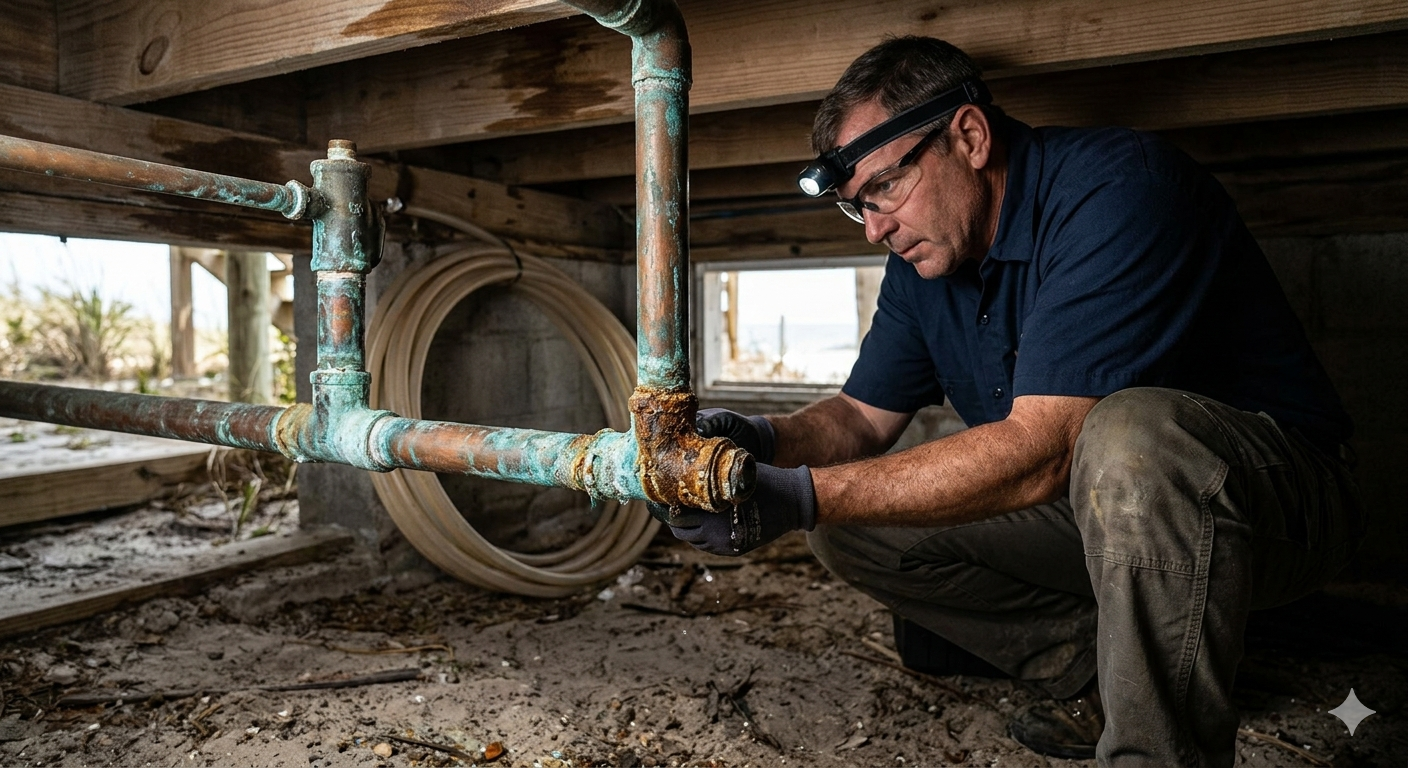

Living near the coast offers a relaxed lifestyle, but it also brings environmental conditions that can affect your home in ways many buyers do not expect. Plumbing systems are particularly exposed in coastal areas, where salt air, moisture, and shifting ground conditions can gradually wear down components. If you have recently purchased a property near the beach, understanding these influences early will help you avoid unexpected repairs and keep your plumbing system working reliably.
How Coastal Conditions Affect Plumbing
Coastal environments create a different set of challenges compared to inland areas. One of the most significant factors is salt in the air. Salt particles travel with sea breezes and settle on surfaces, including exposed pipes, fittings, and fixtures. Over time, this leads to corrosion, even on materials that would normally last for years in other locations.
Humidity also plays a role. Coastal areas tend to have higher moisture levels in the air, which increases the rate at which metal components deteriorate. When combined with salt exposure, this creates a more aggressive environment for plumbing systems.
Sand is another element that affects performance. Fine particles can enter drainage systems, especially in outdoor areas or older properties with less effective sealing. Once inside the pipes, sand can accumulate and restrict water flow, contributing to blockages.
High water tables are common in coastal regions as well. This can place additional pressure on underground pipes and drainage systems. During periods of heavy rain, the ground may become saturated, making it harder for wastewater to drain efficiently.
Common Plumbing Problems in Coastal Homes
These environmental factors lead to a range of plumbing issues that are more frequent in beachside properties. One of the most common problems is pipe deterioration. Corrosion weakens metal pipes over time, increasing the likelihood of leaks or bursts.
Blocked drains are also a regular concern. The combination of sand, debris, and everyday waste can build up quickly, especially if the system is not maintained regularly. This often results in slow drainage or recurring blockages that require attention.
Fixtures such as taps, showerheads, and outdoor connections can show signs of wear sooner than expected. Rust, reduced water pressure, and uneven flow are all indicators that coastal exposure is taking its toll.
Hot water systems are not immune either. External units, in particular, are exposed to the elements and may experience faster deterioration if not properly protected. This can lead to reduced efficiency and a shorter overall lifespan.
Another issue to watch for is damage to underground pipes caused by shifting soil conditions. Coastal ground can be less stable, especially in areas with high moisture content. This movement can place stress on pipes and joints, leading to cracks or misalignment.
Why Regular Maintenance Matters
Routine maintenance becomes far more important in coastal homes. Small issues can develop quickly in this environment, and early detection makes a significant difference in preventing larger problems.
Regular inspections allow you to identify signs of corrosion before they lead to leaks. Checking exposed pipes, fittings, and fixtures helps ensure that any deterioration is addressed promptly. This reduces the risk of sudden failures and extends the life of your plumbing system.
Drain maintenance is equally important. Clearing out sand and debris before it builds up keeps water flowing smoothly and prevents recurring blockages. This is particularly relevant for outdoor drains and areas exposed to wind and foot traffic.
Protective measures can also be implemented during maintenance. This may include applying coatings to exposed metal parts, ensuring proper sealing around pipes, and checking that drainage systems are functioning as intended.
Staying consistent with maintenance not only improves performance but also helps you avoid the inconvenience and cost of emergency repairs.
The Role of Professional Assessment
While basic checks can be done by homeowners, a professional assessment provides a more thorough understanding of how coastal conditions are affecting your plumbing. An experienced Plumber Henley Beach is familiar with the specific challenges that come with properties in this area.
A professional inspection goes beyond surface-level observations. It includes assessing pipe condition, checking for hidden leaks, and evaluating the overall performance of the system. This helps identify issues that may not be visible during a routine check.
Professionals can also recommend practical solutions to protect your plumbing. This might involve upgrading materials to more corrosion-resistant options, improving drainage design, or installing protective coverings for exposed components.
In addition, expert advice helps you plan for long-term maintenance. Understanding which parts of the system are most vulnerable allows you to prioritise inspections and repairs effectively.
Working with someone who understands local conditions ensures that your plumbing system is suited to the environment rather than simply meeting general standards.
Practical Steps for Coastal Homeowners
There are several steps you can take to reduce the impact of coastal conditions on your plumbing system. Rinsing outdoor fixtures with fresh water helps remove salt residue and slows down corrosion. Keeping drains clear of sand and debris prevents build-up and maintains proper flow.
It is also helpful to monitor water pressure and flow regularly. Any noticeable change can indicate an underlying issue that needs attention. Addressing these signs early prevents them from developing into more serious problems.
Scheduling periodic professional inspections ensures that your system remains in good condition. This approach allows you to stay ahead of potential issues rather than reacting to them after damage has occurred.
Conclusion
Coastal living offers many advantages, but it also places additional demands on your plumbing system. Salt air, moisture, sand, and ground conditions all contribute to faster wear and increased risk of damage. By understanding these factors and maintaining your system properly, you can avoid common problems and extend the life of your plumbing.
If you have recently moved into a coastal property, it is worth arranging a professional inspection to assess the condition of your plumbing. A qualified expert can identify risks early and recommend the right solutions to keep everything running smoothly. Taking action now helps ensure your home remains comfortable and free from avoidable plumbing issues.