

Introduction
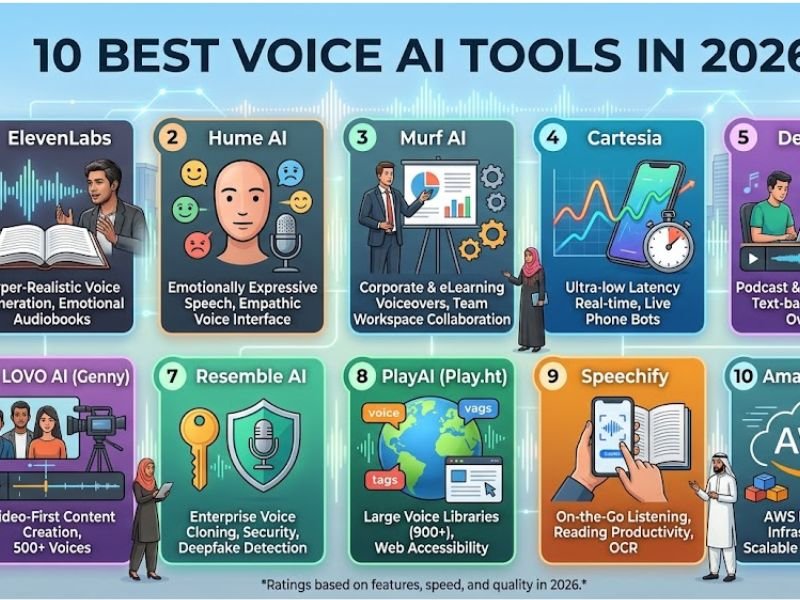
The best voice AI tools in 2026 are changing the way creators, businesses, educators, and developers produce audio content. Artificial intelligence can now generate speech that sounds increasingly natural, expressive, and human-like. Instead of hiring voice actors for every project or spending hours recording audio manually, users can create professional voiceovers with an AI voice generator in just a few minutes. These tools are being used for YouTube videos, podcasts, audiobooks, e-learning, marketing, customer support, gaming, and accessibility. Modern text-to-speech software also provides more control over tone, language, pacing, pronunciation, and voice style, making realistic AI voices useful across many industries.
What Are Voice AI Tools?
Voice AI tools use artificial intelligence to convert written text into spoken audio or create synthetic voices for different purposes. The technology has improved significantly in recent years. Earlier text-to-speech systems often sounded robotic and unnatural. Modern AI systems can produce more realistic pronunciation, emotion, pauses, and conversational delivery.
The best voice AI tools now offer features such as voice cloning, multilingual speech generation, dubbing, audio editing, API access, and customizable voice settings. The right tool depends on your needs. A YouTube creator may prioritize natural narration, while a business may need professional corporate voices. Developers may focus more on API access and low-latency performance.
1. ElevenLabs
ElevenLabs ElevenLabs is widely known for realistic AI-generated speech and voice technology. It is particularly popular among content creators, developers, and businesses looking for expressive narration and voice cloning capabilities.
The platform can be useful for audiobooks, videos, podcasts, dubbing, gaming, and conversational AI applications. One of its major strengths is voice realism. The generated speech can include more natural pacing and emotional expression than traditional text-to-speech systems. For many users looking for premium voice quality, ElevenLabs remains one of the strongest options available. Recent comparisons also consistently rank it highly for natural speech and voice cloning.
2. Murf AI
Murf AI Murf AI is designed for professional voiceovers and business-focused audio production. It is commonly used for presentations, training materials, explainers, marketing videos, and e-learning content. Murf provides an accessible studio-style workflow where users can create voiceovers and manage scripts more easily.
This makes it a strong choice for businesses and teams that need structured audio production rather than only experimental AI voices. Among the best voice AI tools, Murf is particularly useful for professional and corporate projects. Recent 2026 comparisons frequently highlight it for business narration, e-learning, and production workflows.
3. LOVO AI
LOVO AI LOVO AI is a popular option for creators who want AI-generated voices alongside broader content creation features. The platform supports multiple voice styles and languages, making it useful for videos, advertisements, social media content, and marketing projects.
LOVO can be particularly helpful for creators who want to combine voice generation with other production tools. Instead of using several separate platforms, users may be able to manage different parts of their content workflow in one place.
4. Speechify
Speechify Speechify is best known for turning written content into audio. It can help users listen to articles, documents, PDFs, and other written material. Speechify is particularly useful for accessibility, education, productivity, and people who prefer listening to content instead of reading it.
Its AI voice technology has also expanded into creator-focused audio and voiceover workflows. For users looking for flexible text-to-speech software, Speechify is a strong option, especially for listening and accessibility use cases.
5. Descript
Descript Descript is different from many traditional AI voice platforms because it focuses heavily on editing audio and video through text. It is particularly popular among podcasters, video creators, and teams producing spoken content.
Users can edit recordings by editing the transcript, making the production process easier for people who do not want to work with traditional audio timelines. Descript’s AI voice features and text-based editing workflow make it useful for podcast production and content correction.
6. WellSaid Labs
WellSaid Labs WellSaid Labs focuses on professional AI voice generation. It is commonly associated with business content, corporate training, e-learning, and professional narration. Consistency is especially important for companies creating large libraries of educational or training content.
WellSaid Labs can provide polished voices suitable for professional environments. Recent industry comparisons continue to position WellSaid as a strong choice for enterprise and corporate narration.
7. Resemble AI
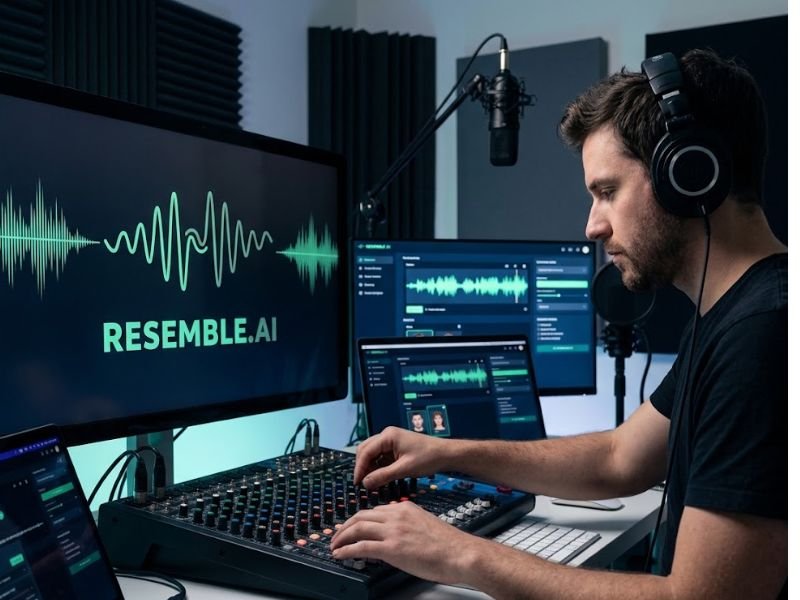
Resemble AI Resemble AI is focused on AI voice technology, including voice cloning and developer-oriented applications. It can be useful for companies building custom voice experiences and applications. Voice cloning technology allows users to create synthetic voice models based on approved voice samples.
However, this technology should always be used responsibly and with proper consent. Businesses should avoid cloning a person’s voice without permission and should follow applicable laws and platform policies. Resemble AI is particularly relevant for developers and organizations that need customizable voice technology.
8. Listnr AI
Listnr AI Listnr AI provides AI voice generation and multilingual audio capabilities. It can be useful for podcasts, videos, audiobooks, and global content creation. Language support is important for businesses and creators who want to reach audiences in different countries.
AI-generated voices can make localization faster by helping teams create audio versions of content in multiple languages. Listnr has been highlighted in recent 2026 comparisons for multilingual content production and creator workflows.
9. Cartesia
Cartesia Cartesia is focused on fast, real-time AI voice technology. This type of technology is especially useful for conversational AI, voice assistants, and live applications where response speed matters. For example, a customer-service voice agent needs to respond quickly enough to maintain a natural conversation.
Low latency is therefore important for developers building real-time voice experiences.Cartesia is frequently mentioned among modern AI voice platforms designed for fast, interactive voice applications.
10. Hume AI
Hume AI Hume AI focuses on emotionally expressive artificial intelligence. Voice is not only about reading words correctly. The way something is spoken can change its meaning. Emotion, tone, pacing, and expression are important for storytelling, entertainment, customer experiences, and interactive applications.
Hume AI represents the growing interest in making realistic AI voices more expressive and responsive. Recent voice AI comparisons identify emotional delivery and natural-language voice direction as important areas where AI voice technology continues to develop.
How to Choose the Best Voice AI Tools
Choosing between the best voice AI tools depends on your specific purpose. For YouTube videos and storytelling, voice realism may be the most important factor. For corporate training, consistency and professional narration may matter more.
For developers, API access, speed, and scalability can be essential. Before choosing a platform, consider the following factors:
Voice Quality
The most important question is whether the voice sounds natural and appropriate for your audience.
Language Support
If you create international content, choose a platform that supports the languages and accents you need.
Voice Customization
Some tools provide more control over pacing, emotion, pronunciation, and delivery.
Voice Cloning
If voice cloning is required, always ensure you have proper permission and consent.
Commercial Usage
Check whether the platform allows commercial use of generated audio under your selected plan.
Pricing
Compare pricing based on your actual usage rather than simply choosing the lowest monthly subscription.
The Benefits of AI Voice Generators
An AI voice generator can save time and simplify content production.
Creators no longer need to record every script manually. Businesses can also create multiple versions of the same content for different audiences.
Some major benefits include:
- Faster voiceover production
- Lower production costs
- Multilingual content creation
- Flexible voice styles
- Easier audio updates
- Accessibility support
- Scalable content production
However, AI voices are not always the right choice.
Certain projects may still benefit from professional human voice actors, especially when highly specific emotional performance or artistic interpretation is required.
The Future of Realistic AI Voices
The future of realistic AI voices will likely involve better emotional expression, faster generation, improved personalization, and stronger conversational abilities. AI voice technology is moving beyond simple text-to-speech. Future systems may understand context better and adjust their speaking style depending on the situation.
Voice agents may become more natural in customer service and interactive applications.
At the same time, responsible AI practices will become increasingly important. As synthetic voices become more realistic, companies will need stronger policies around consent, identity protection, disclosure, and misuse prevention.
Why Text-to-Speech Software Is Growing
Modern text-to-speech software is no longer used only for accessibility. It is now part of content creation, marketing, education, entertainment, and software development.
A single written article can be transformed into an audio version. A company can create training materials without recording every lesson manually. Video creators can generate narration without needing a recording studio. This flexibility is one of the biggest reasons why AI voice technology continues to grow.
Conclusion
The best voice AI tools in 2026 offer powerful solutions for creators, businesses, educators, and developers. Platforms such as ElevenLabs, Murf AI, LOVO AI, Speechify, Descript, WellSaid Labs, Resemble AI, Listnr AI, Cartesia, and Hume AI each serve different purposes. Some focus on realistic narration, while others specialize in business voiceovers, multilingual content, voice cloning, editing, or real-time applications. The best AI voice generator for you will depend on your specific workflow and audience. As text-to-speech software continues to improve, realistic AI voices will become an even more important part of digital content creation. The key is to choose a tool that provides the right balance of quality, features, pricing, and responsible use.
FAQs
What are the best voice AI tools in 2026?
Some of the leading voice AI platforms include ElevenLabs, Murf AI, LOVO AI, Speechify, Descript, WellSaid Labs, Resemble AI, Listnr AI, Cartesia, and Hume AI. The best choice depends on your specific needs.
Which AI voice generator sounds the most realistic?
ElevenLabs is widely recognized for highly natural and expressive AI voice generation, while other platforms such as Hume AI also focus on emotional and realistic delivery.
Can AI voices be used for YouTube videos?
Yes. AI-generated voices are commonly used for YouTube narration, explainers, educational content, documentaries, and faceless video channels.
Is text-to-speech software useful for businesses?
Yes. Businesses can use text-to-speech software for training, customer communication, marketing videos, product demonstrations, accessibility, and multilingual content.
Can AI clone a human voice?
Some AI voice tools offer voice cloning. However, a person’s voice should only be cloned with their clear permission and consent.
Are AI-generated voices replacing human voice actors?
AI voices are becoming useful for many types of content, but human voice actors remain valuable for artistic performance, complex emotion, and specialized projects.
Which voice AI tool is best for business content?
Murf AI and WellSaid Labs are often strong choices for professional voiceovers, corporate training, and business-focused content.