

Introduction
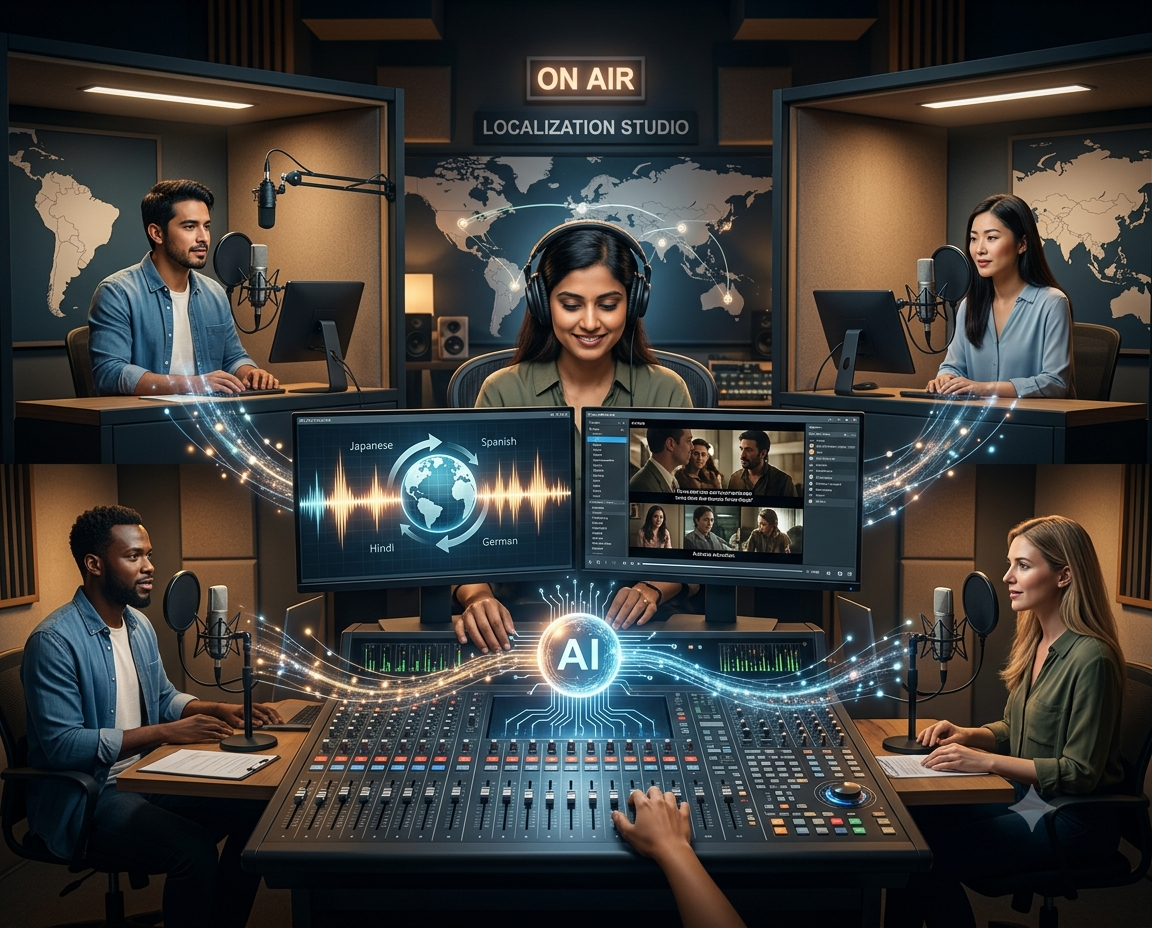
As businesses, creators, and brands expand into international markets, delivering content that feels natural to local audiences has become more important than ever. AI Voice Localization is changing the way companies communicate by adapting spoken content into multiple languages while preserving tone, emotion, and cultural relevance. Unlike traditional voice translation, AI-powered solutions make the localization process faster, more affordable, and highly scalable. Whether it’s videos, podcasts, e-learning courses, or marketing campaigns, AI Voice Localization helps organizations connect with audiences around the world more authentically and engagingly.
What Is AI Voice Localization?
AI Voice Localization is the process of using artificial intelligence to translate, adapt, and recreate spoken audio for different languages and regions. Instead of simply converting words from one language to another, AI analyzes pronunciation, context, speaking style, and emotional tone to produce natural-sounding voiceovers. Modern AI technologies, including speech synthesis, neural text-to-speech, and machine learning, enable businesses to localize content without recording separate voiceovers for every market. This makes multilingual communication more accessible while maintaining consistency across global content.
Why AI Voice Localization Is Becoming Essential
As digital content consumption continues to grow worldwide, audiences increasingly expect content in their native language. Companies that fail to localize their voice content often struggle to engage international users. AI Voice Localization helps bridge language barriers by creating personalized experiences that feel familiar to local listeners. It also allows businesses to launch products in multiple countries simultaneously, improving customer satisfaction and expanding market reach. For organizations looking to scale globally, AI-powered localization has become a competitive advantage rather than an optional feature.
How AI Voice Localization Is Transforming Global Content
The biggest impact of AI Voice Localization is its ability to make global content accessible within a fraction of the time required by traditional localization methods. Video creators can publish multilingual content within hours instead of weeks. E-learning platforms can deliver educational materials to international students more efficiently. Businesses can launch multilingual product demonstrations, customer support videos, and marketing campaigns without hiring multiple voice actors for every language. This rapid turnaround helps companies respond quickly to changing market demands while maintaining consistent messaging across different regions.
Benefits of AI Voice Localization
Businesses of all sizes are adopting AI-powered localization because it offers significant advantages. It dramatically reduces production costs by minimizing the need for repeated recording sessions. AI tools can generate high-quality voiceovers at scale while preserving consistent pronunciation and speaking style. Faster production speeds enable companies to release content in multiple languages simultaneously. Additionally, localized voice content improves audience engagement, increases watch time, and builds stronger trust among international customers. These benefits make AI localization a valuable investment for organizations focused on global growth.
Industries Benefiting from AI Voice Localization
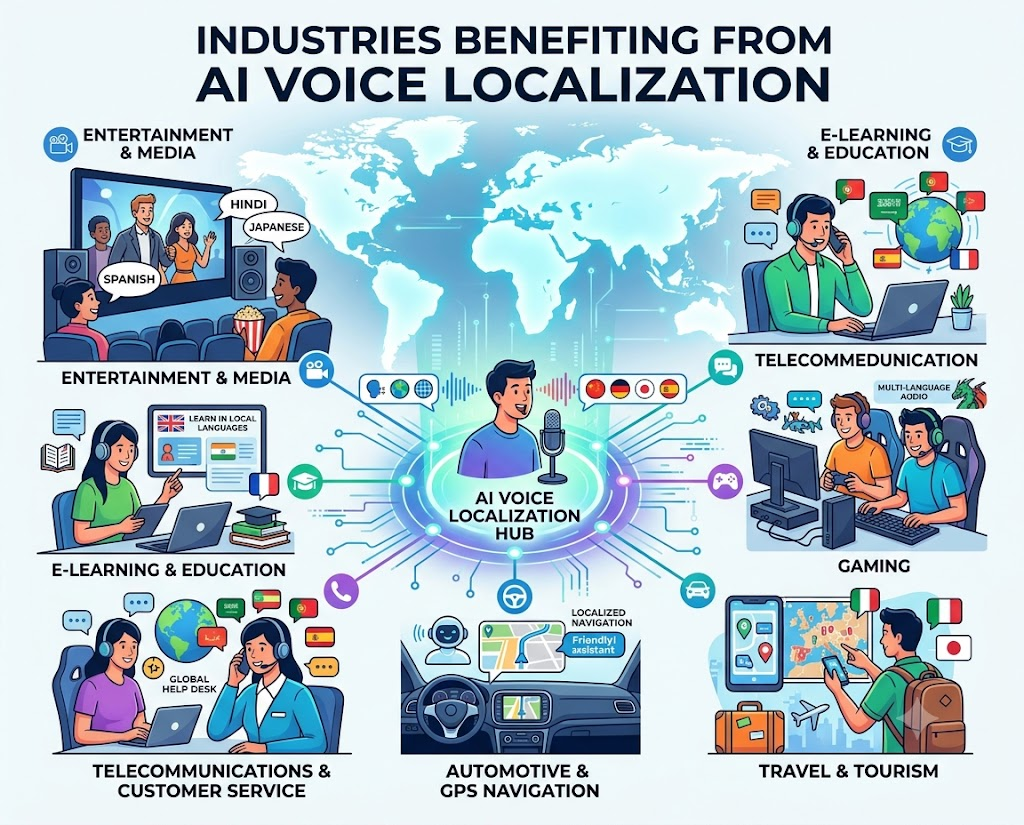
Many industries are experiencing the advantages of AI-driven voice localization. Media and entertainment companies use localized dubbing to reach international viewers. E-learning providers deliver multilingual educational courses to students worldwide. Healthcare organizations create accessible training materials for diverse communities. Software companies localize product tutorials and onboarding videos, while e-commerce businesses produce multilingual advertisements that connect with customers in different countries. Even corporate training departments are using AI-powered voice solutions to educate employees across multiple regions efficiently.
AI Voice Localization vs Traditional Voice Localization
Traditional voice localization often requires professional translators, recording studios, voice actors, audio engineers, and extensive editing. This process can be expensive and time-consuming, especially for large projects. AI-powered localization automates many of these steps while maintaining impressive audio quality. Although human review remains valuable for highly creative projects, AI significantly reduces production time and costs. Businesses can therefore localize more content without sacrificing consistency or exceeding their budgets.
Best Practices for Successful AI Voice Localization
To achieve the best results, organizations should begin with high-quality source audio and accurate scripts. Selecting AI tools that support natural speech patterns and regional accents improves authenticity. Human editors should review localized content to ensure cultural appropriateness and linguistic accuracy before publication. Testing localized audio with native speakers can also help identify improvements. Combining AI efficiency with human quality assurance creates content that feels both professional and culturally relevant.
The Future of AI Voice Localization
The future of voice localization is expected to become even more advanced as artificial intelligence continues to evolve. AI systems are improving their ability to capture emotional expression, conversational rhythm, and regional pronunciation. Real-time multilingual voice translation is becoming increasingly accurate, opening new possibilities for live events, virtual meetings, customer support, and international collaboration. As AI technology matures, businesses will be able to communicate naturally with global audiences faster than ever before.
Conclusion
AI Voice Localization is transforming global content by making multilingual communication faster, smarter, and more cost-effective. From marketing campaigns and educational content to entertainment and corporate communications, AI enables organizations to reach international audiences with natural-sounding localized voiceovers. As companies continue expanding into global markets, adopting AI-powered localization will play a key role in improving customer engagement, increasing accessibility, and strengthening worldwide brand presence. Businesses that embrace this technology today will be better prepared for the future of digital communication.
FAQs
What is AI Voice Localization?
AI Voice Localization uses artificial intelligence to translate and recreate spoken audio in different languages while maintaining natural tone, pronunciation, and emotional expression.
Why is AI Voice Localization important?
It helps businesses communicate effectively with international audiences, improve customer engagement, and expand into new markets more efficiently.
Which industries use AI Voice Localization?
Industries such as media, education, healthcare, e-commerce, software, gaming, and corporate training commonly use AI-powered voice localization.
Is AI Voice Localization better than traditional localization?
AI localization is generally faster, more scalable, and more cost-effective, while human review remains valuable for creative and highly nuanced content.
Can small businesses benefit from AI Voice Localization?
Yes. AI-powered solutions make multilingual content creation affordable, allowing small businesses to reach global audiences without investing in expensive recording studios or large localization teams.