

Introduction
Laser cutting has become one of the most important manufacturing processes in modern industry. From metal fabrication and automotive production to signage and custom product design, laser systems provide unmatched precision and efficiency. Among the most popular solutions are CO₂ and fiber laser machines. Understanding the differences between these technologies is essential for businesses looking to invest in the right equipment. This guide on CO₂ Laser Cutters Explained explores how both systems work, their advantages, limitations, and the applications where each performs best.
Understanding Laser Cutting Technology
Laser cutting technology uses a focused beam of light to cut, engrave, or mark materials with exceptional accuracy. The laser generates intense heat that melts, burns, or vaporizes material along a programmed path.
Benefits of laser cutting technology include:
- High precision
- Fast production speeds
- Minimal material waste
- Consistent quality
- Reduced manual labor
- Automated operation
As manufacturing demands continue to grow, laser cutting remains a preferred solution for both small workshops and large industrial facilities.
What Is a CO₂ Laser Machine?
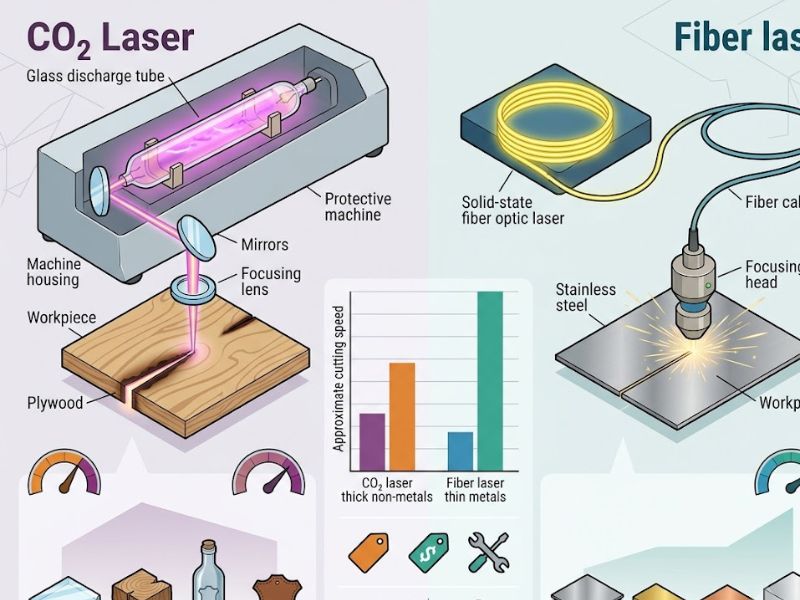
A CO₂ laser machine uses a gas mixture containing carbon dioxide as its laser medium. When electrical energy excites the gas, it produces a powerful infrared laser beam that can cut or engrave various materials.
CO₂ lasers are widely used for:
- Acrylic cutting
- Woodworking
- Leather processing
- Fabric cutting
- Plastic engraving
- Paper and packaging applications
Because of their versatility, CO₂ laser machines are commonly found in sign-making businesses, creative workshops, and manufacturing environments that work with non-metal materials.
How CO₂ Laser Cutters Work
CO₂ laser cutters generate laser energy through a sealed tube filled with carbon dioxide gas. Mirrors direct the laser beam toward the cutting head, where a lens focuses the beam onto the material.
The focused energy creates a highly concentrated heat source that:
- Cuts materials cleanly
- Produces detailed engravings
- Delivers smooth edges
- Supports complex designs
This process makes CO₂ systems ideal for projects requiring precision and flexibility.
What Is a Fiber Laser Cutter?
Fiber laser systems use optical fibers doped with rare-earth elements to generate laser energy. Unlike CO₂ lasers, fiber lasers do not rely on gas-filled tubes.
Fiber lasers are especially effective for:
- Stainless steel
- Carbon steel
- Aluminum
- Copper
- Brass
- Titanium
Their efficiency and speed have made them a popular choice for industrial manufacturing and metal fabrication.
Key Differences Between CO₂ and Fiber Laser Technology
Understanding the distinctions between these technologies helps businesses select the most suitable equipment.
Material Compatibility
CO₂ Laser Machine:
- Best for non-metals
- Wood
- Acrylic
- Leather
- Plastic
- Fabric
Fiber Laser Cutter:
- Best for metals
- Stainless steel
- Aluminum
- Brass
- Copper
Material type is often the most important factor when choosing a laser system.
Cutting Speed
Fiber lasers generally cut thin metal sheets significantly faster than CO₂ systems.
CO₂ lasers often perform better when processing thicker non-metal materials.
Energy Efficiency
Fiber lasers are known for superior energy efficiency because they convert electrical energy into laser energy more effectively.
This results in:
- Lower electricity consumption
- Reduced operating costs
- Improved productivity
Maintenance Requirements
CO₂ systems require maintenance of mirrors, lenses, and gas tubes.
Fiber lasers have fewer moving components and generally require less maintenance.
Lifespan
Fiber laser sources typically offer longer operational lifespans than traditional CO₂ laser tubes.
This can reduce long-term ownership costs for industrial users.
Advantages of CO₂ Laser Machines
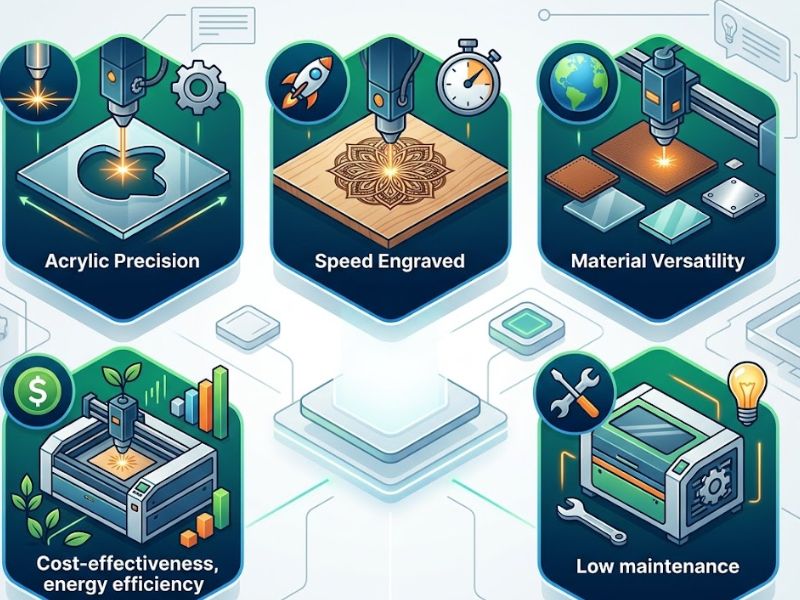
CO₂ laser systems remain highly relevant despite the growing popularity of fiber lasers.
Key advantages include:
Excellent Non-Metal Cutting
CO₂ lasers excel at processing materials that fiber lasers struggle to handle effectively.
High-Quality Engraving
Detailed engraving on wood, acrylic, leather, and plastics is a major strength.
Lower Initial Investment
Many entry-level CO₂ systems are more affordable than industrial-grade fiber laser equipment.
Versatility
CO₂ systems support a broad range of applications beyond simple cutting tasks.
These benefits make CO₂ technology attractive for creative industries and small businesses.
Advantages of Fiber Laser Cutters
Fiber laser technology offers several important benefits for industrial users.
Faster Metal Processing
Fiber lasers achieve high cutting speeds on metal materials.
Improved Efficiency
Lower energy consumption reduces operating expenses.
Reduced Maintenance
Fewer consumable components minimize downtime.
Compact Design
Fiber laser systems often occupy less space than equivalent CO₂ systems.
These advantages make fiber lasers ideal for high-volume manufacturing environments.
Choosing the Right Industrial Laser Cutter
Selecting the best industrial laser cutter depends on several factors.
Consider:
Material Type
The materials you plan to process should guide your decision.
Production Volume
High-volume operations may benefit from the speed of fiber lasers.
Budget
Initial investment and operating costs should both be evaluated.
Application Requirements
Engraving, cutting, marking, and material thickness all influence equipment selection.
Businesses should carefully assess their production goals before investing in laser technology.
Future Trends in Laser Cutting Technology
The future of laser cutting technology continues to evolve rapidly.
Emerging trends include:
- AI-powered machine optimization
- Automated material handling
- Smart manufacturing integration
- Improved energy efficiency
- Faster cutting speeds
- Enhanced precision controls
As Industry 4.0 adoption grows, laser systems will become increasingly intelligent and connected.
These innovations will help manufacturers improve productivity, reduce waste, and enhance product quality.
Conclusion
This guide on CO₂ Laser Cutters Explained highlights the key differences between CO₂ and fiber laser technologies. While a CO₂ laser machine remains an excellent solution for non-metal applications such as wood, acrylic, and leather, fiber lasers dominate metal fabrication thanks to their speed, efficiency, and low maintenance requirements.
Choosing the right industrial laser cutter depends on your materials, production needs, and budget. By understanding the strengths of each technology, businesses can make informed investments that support long-term growth and operational success.
FAQs
1. What is a CO₂ laser machine?
A CO₂ laser machine uses carbon dioxide gas to generate a laser beam for cutting, engraving, and marking materials.
2. What materials can CO₂ lasers cut?
CO₂ lasers are commonly used for wood, acrylic, leather, fabric, paper, and many plastics.
3. What is a fiber laser cutter?
A fiber laser cutter uses optical fiber technology to generate a laser beam optimized for metal cutting and marking.
4. Which laser is better for metal fabrication?
Fiber lasers are generally preferred for metal cutting due to their speed, efficiency, and precision.
5. Are CO₂ laser cutters still relevant in 2026?
Yes. CO₂ laser cutters remain highly effective for non-metal materials and are widely used in manufacturing, signage, and creative industries.