


Introduction
Cybersecurity has become one of the most critical concerns for organizations and individuals alike. As technology evolves, so do the methods used by cybercriminals. Modern attackers are more sophisticated than ever, leveraging advanced tools, artificial intelligence, and social engineering techniques to exploit vulnerabilities. Understanding today’s cyber threat landscape is essential for businesses seeking to protect sensitive data, maintain customer trust, and ensure operational continuity. This article explores the tactics, challenges, and defense strategies associated with modern cybersecurity threats.
Who Are Modern Attackers?
Modern attackers are individuals or organized groups that use digital technologies to compromise systems, steal data, disrupt operations, or gain unauthorized access to networks. Unlike traditional hackers, today’s attackers often employ highly sophisticated methods and target organizations of all sizes.
Common types of attackers include:
- Cybercriminal organizations
- State-sponsored threat groups
- Insider threats
- Hacktivists
- Financially motivated attackers
- Opportunistic hackers
Each group has different objectives, ranging from financial gain to political influence or data theft.
The Evolution of Cybersecurity Threats
The cyber threat landscape has changed dramatically over the past decade.
Key factors driving this evolution include:
- Increased cloud adoption
- Remote work environments
- Internet of Things (IoT) devices
- Artificial intelligence
- Digital transformation
- Expanding attack surfaces
These technological advancements have created new opportunities for attackers while increasing the complexity of cybersecurity defense. Organizations must continually adapt to stay ahead of evolving threats.
Common Cyber Attack Techniques
Modern attackers rely on various techniques to infiltrate systems and compromise sensitive information.
Phishing Attacks
Phishing remains one of the most common cyber attacks. Attackers use fraudulent emails, websites, or messages to trick users into revealing passwords or financial information.
Ransomware
Ransomware encrypts files and demands payment in exchange for restoring access. These attacks can severely disrupt business operations.
Malware
Malicious software is designed to damage systems, steal information, or gain unauthorized access.
Credential Theft
Attackers use stolen usernames and passwords to access business systems and cloud services.
Social Engineering
Rather than exploiting technical vulnerabilities, attackers manipulate people into revealing confidential information. These techniques continue to evolve alongside technology.
Why Network Security Is Essential
Strong network security serves as the foundation of effective cybersecurity.
Organizations should implement:
- Firewalls
- Intrusion detection systems
- Secure network segmentation
- Multi-factor authentication
- Endpoint protection
- Continuous monitoring
A layered security strategy helps reduce the likelihood of successful cyber attacks. Protecting internal networks is essential for safeguarding valuable business assets.
The Role of Artificial Intelligence
Artificial intelligence has become both a defensive tool and a weapon for modern attackers.
Attackers may use AI to:
- Automate phishing campaigns
- Analyze vulnerabilities
- Generate convincing fraudulent content
- Improve malware capabilities
Meanwhile, cybersecurity professionals use AI to:
- Detect suspicious behavior
- Identify anomalies
- Automate threat response
- Improve incident detection
The increasing use of AI is transforming the cybersecurity landscape on both sides.
Emerging Cybersecurity Threats
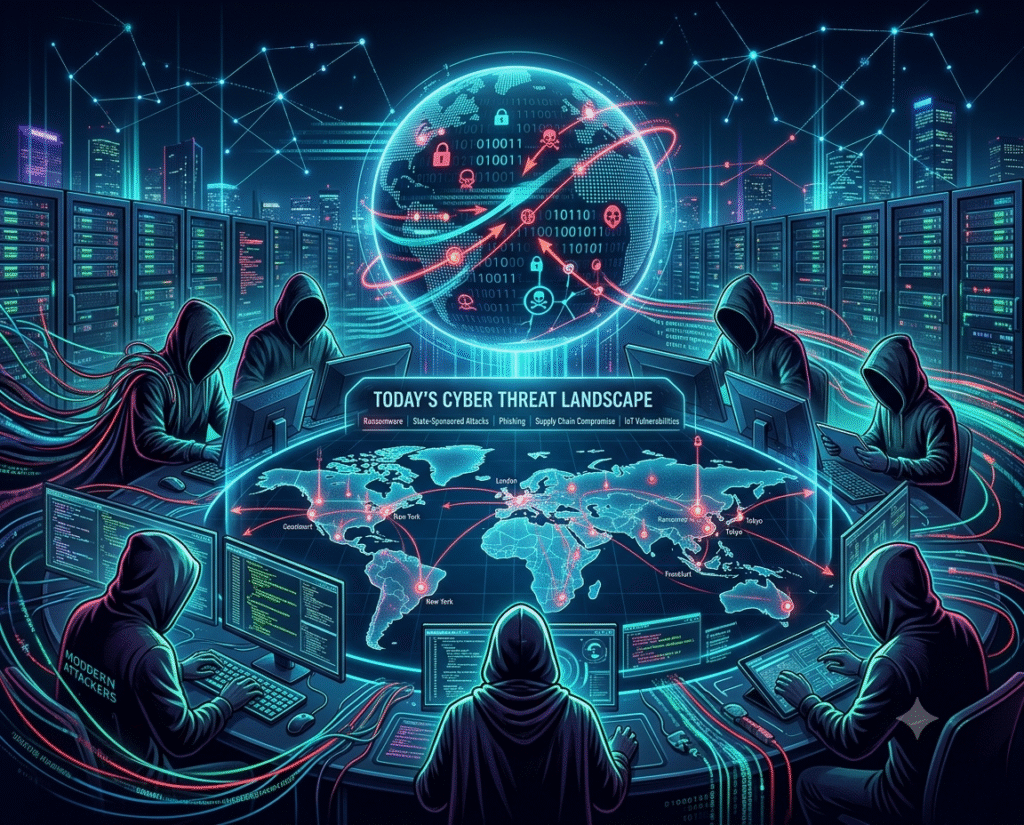
Several new threats are becoming increasingly important.
Supply Chain Attacks
Attackers compromise trusted software providers to reach multiple organizations.
Cloud Security Risks
Misconfigured cloud environments can expose sensitive business data.
Internet of Things (IoT)
Connected devices often introduce additional security vulnerabilities.
Business Email Compromise
Attackers impersonate executives or vendors to steal money or confidential information.
AI-Generated Fraud
Advanced AI tools enable more convincing scams and identity impersonation. Organizations should regularly evaluate these evolving risks.
Best Practices for Cyber Defense
Businesses can reduce exposure to cybersecurity threats by implementing proven security measures.
Employee Awareness Training
Educating staff helps reduce phishing and social engineering risks.
Regular Software Updates
Security patches eliminate known vulnerabilities.
Strong Password Policies
Unique passwords combined with multi-factor authentication improve security.
Data Backups
Secure backups support rapid recovery after ransomware attacks.
Continuous Monitoring
Real-time monitoring enables faster detection of suspicious activity. A proactive cybersecurity strategy significantly improves organizational resilience.
Building a Strong Cybersecurity Culture
Technology alone cannot eliminate cyber risks.
Organizations should promote:
- Security awareness
- Executive involvement
- Incident response planning
- Regular security assessments
- Clear cybersecurity policies
A culture of security encourages employees to recognize threats and follow best practices. Strong leadership plays an essential role in maintaining cybersecurity readiness.
The Future of Cybersecurity
The future cyber threat landscape will continue to evolve as technology advances.
Expected trends include:
- AI-powered cyber attacks
- Increased cloud security investments
- Zero Trust security models
- Advanced threat intelligence
- Automated security operations
- Improved identity management
Organizations that invest in modern cybersecurity strategies will be better prepared for future challenges. Continuous improvement will remain essential in an increasingly connected digital world.
Conclusion
Modern attackers are becoming more sophisticated, making cybersecurity threats, cyber attacks, and network security more important than ever. Businesses must understand evolving attack methods and implement comprehensive security strategies to protect their systems, data, and customers.
By combining advanced technology with employee education, proactive monitoring, and strong security policies, organizations can significantly reduce cyber risks. As digital transformation continues, maintaining a resilient cybersecurity posture will remain one of the most important priorities for every business.
FAQs
1. Who are modern attackers?
Modern attackers are cybercriminals, organized groups, insider threats, or state-sponsored actors that use advanced techniques to compromise digital systems.
2. What are the most common cybersecurity threats?
Common threats include phishing, ransomware, malware, credential theft, business email compromise, and social engineering attacks.
3. Why is network security important?
Network security protects business systems, prevents unauthorized access, and reduces the risk of cyber attacks.
4. How does artificial intelligence affect cybersecurity?
AI helps security teams detect threats more quickly, but attackers also use AI to automate and improve cyber attacks.
5. How can businesses protect themselves from modern attackers?
Organizations should implement multi-layered security, employee training, software updates, strong authentication, continuous monitoring, and regular data backups to strengthen their cybersecurity posture.