

Introduction
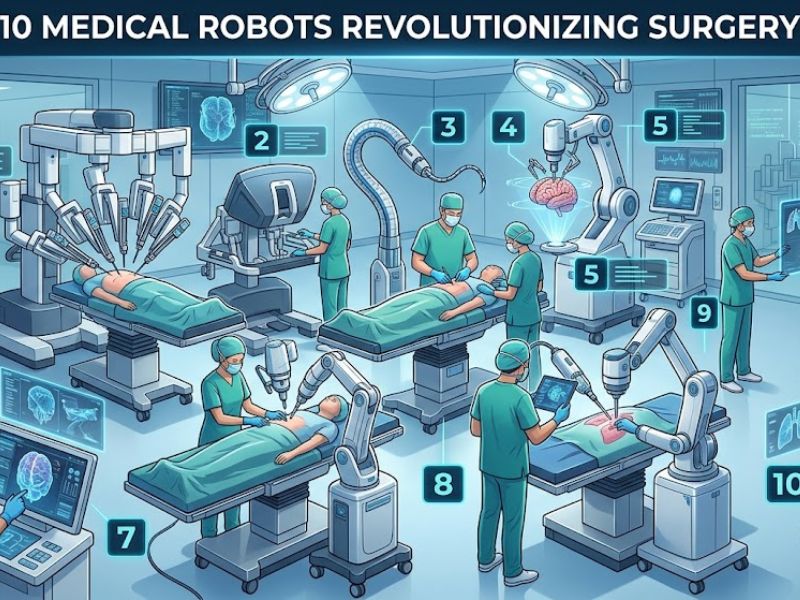
The healthcare industry is undergoing a rapid transformation, and one of the most groundbreaking innovations leading this change is medical robots. In 2026, these advanced robotic systems will not just assist surgeons; they will redefine how surgeries are performed. From increased precision to faster recovery times, medical robots are revolutionizing surgery in ways that were once considered science fiction. With the integration of artificial intelligence, machine learning, and real-time imaging, modern medical robots are helping doctors perform complex procedures with unmatched accuracy. This article explores the top 10 medical robots revolutionizing surgery in 2026, their features, and how they are shaping the future of healthcare.
What Are Medical Robots?
Medical robots are robotic systems designed to assist healthcare professionals in performing surgical procedures. These machines can carry out tasks with high precision, stability, and control, reducing human error and improving patient outcomes.
They are commonly used in:
- Minimally invasive surgeries
- Orthopedic procedures
- Neurosurgery
- Cardiac operations
The goal of medical robots is not to replace surgeons but to enhance their capabilities.
Why Medical Robots Are Important in Modern Surgery
The rise of medical robots is driven by their ability to improve surgical efficiency and patient safety. Here are some key advantages:
- Higher precision than manual surgery
- Smaller incisions, leading to less pain
- Faster recovery time for patients
- Reduced risk of complications
- Better visualization through 3D imaging
These benefits make medical robots a vital part of modern operating rooms.
Top 10 Medical Robots Revolutionizing Surgery in 2026
1. da Vinci Surgical System
The da Vinci Surgical System remains one of the most widely used medical robots in the world. It allows surgeons to perform minimally invasive procedures using robotic arms controlled from a console.
Key features:
- 3D high-definition vision
- Enhanced precision and control
- Widely used in urology and gynecology
2. Mako Robotic-Arm Assisted Surgery System
The Mako system is specifically designed for orthopedic procedures like knee and hip replacements.
Benefits:
- Personalized surgical planning
- Accurate bone cutting
- Faster recovery for patients
3. ROSA Surgical Robot
The ROSA robot is used in neurosurgery and spinal procedures. It assists surgeons in performing delicate operations on the brain and spine.
Highlights:
- High accuracy in positioning
- Real-time data tracking
- Improved patient safety
4. CyberKnife System
The CyberKnife is a non-invasive robotic system used for cancer treatment. It delivers radiation therapy with extreme precision.
Advantages:
- No need for traditional surgery
- Targets tumors accurately
- Minimizes damage to healthy tissue
5. Senhance Surgical System
The Senhance system is a newer competitor in the robotic surgery space. It offers advanced features like eye-tracking technology.
Key features:
- Haptic feedback (touch sensation)
- Lower operational costs
- Enhanced surgeon control
6. Versius Surgical System
The Versius robot is designed to make robotic surgery more accessible to hospitals worldwide.
Benefits:
- Compact design
- Flexible robotic arms
- Suitable for multiple procedures
7. Monarch Platform
The Monarch system is used for minimally invasive procedures in the lungs.
Highlights:
- Advanced navigation system
- Improved diagnosis of lung diseases
- Less invasive than traditional methods
8. Hugo Robotic-Assisted Surgery System
The Hugo system is a modern robotic platform that competes with traditional systems like da Vinci.
Key advantages:
- Modular design
- Cost-effective solution
- Expanding global adoption
9. Navio Surgical System
The Navio system is another orthopedic-focused medical robot used for joint replacement surgeries.
Features:
- Real-time imaging
- Precise implant positioning
- Reduced surgical errors
10. ZEUS Surgical System
Although older, the ZEUS system played a major role in the development of modern medical robots and is still referenced in robotic surgery advancements.
Importance:
- Pioneer in robotic-assisted surgery
- Laid the foundation for newer systems
- Historical significance in healthcare technology
How Medical Robots Are Changing the Future of Surgery
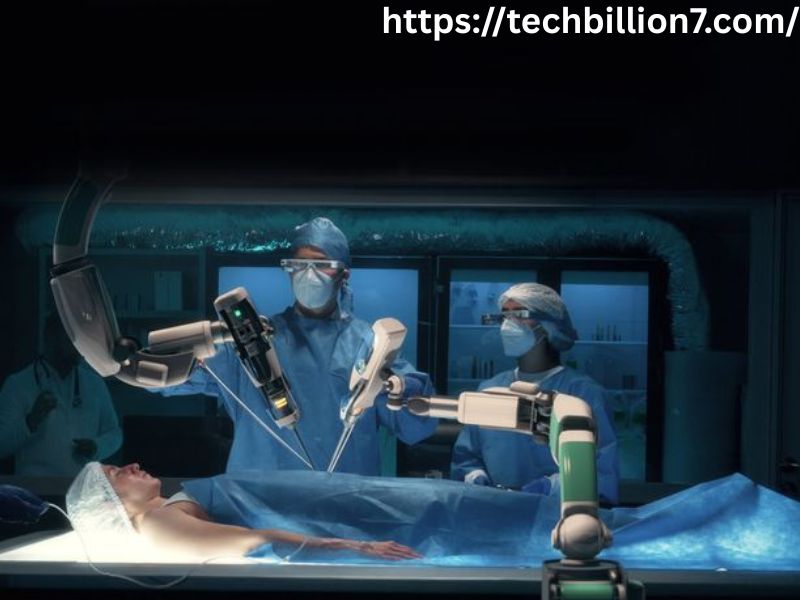
The impact of medical robots goes beyond the operating room. These systems are shaping the future of healthcare in several ways:
- Enabling remote surgeries (tele-surgery)
- Improving training for surgeons through simulation
- Reducing hospital stays and costs
- Increasing access to advanced medical care
As technology continues to evolve, medical robots will become even more intelligent and autonomous.
Challenges of Medical Robots in Surgery
Despite their advantages, medical robots also come with challenges:
- High initial cost
- Need for specialized training
- Limited availability in smaller hospitals
- Dependence on technology
However, as innovation continues, these challenges are expected to decrease over time.
The Role of AI in Medical Robots
Artificial intelligence is playing a major role in enhancing medical robots. AI allows robots to analyze data, assist in decision-making, and improve surgical outcomes.
In the future, AI-powered medical robots may:
- Predict surgical complications
- Provide real-time recommendations
- Automate certain procedures
This combination of AI and robotics is the next frontier in healthcare.
Conclusion
The rise of medical robots in 2026 marks a new era in surgical innovation. From the widely used da Vinci system to advanced platforms like Hugo and Versius, these technologies are transforming how surgeries are performed. By improving precision, reducing recovery time, and enhancing patient safety, medical robots are becoming an essential part of modern medicine. While challenges still exist, the future looks promising as advancements in AI and robotics continue to push boundaries. In the coming years, medical robots will not replace surgeons, but they will empower them to deliver better outcomes and redefine healthcare standards worldwide.
FAQs
1. What are medical robots used for?
Medical robots are used to assist surgeons in performing precise and minimally invasive procedures, improving accuracy and patient outcomes.
2. Are medical robots safe?
Yes, medical robots are designed with advanced safety features and are operated by trained professionals, making them highly reliable.
3. Can medical robots replace doctors?
No, medical robots are tools that assist doctors, not replace them. Surgeons remain in full control during procedures.
4. What is the most popular medical robot?
The da Vinci Surgical System is currently the most widely used robotic system in surgery.
5. How much do medical robots cost?
Medical robots can cost anywhere from hundreds of thousands to millions of dollars, depending on the system and its capabilities.