
Introduction
Choosing the right solar panel can make a significant difference in how efficiently you generate and use electricity. The debate around Flexible vs. Rigid Solar Panels is especially important for homeowners, RV owners, campers, boat users, and anyone looking for portable or permanent solar energy solutions. While flexible solar panels are lightweight and easier to install on curved or irregular surfaces, rigid solar panels are generally built for durability and long-term performance. Understanding the differences between these options can help you select the solar setup that best matches your energy needs, budget, available space, and installation environment.
Understanding Flexible vs. Rigid Solar Panels
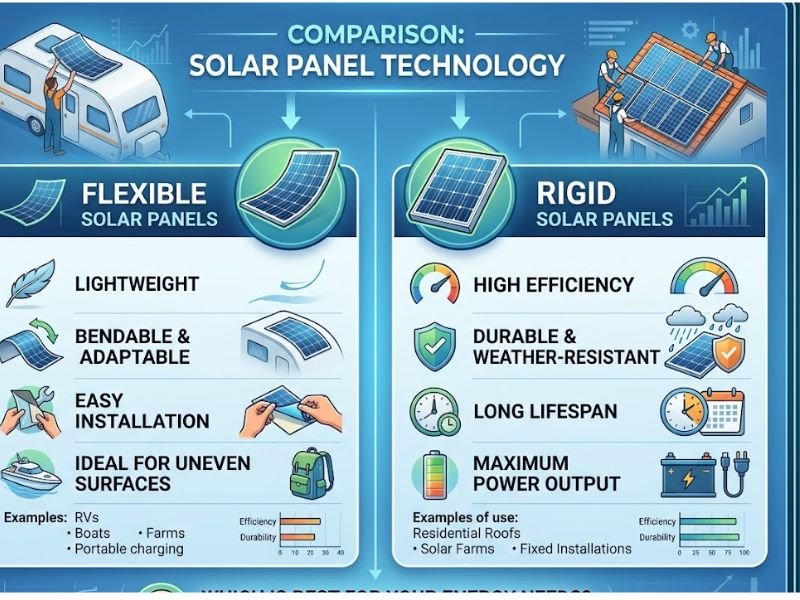
The main difference between flexible and rigid panels is their construction and intended use. Flexible panels are usually thinner and lighter than traditional solar panels. Their design can make them suitable for surfaces where a conventional panel may be difficult to install.
Rigid panels are built with a solid frame and protective materials. They are commonly used in permanent residential, commercial, and off-grid solar installations. When comparing Flexible vs. Rigid Solar Panels, the best choice depends on how and where the panel will be used.
What Are Flexible Solar Panels?
Flexible solar panels are designed to be lightweight and, depending on the specific product, capable of adapting to slightly curved surfaces. They can be useful for RV roofs, boats, camping equipment, and other applications where weight and portability are important.
Their slim design may also make installation easier in locations where a traditional framed panel would be inconvenient. However, flexibility does not automatically mean that a panel can bend in every direction or at any angle. Each manufacturer specifies the maximum level of bending the panel can safely handle. Before installation, it is important to follow the manufacturer’s guidelines to avoid damaging the solar cells.
What Are Rigid Solar Panels?
Rigid solar panels are the traditional framed panels commonly seen on homes, commercial buildings, and ground-mounted solar systems. They are designed with a solid structure that protects the internal solar cells from environmental exposure. Because of their strong construction, rigid panels are often suitable for long-term installations.
They can be mounted on rooftops, ground structures, RVs, and other stable surfaces. Although they are generally heavier and less portable than flexible options, their design can provide advantages in durability and long-term use.
Flexible vs. Rigid Solar Panels: Weight and Portability
One of the biggest advantages of flexible panels is their lower weight. For people traveling in an RV, sailing on a boat, or carrying solar equipment for outdoor activities, reducing weight can be important. Flexible panels can also be easier to transport and handle during installation.
Rigid panels are usually heavier because of their frames and protective layers. However, the additional weight may be less important in a permanent installation. For a home or fixed off-grid system, durability and energy production may matter more than portability.
Efficiency and Energy Output
Efficiency is an important factor when choosing any solar panel. The actual energy output depends on the panel’s technology, size, sunlight conditions, installation angle, shading, temperature, and other environmental factors. A rigid panel may be a practical choice when maximum long-term energy production is the main priority, and there is enough space for installation.
Flexible panels can also provide useful energy generation, particularly when portability or installation flexibility is more important. Instead of assuming that one category is always more efficient, compare the specifications of individual products.
Durability and Lifespan
Durability is another important consideration in the Flexible vs. Rigid Solar Panels comparison. Rigid panels are designed with a strong frame and protective covering, which can make them suitable for long-term exposure to weather conditions.
Flexible panels are thinner and may require more careful installation and handling. Heat management can also be important. A solar panel installed directly against a surface may have less airflow than a raised panel installation. Since high temperatures can affect solar performance, installation design should support the product’s recommended operating conditions. For permanent installations, expected lifespan and warranty coverage should be carefully compared.
Installation Requirements
Flexible panels can offer advantages when installing solar equipment on curved or unusual surfaces. They may require fewer mounting components than traditional framed panels, depending on the installation method. However, the installation surface must still be suitable and capable of supporting the system.
Rigid panels usually require mounting brackets, rails, or other hardware. This can involve more installation work, but it may provide better structural support and ventilation. For large residential systems, professional installation may be appropriate to ensure electrical and structural safety.
Flexible vs. Rigid Solar Panels for RVs and Boats
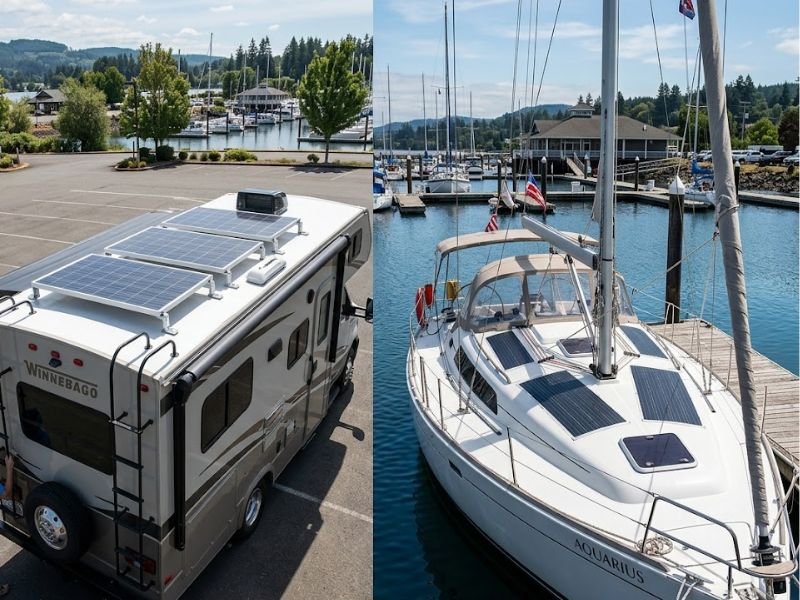
For RVs, vans, and boats, the choice often depends on available space, weight limits, and surface shape. Flexible panels may be useful when the installation surface is curved or when keeping weight low is important. Rigid panels may be a better option when the surface is flat, and there is enough room for mounting hardware.
Ventilation, exposure to vibration, weather conditions, and maintenance access should also be considered. The best option is not always the thinnest or lightest panel. A well-designed installation that matches the vehicle or vessel can provide better long-term performance.
Cost and Value
The purchase price is only one part of the total cost. When comparing Flexible vs. Rigid Solar Panels, consider installation expenses, mounting hardware, expected lifespan, warranty, maintenance requirements, and energy output. A cheaper panel may not always offer the best long-term value.
Likewise, an expensive panel may include features that are unnecessary for a simple portable setup. Calculate how much energy you need and choose a system designed for that purpose. This approach can help you avoid paying for more capacity than necessary.
Choosing the Right Solar Energy Solutions
The right solar energy solutions depend on your specific goals. For permanent home installations, rigid panels may be a practical choice because of their strong structure and suitability for larger systems.
For camping, mobile use, or surfaces where weight is a major concern, flexible panels may offer greater convenience.
Before making a decision, consider these questions:
- How much electricity do you need?
- Is the installation permanent or portable?
- How much space is available?
- Is the surface flat or curved?
- Are weight limits important?
- What weather conditions will the panel experience?
- What is the expected lifespan?
- What warranty does the manufacturer provide?
Answering these questions can make the decision much easier.
Maintenance and Performance
Both types of solar panels benefit from regular inspection. Dust, leaves, bird droppings, and other debris can reduce the amount of sunlight reaching the solar cells. Inspect cables, connectors, and mounting components regularly for signs of wear or damage. Cleaning methods should follow the manufacturer’s recommendations. Using unsuitable chemicals or abrasive materials could damage the panel surface.
Monitoring energy output can also help identify problems. A sudden or unexpected decrease in production may indicate shading, dirt, connection issues, or equipment failure.
Environmental Benefits of Solar Power
Solar technology can help generate electricity from sunlight and reduce dependence on conventional energy sources. However, the environmental impact of a solar system depends on its complete lifecycle, including manufacturing, transportation, installation, operation, and eventual disposal or recycling.
Choosing durable equipment and maintaining it properly can help extend its useful life. As solar technology continues to improve, recycling and resource recovery are also becoming increasingly important parts of the broader renewable energy industry.
Flexible vs. Rigid Solar Panels: Which One Should You Choose?
The answer depends on your situation. Choose flexible panels if portability, low weight, or installation on a slightly curved surface is your main priority. Choose rigid panels if you need a strong, stable system for long-term energy production and have enough space for proper mounting. For some users, a combination of different solar energy solutions may also make sense.
For example, a permanent rigid system could provide regular power at home, while a smaller portable or flexible panel could be used for travel or outdoor activities. The best system is the one that matches your actual energy requirements and installation conditions.
Conclusion
The decision between Flexible vs. Rigid Solar Panels depends on portability, durability, installation requirements, available space, and long-term energy goals. Flexible solar panels can be an attractive choice for RVs, boats, camping, and lightweight applications, while rigid solar panels are often better suited to permanent and larger installations. Before buying, compare individual product specifications, warranties, installation requirements, and expected energy output. By choosing the right option for your needs, you can build more effective and reliable solar energy solutions for your home, vehicle, or outdoor lifestyle.
FAQs
What is the main difference between flexible and rigid solar panels?
Flexible panels are generally thinner and lighter, while rigid panels use a solid frame and protective structure designed for stable installations.
Are flexible solar panels good for RVs?
Yes, flexible panels can be useful for RVs, particularly when weight or surface shape is an important consideration. Always check the installation requirements for the specific product.
Are rigid solar panels more durable?
Rigid panels are generally designed with stronger physical protection, making them well suited for long-term installations. Actual durability varies by manufacturer and model.
Which type produces more electricity?
Energy output depends on the individual panel’s size, technology, efficiency, sunlight exposure, temperature, shading, and installation conditions.
Are flexible solar panels easy to install?
They can be easier to handle because of their lightweight design, but proper installation is still essential. Follow the manufacturer’s recommendations for mounting, bending limits, wiring, and ventilation.
Which solar panel is better for a home?
For a permanent home installation, rigid panels are often a practical choice because they are designed for stable, long-term mounting. The ideal system should be selected based on your roof, energy needs, budget, and local installation requirements.


