
Robotics has moved from being a specialized technology used mainly in factories to becoming an important part of modern life and business. A general robotics company can play an important role in developing intelligent machines that help businesses automate repetitive tasks, improve productivity, reduce operational costs, and work more safely. As artificial intelligence, sensors, computer vision, and machine learning continue to advance, robots are becoming more capable of understanding their surroundings and performing increasingly complex tasks across different industries.
What Is a General Robotics Company?
A general robotics company typically focuses on developing robotic technologies that can be adapted to different environments and applications. Instead of designing robots for only one narrow task, companies in this field may work on flexible robotic systems capable of performing multiple activities. These systems can combine mechanical engineering with artificial intelligence, cameras, sensors, software, and advanced control systems.
Modern robotics is no longer limited to robotic arms working on assembly lines. Robots can now be designed to move through warehouses, assist with logistics, inspect equipment, support healthcare workers, perform agricultural tasks, and interact with people. This broader approach is helping robotics become a more practical technology for businesses of different sizes.
How a General Robotics Company Uses Artificial Intelligence
Artificial intelligence has become one of the most important technologies behind modern robotics. Traditional robots usually followed carefully programmed instructions and operated in controlled environments. AI-powered robots can potentially process information from their surroundings and make decisions based on changing conditions.
A general robotics company can combine AI with computer vision, machine learning, and sensor technology to make robots more adaptable. Cameras can help robots identify objects, while sensors can provide information about distance, movement, temperature, or obstacles. AI software can then process this information and help the robotic system determine an appropriate action.
This combination of robotics and AI is particularly useful in environments where conditions are not always predictable. Instead of repeating exactly the same movement, an intelligent robot may be able to adjust its actions based on what it detects around it.
Robotics in Manufacturing
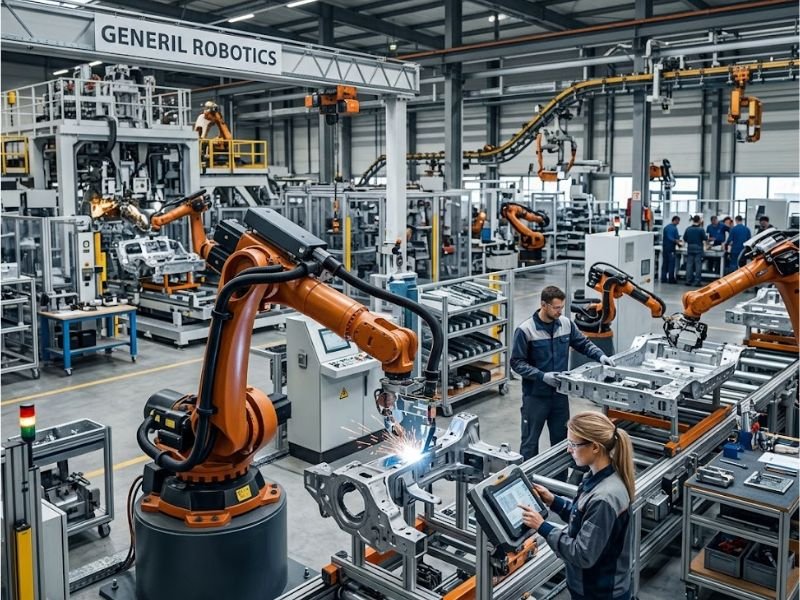
Manufacturing remains one of the largest applications of robotics. Industrial robots can perform repetitive processes such as welding, assembly, packaging, painting, and material handling. These machines can operate for long periods with consistent accuracy, making them valuable for businesses focused on productivity and quality.
Robotics can also improve workplace safety by allowing machines to handle tasks that involve heavy materials, extreme temperatures, hazardous chemicals, or repetitive physical movements. Human employees can then focus on supervision, maintenance, quality control, and more complex responsibilities.
As robotic systems become more flexible, smaller manufacturers may also find opportunities to introduce automation without completely redesigning their production processes.
Robotics in Warehousing and Logistics
The rapid growth of online shopping has increased demand for efficient logistics and warehouse operations. Robots are increasingly being used to move products, organize inventory, transport packages, and support order fulfillment.
Autonomous mobile robots can navigate warehouse environments and transport goods between different locations. Advanced systems can use cameras, sensors, maps, and software to avoid obstacles and select efficient routes.
A general robotics company can contribute to this transformation by developing flexible robotic platforms that can work alongside human employees. Rather than replacing every warehouse worker, robots can take care of repetitive transportation tasks while people handle activities requiring judgment, communication, and problem-solving.
Robotics in Healthcare
Healthcare is another area where robotics has significant potential. Robots can support medical professionals in several ways, including surgical assistance, rehabilitation, patient transportation, laboratory automation, and hospital logistics.
Robotic systems can help improve precision during certain medical procedures, while rehabilitation robots can assist patients with controlled physical movements. In hospitals, robots may also transport supplies, medications, or equipment between departments.
However, healthcare robotics requires particularly high standards for reliability, safety, privacy, and regulatory compliance. Successful robotic solutions need to be designed with both technological performance and patient safety in mind.
Robotics in Agriculture
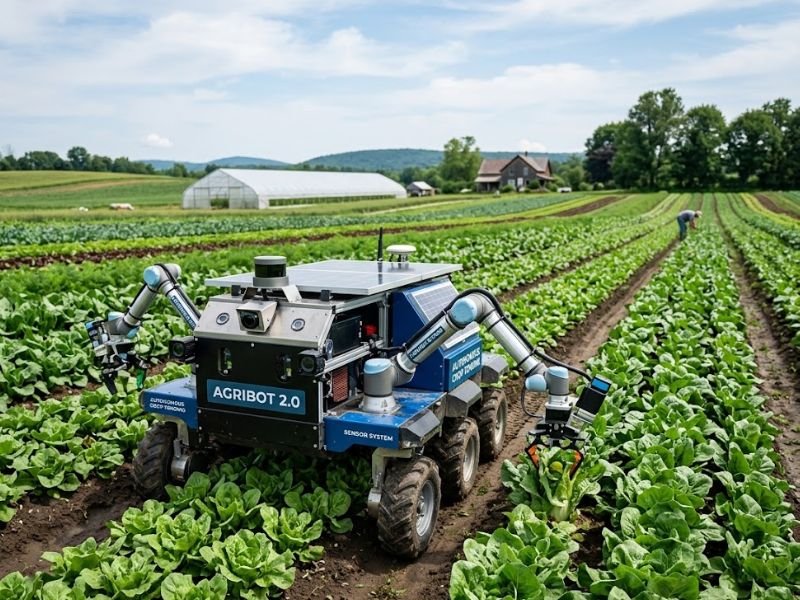
Agriculture is facing increasing pressure to produce more food efficiently while managing labor and resource challenges. Robotics can help farmers automate tasks that traditionally require significant amounts of manual work.
Agricultural robots can be designed for activities such as crop monitoring, harvesting, planting, weed detection, and precision spraying. Computer vision and AI can help machines identify plants, detect potential problems, and collect useful information about agricultural environments.
The future of agricultural robotics may involve fleets of smaller autonomous machines working across farms. These systems could potentially perform specific tasks while collecting data that helps farmers make better decisions.
Robotics and Workplace Safety
One of the strongest advantages of robotics is the ability to move dangerous or physically demanding tasks away from people. Robots can work in environments where humans may face risks from heavy machinery, toxic substances, extreme temperatures, or unstable conditions.
Collaborative robots, often called cobots, are particularly interesting because they are designed to work alongside human employees. With appropriate sensors and safety systems, these robots can assist workers without requiring complete separation between humans and machines.
A general robotics company can help businesses identify tasks where automation improves both efficiency and workplace safety. The goal is not simply to automate everything but to determine where robotic assistance creates genuine value.
The Future of General Robotics Company Technology
The future of robotics is likely to involve greater autonomy, better AI models, improved sensors, and more natural interaction between humans and machines. Robots are expected to become more capable of learning from their environments and adapting to new tasks.
Humanoid robotics is also receiving significant attention because human-designed environments contain stairs, doors, shelves, tools, and workspaces built around the human body. Robots with more human-like movement could potentially operate in existing environments without requiring major infrastructure changes.
At the same time, software will become just as important as hardware. Improvements in AI could allow robots to understand instructions expressed in natural language and translate them into physical actions.
Why Businesses Are Investing in Robotics
Businesses invest in robotics for several reasons. Automation can increase productivity, improve consistency, reduce certain operational costs, and help address repetitive or physically demanding work. Robots can also collect operational data that businesses can use to identify inefficiencies.
However, successful automation requires careful planning. Companies need to consider the cost of robotic equipment, software, maintenance, employee training, integration, and long-term support.
The best approach is often to begin with a specific problem rather than purchasing technology simply because it is new. A clear automation strategy can help businesses determine whether robotics will provide a meaningful return on investment.
Challenges Facing the Robotics Industry
Despite rapid progress, robotics still faces important challenges. Developing reliable robots can be expensive, particularly when machines must operate safely in unpredictable environments. Hardware also requires maintenance, while software needs regular updates and testing.
Another challenge is integrating robots with existing business systems. A robotic platform may work well independently but become much more valuable when it can communicate with inventory systems, manufacturing software, or other workplace technologies.
There are also questions around workforce changes, cybersecurity, privacy, and responsible use of AI. As robots become more intelligent and connected, companies will need to consider these issues alongside technical performance.
Conclusion
A general robotics company can help accelerate the transition toward a future where intelligent machines work alongside people across manufacturing, logistics, healthcare, agriculture, and many other industries. The combination of robotics, artificial intelligence, computer vision, and advanced sensors is making machines more capable and adaptable than previous generations.
Robotics will not solve every business challenge, but it can provide valuable solutions when applied to the right problems. As technology continues to improve, businesses that carefully evaluate automation opportunities may be able to increase efficiency while creating safer and more productive workplaces.
FAQs
What does a general robotics company do?
A general robotics company develops robotic hardware, software, AI systems, sensors, and related technologies that can be used across multiple applications and industries.
How is AI changing robotics?
AI allows robots to process information from their surroundings, recognize objects, understand patterns, and potentially adapt their actions instead of relying entirely on fixed instructions.
Which industries use robotics?
Robotics is widely used in manufacturing and logistics and is increasingly being adopted in healthcare, agriculture, construction, retail, hospitality, and other industries.
Are robots replacing human workers?
Robots can automate certain repetitive or dangerous tasks, but they also create demand for people who design, program, operate, maintain, and manage robotic systems. The impact varies significantly by industry and type of work.
What is the future of robotics?
The future is likely to include more autonomous robots, AI-powered machines, collaborative robots, humanoid systems, improved computer vision, and robots capable of performing a wider range of tasks.