

Introduction
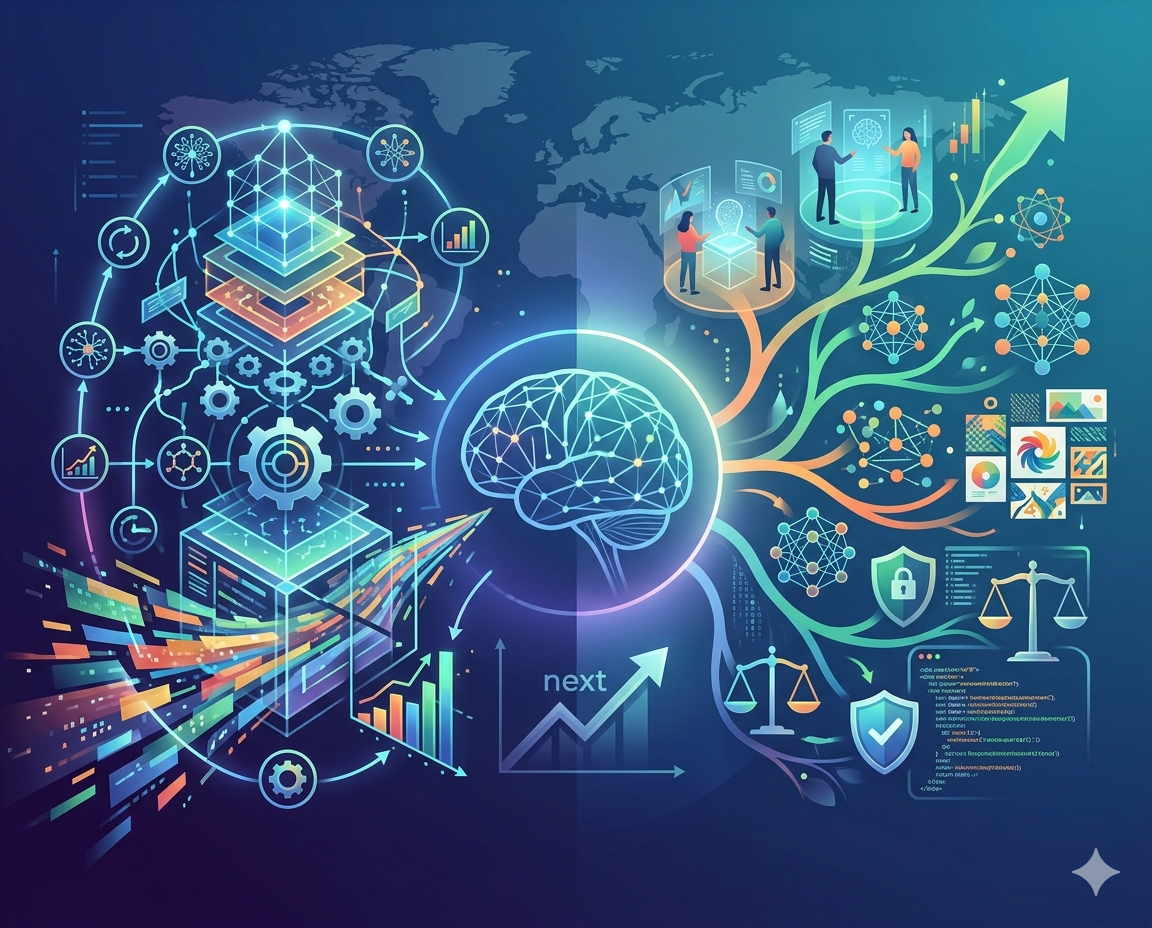
Artificial intelligence has made remarkable progress in recent years, powering everything from chatbots and recommendation systems to autonomous vehicles and advanced robotics. However, many experts believe that current AI systems still lack a true understanding of the world around them. This is where the Yann LeCun World Models Bet comes into focus. As one of the most influential figures in AI, Yann LeCun has consistently argued that future AI systems must develop internal representations of the world to achieve human-like intelligence. His vision for World models AI could significantly influence the next generation of artificial intelligence and reshape how machines learn, reason, and interact with their environments.
Who Is Yann LeCun?
The discussion surrounding the Yann LeCun World Models Bet begins with understanding the person behind the idea. Yann LeCun is one of the pioneers of modern artificial intelligence and deep learning. His contributions to neural networks and machine learning have helped lay the foundation for many AI technologies used today.
Through years of Yann LeCun AI research, he has explored how machines can learn from data and improve their ability to solve complex problems. While many AI systems rely heavily on massive datasets and pattern recognition, LeCun believes future systems need deeper reasoning capabilities to achieve more advanced forms of intelligence.
His research continues to influence the direction of AI development across academia and industry.
What Are World Models AI?
At the center of the Yann LeCun World Models Bet is the concept of World models AI. A world model is an internal representation that allows an AI system to understand how its environment works and predict future outcomes.
Humans naturally develop mental models of the world through observation and experience. For example, people understand that objects fall due to gravity, that actions have consequences, and that events often follow predictable patterns. These mental models help humans make decisions and adapt to new situations.
LeCun argues that AI systems should develop similar capabilities. Instead of simply recognizing patterns, future AI should understand cause-and-effect relationships and anticipate what may happen next.
Why Current AI Systems Have Limitations
Today’s AI systems are extremely powerful in specific tasks, but they still face significant limitations. Many models excel at generating text, recognizing images, and analyzing data, yet they often struggle with common-sense reasoning and real-world understanding.
This challenge is one of the primary motivations behind the Yann LeCun World Models Bet. Current AI models often require enormous amounts of data and computing power to perform effectively. They may also produce incorrect answers because they lack a genuine understanding of the physical and social world.
By incorporating World models AI, researchers hope to create systems that can learn more efficiently, adapt more easily, and make better decisions in unfamiliar situations.
How World Models Could Transform Artificial Intelligence
The development of world models could significantly improve the capabilities of future AI systems. Instead of reacting only to patterns found in training data, AI would be able to simulate possible outcomes before taking action.
For example, an autonomous vehicle could predict the movement of pedestrians and other vehicles more accurately. A robotic assistant could understand how objects behave in physical environments before attempting tasks. AI systems could also improve planning, reasoning, and problem-solving abilities.
This vision is central to the Yann LeCun World Models Bet, which suggests that future AI should learn by observing the world and building predictive models rather than relying solely on supervised training methods.
The result could be more intelligent, efficient, and adaptable AI systems capable of handling complex real-world challenges.
The Role of Yann LeCun AI Research
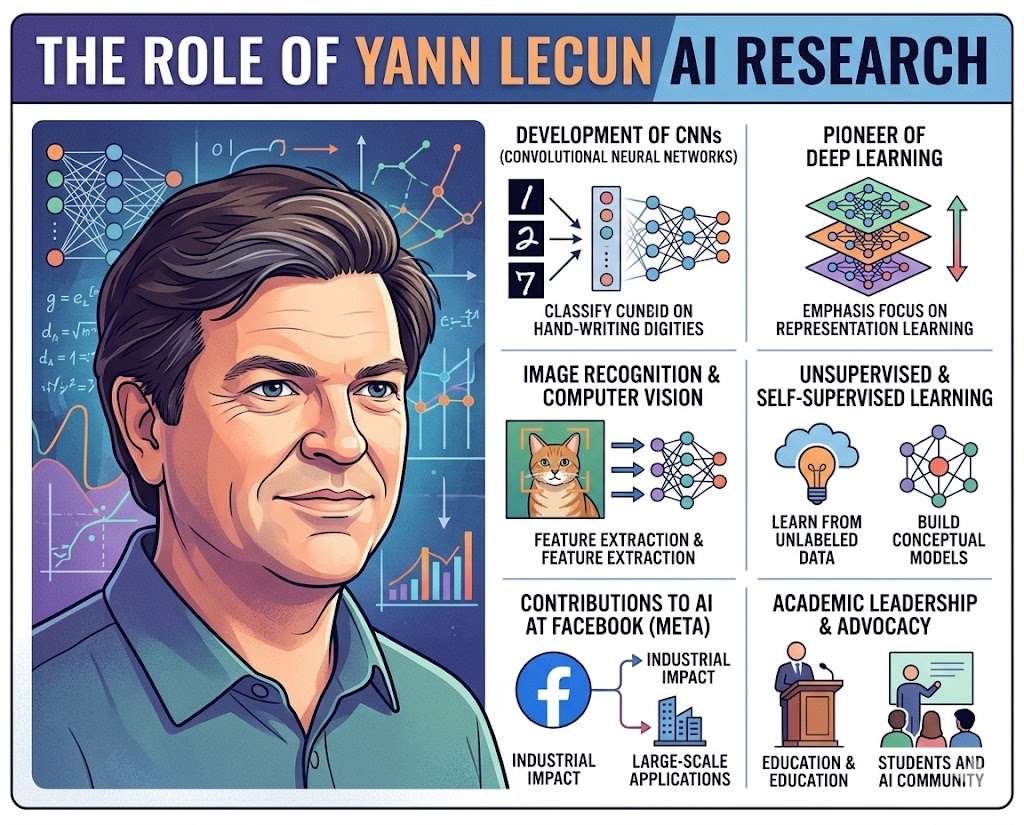
The importance of Yann LeCun AI research extends beyond theoretical discussions. His work actively explores methods that allow machines to learn through observation and prediction rather than explicit instruction.
LeCun has emphasized self-supervised learning as a promising approach for developing world models. In self-supervised learning, AI systems discover patterns and relationships from raw data without requiring extensive human labeling.
This approach more closely resembles how humans learn about the world. Children learn by observing their surroundings, predicting outcomes, and adjusting their understanding over time. Applying similar principles to AI may help create systems that develop richer and more accurate world models.
Researchers worldwide are now investigating these ideas as part of broader efforts to advance artificial intelligence.
Challenges Facing World Models AI
Although the concept is promising, building effective World models AI presents significant challenges. Real-world environments are incredibly complex, and accurately modeling them requires advanced computational capabilities.
AI systems must learn not only physical rules but also social interactions, language, uncertainty, and abstract concepts. Creating models that can generalize across diverse situations remains a difficult research problem.
Another challenge involves balancing accuracy with efficiency. Large-scale world models may require substantial computing resources, making practical implementation more difficult.
Despite these obstacles, many researchers believe that overcoming these challenges could lead to major breakthroughs in AI capabilities.
The Future of Artificial Intelligence
The Yann LeCun World Models Bet represents a bold vision for the future of artificial intelligence. Rather than focusing solely on larger datasets and bigger models, this approach emphasizes understanding, reasoning, and prediction.
As research progresses, world models could become a foundational component of next-generation AI systems. These systems may eventually demonstrate stronger common-sense reasoning, improved adaptability, and greater autonomy across various applications.
Industries such as robotics, healthcare, transportation, education, and scientific research could all benefit from AI systems capable of understanding and predicting the world more effectively.
Conclusion
The Yann LeCun World Models Bet highlights an important direction for the future of artificial intelligence. Through the development of World models AI, researchers hope to create systems that move beyond pattern recognition and achieve deeper understanding of the world around them.
Driven by ongoing Yann LeCun AI research, this approach could lead to more capable, efficient, and intelligent AI systems. While significant challenges remain, world models offer a compelling path toward the next generation of artificial intelligence and may play a crucial role in shaping the future of technology.
FAQs
1. What is the Yann LeCun World Models Bet?
It is Yann LeCun’s belief that AI systems need internal world models to achieve more advanced reasoning and understanding.
2. What are World Models AI?
World models are internal representations that help AI systems predict outcomes and understand how environments function.
3. Why are world models important for AI?
They can improve reasoning, planning, adaptability, and common-sense understanding.
4. What is Yann LeCun known for?
Yann LeCun is a leading AI researcher and one of the pioneers of deep learning and neural networks.
5. Could world models lead to human-level AI?
Many researchers believe world models could be an important step toward more advanced and human-like artificial intelligence.