

Introduction
Manufacturing industries are rapidly embracing automation to improve productivity, reduce costs, and maintain consistent product quality. One technology gaining significant attention is the arc welding robot. As production demands continue to increase, manufacturers are looking for solutions that can perform repetitive welding tasks with greater precision and efficiency than traditional methods. Modern robotic welding systems are helping companies streamline operations while improving workplace safety and reducing errors. From automotive production lines to heavy machinery manufacturing, arc welding robots are becoming an essential part of industrial automation strategies.
What Is an Arc Welding Robot?
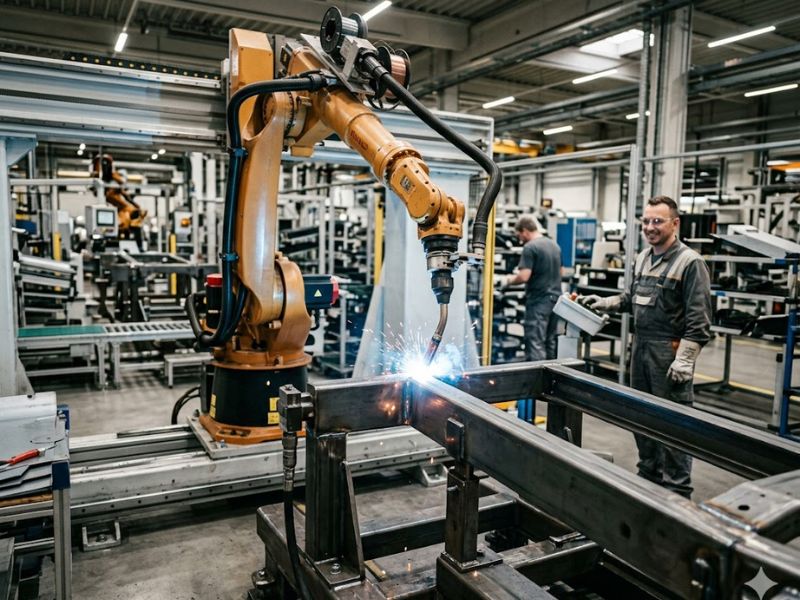
An arc welding robot is an automated machine designed to perform welding operations using an electric arc to join metal components. These robots are programmed to follow precise welding paths, ensuring consistent weld quality across large production runs.
Unlike manual welding, robotic systems can operate continuously with minimal interruptions. They use advanced sensors, motion control systems, and software to achieve high levels of accuracy. As manufacturing processes become more complex, businesses are increasingly relying on automation to maintain quality standards and improve efficiency.
The growing adoption of robotic welding technology reflects the industry’s shift toward smarter and more automated production environments.
Why Manufacturers Are Choosing Robotic Welding Systems
One of the primary reasons manufacturers invest in robotic welding systems is productivity. Manual welding can be time-consuming and dependent on operator skill levels. In contrast, robots can perform repetitive tasks quickly and consistently without fatigue.
Robotic systems can operate around the clock, significantly increasing production output. This capability is especially valuable for industries with high-volume manufacturing requirements, such as automotive, aerospace, and industrial equipment production.
Consistency is another major advantage. Every weld follows the same programmed specifications, reducing variations that can affect product quality. This helps manufacturers maintain strict quality control standards while minimizing costly rework.
The Benefits of Automated Welding Technology
Modern automated welding technology offers several benefits beyond productivity improvements. One key advantage is precision. Robots can execute complex welds with a high degree of accuracy, reducing defects and improving overall product reliability.
Automation also helps reduce material waste. Consistent welding performance minimizes errors that may require additional materials for corrections or repairs. This contributes to cost savings and improved resource utilization.
Another benefit is scalability. Manufacturers can increase production capacity more easily by deploying additional robotic systems without significantly expanding their workforce. This flexibility supports business growth while maintaining operational efficiency.
As technology advances, automated welding solutions continue becoming more intelligent and capable of handling increasingly sophisticated tasks.
Improving Workplace Safety
Workplace safety is a major factor driving investment in the arc welding robot market. Welding environments often expose workers to heat, sparks, fumes, and repetitive physical movements. While safety measures can reduce risks, automation provides an additional layer of protection.
By assigning hazardous or repetitive tasks to robots, companies can reduce employee exposure to potentially dangerous working conditions. Human workers can instead focus on monitoring, programming, maintenance, and quality assurance activities.
This shift not only improves safety outcomes but also helps manufacturers address labor shortages by creating more skilled and less physically demanding job roles within production facilities.
How Industrial Welding Robots Increase Efficiency
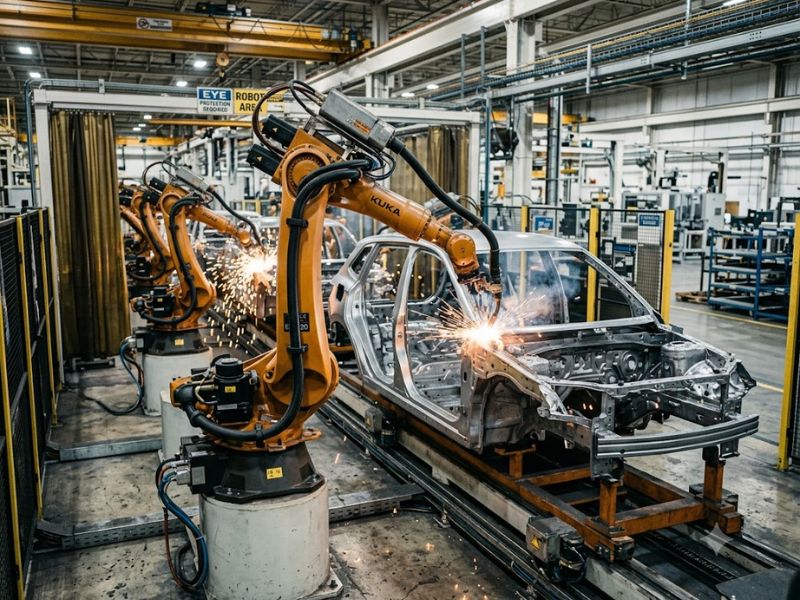
An industrial welding robot is designed to maximize operational efficiency through speed, accuracy, and reliability. Unlike manual processes, robotic systems can maintain consistent performance throughout extended production shifts.
Advanced programming capabilities allow robots to switch between different welding tasks quickly, reducing downtime during production changes. Many modern systems also integrate with smart manufacturing platforms, enabling real-time monitoring and performance analysis.
Data collected from robotic systems helps manufacturers identify opportunities for optimization, predictive maintenance, and continuous improvement. These capabilities contribute to higher productivity and more efficient resource management.
As Industry 4.0 technologies continue evolving, industrial welding robots are becoming increasingly connected and intelligent.
Applications Across Industries
The use of arc welding robot technology extends across numerous industries. Automotive manufacturers rely on robotic welding systems to produce vehicle frames, body panels, and structural components with exceptional consistency.
Heavy equipment manufacturers use automated welding technology to assemble machinery that requires strong and reliable welds. The aerospace sector also benefits from robotic precision when producing critical aircraft components.
Additional applications include shipbuilding, construction equipment manufacturing, energy infrastructure, and metal fabrication. The versatility of robotic welding solutions makes them valuable for a wide range of industrial production environments.
Future Trends in Welding Automation
The future of robotic welding systems looks promising as artificial intelligence, machine vision, and machine learning technologies continue advancing. Future systems may become even more autonomous, capable of adapting to changing conditions and optimizing welding parameters automatically.
Collaborative robots, often called cobots, are also gaining popularity. These systems can work alongside human operators, combining robotic precision with human flexibility.
As manufacturing becomes increasingly data-driven, automated welding technology will play a critical role in supporting smart factories and digital transformation initiatives.
The continued evolution of automation is expected to further increase the value and capabilities of industrial welding solutions.
Conclusion
The growing popularity of the arc welding robot reflects manufacturers’ commitment to improving productivity, quality, and workplace safety. Through advanced robotic welding systems, businesses can achieve consistent results while reducing costs and increasing operational efficiency.
The benefits of automated welding technology include greater precision, reduced material waste, improved worker safety, and enhanced production capacity. As the manufacturing industry continues embracing automation, the industrial welding robot will remain a key driver of innovation and competitiveness.
For companies seeking to modernize their operations and prepare for the future of manufacturing, investing in welding automation represents a strategic and forward-thinking decision.
FAQs
1. What is an arc welding robot?
An arc welding robot is an automated machine that uses an electric arc to perform welding operations with high precision and consistency.
2. Why are manufacturers investing in robotic welding systems?
They improve productivity, reduce costs, enhance quality control, and support workplace safety initiatives.
3. What are the benefits of automated welding technology?
Benefits include faster production, greater accuracy, reduced waste, and consistent weld quality.
4. Where are industrial welding robots commonly used?
They are widely used in automotive, aerospace, heavy equipment, shipbuilding, and metal fabrication industries.
5. Will welding robots replace human workers?
Robots typically handle repetitive and hazardous tasks, while human workers focus on programming, maintenance, quality control, and supervision.