


Few historical sites in the United States are as iconic or emotionally charged as the Alamo. This modest mission-turned-fortress in San Antonio, Texas, has become a symbol of courage, sacrifice, and the enduring pursuit of freedom. While the battle itself lasted only 13 days in 1836, the story of the Alamo continues to resonate nearly two centuries later. From its early origins as a Spanish mission to its modern role as a museum and cultural landmark, the Alamo remains a powerful touchstone in American memory.
This article explores the history, significance, and ongoing influence of the Alamo, highlighting the reasons why this small mission still captures the imagination of millions.
The Origins of the Alamo
Long before it became synonymous with battle and bravery, the Alamo began simply as Mission San Antonio de Valero, established in 1718 by Spanish missionaries. The mission’s original purpose was to convert local Indigenous populations to Christianity and integrate them into Spanish colonial society. The name “Alamo” came later, likely derived from a Spanish military unit that garrisoned the mission in the early 1800s. The soldiers referred to their post as “El Álamo” in honor of their hometown of Alamo de Parras.
By the early 19th century, as control of the region shifted between Spanish, Mexican, and Texian authorities, the mission grew increasingly militarized. Its thick walls, central courtyard, and enclosed rooms made it a practical—though not ideal—defensive structure. By the time of the Texas Revolution, the Alamo had evolved into a strategic military fort.
The Road to Revolution
Tensions had been building between Anglo-American settlers and the Mexican government throughout the early 1830s. Many settlers, known as Texians, resisted Mexico’s attempts to centralize authority and limit immigration from the United States. When open rebellion broke out in 1835, Texians won a series of quick victories and forced Mexican troops from several key locations, including San Antonio and the Alamo.
Recognizing the mission’s strategic value, Texian forces occupied the Alamo and prepared for a counterattack they knew would come. That counterattack would arrive in February 1836, led by Mexican President and General Antonio López de Santa Anna, who was determined to crush the rebellion and reassert control.
The Battle of the Alamo
A 13-Day Siege
On February 23, 1836, Santa Anna’s army—numbering between 1,500 and 6,000 men—surrounded the Alamo. Inside the fort were roughly 180–200 defenders. Among them were legendary figures such as James Bowie, William B. Travis, and frontiersman Davy Crockett. Despite being vastly outnumbered and lacking sufficient reinforcements, the Texian defenders refused to surrender.
For nearly two weeks, Mexican artillery pounded the walls while the defenders maintained their resolve. Travis famously wrote his “Victory or Death” letter during the siege, appealing for aid but vowing to stand firm.
The Final Assault
Before dawn on March 6, Santa Anna launched a full-scale assault. Mexican troops overcame the outer defenses and poured into the compound. The fighting inside the Alamo was fierce and decisive. Within about 90 minutes, the defenders were overwhelmed. Almost all were killed, though exact numbers remain debated.
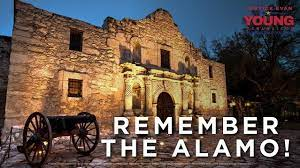
While the battle was an overwhelming military victory for Santa Anna, it became a defining moment of the Texas Revolution. The rallying cry “Remember the Alamo!” would soon echo across Texas, inspiring rebel forces to fight with renewed determination.
The Aftermath and Legacy
A Turning Point in the Texas Revolution
Just six weeks after the fall of the Alamo, Texian forces led by Sam Houston defeated Santa Anna at the Battle of San Jacinto. During the battle, the Texians repeatedly shouted “Remember the Alamo!” as they charged the Mexican lines. The victory secured Texas independence and transformed the Alamo into a symbol of heroic resistance.
Myth, Memory, and Meaning
In the years that followed, the Alamo took on a larger-than-life status. Writers, historians, and political leaders emphasized the courage and sacrifice of its defenders. Though some details were mythologized—especially in popular culture—the central message remained: the Alamo represented the cost of freedom and the strength of human resolve.
The site itself underwent decades of neglect before preservationists intervened in the late 19th century. The Daughters of the Republic of Texas played a key role in preserving the remains of the mission, ensuring the Alamo became a lasting public monument.
The Alamo in American Culture
Literature and Film
The story of the Alamo has inspired countless books, songs, and movies. From early Western novels to Hollywood films such as John Wayne’s The Alamo (1960), the battle has been retold through varying lenses. These portrayals often blend fact with legend, but their popularity demonstrates the enduring fascination with the event.
Tourism and Education
Today, the Alamo is one of the most visited historical sites in the United States. Millions travel to San Antonio each year to walk through its halls, view artifacts, and learn about the people who fought and died there. Educational programs, museum exhibitions, and guided tours help contextualize the historical complexities of the Alamo while preserving its legacy.
Symbolic Interpretations
Beyond its historical significance, the Alamo has become a symbol used in various political and cultural contexts. Some see it as a tribute to personal sacrifice and self-determination. Others interpret it within broader conversations about colonization, identity, and regional history. These diverse perspectives ensure that discussions about the Alamo remain dynamic and relevant.
Controversies and Evolving Perspectives
In recent decades, historians and cultural groups have reexamined the story of the Alamo through a more inclusive lens. This involves acknowledging the experiences of Tejanos (Texans of Mexican descent) who fought on both sides of the conflict, as well as the Indigenous communities affected by Spanish and Texian expansion.
While the popular narrative often emphasized a simple “heroic last stand,” modern scholarship highlights the complex political, cultural, and economic factors surrounding the Texas Revolution. These discussions do not diminish the bravery of the defenders; rather, they provide a fuller understanding of the past.
Visiting the Alamo Today
A visit to the Alamo offers a powerful experience. The site includes the historic church, long barracks, gardens, and a visitor center with exhibits. Walking through the grounds, one can sense the gravity of the events that took place there.
Visitors often reflect not only on the past but also on the broader themes of courage, struggle, and remembrance. The Alamo stands as a testament to the human capacity for resilience, even in the face of overwhelming odds.
Conclusion
The Alamo remains one of America’s most enduring and symbolic historical landmarks. Its story—rooted in conflict, courage, and sacrifice—continues to capture the imagination of generations. Whether viewed as a military turning point, a cultural touchstone, or a symbol of defiance, the Alamo’s significance endures.
“Remember the Alamo” is more than a slogan—it is a reminder of the people who stood their ground for what they believed in. As time passes, the challenge is to honor their legacy while also embracing a more complete and inclusive understanding of the history that shaped the Alamo and the world around it
