

Introduction
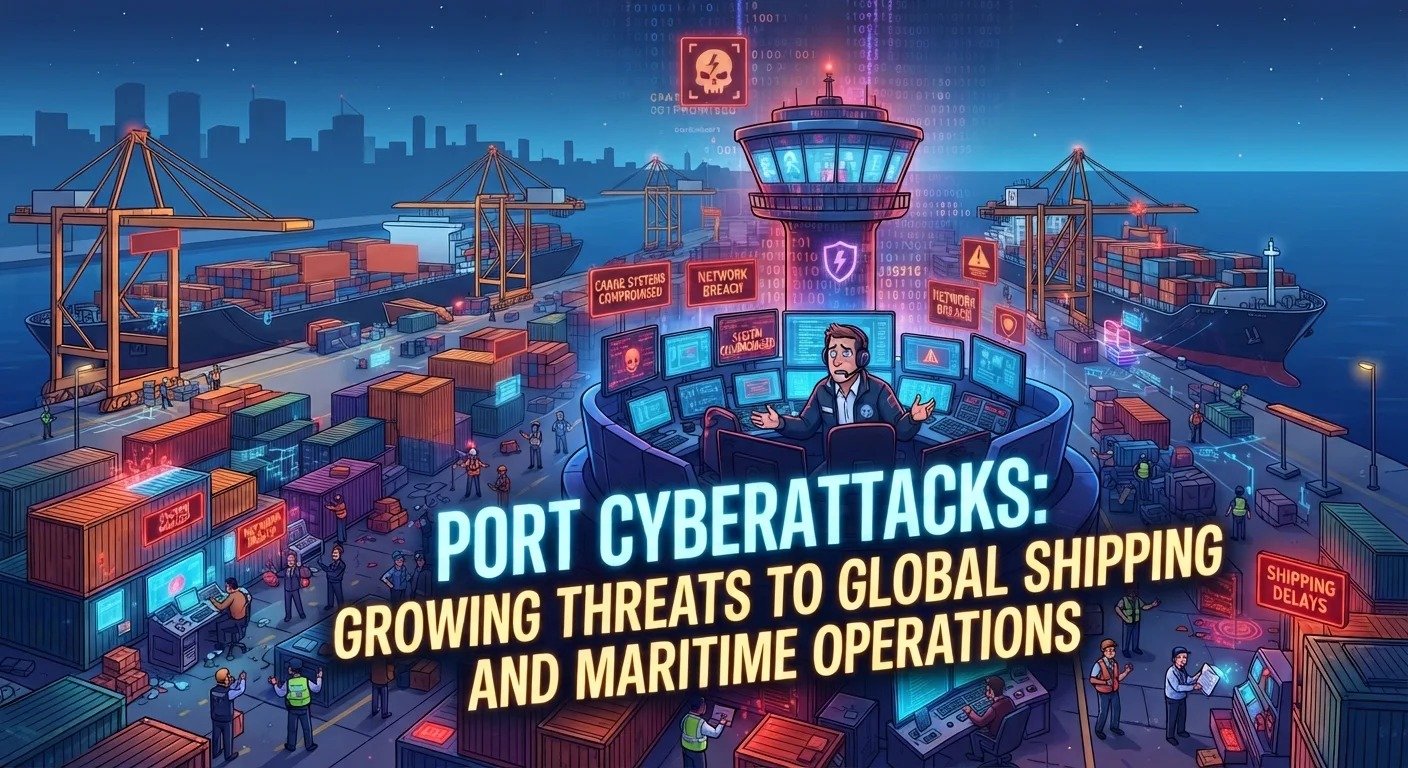
Global ports play an essential role in international trade, connecting businesses, manufacturers, shipping companies, and consumers worldwide. As ports increasingly depend on digital technologies to manage cargo, track shipments, control equipment, and coordinate transportation, cybersecurity has become a major concern. Port Cyberattacks are an increasing threat to maritime operations because hackers can target critical systems and disrupt activities that keep global supply chains moving.
Cybercriminals use different techniques, including ransomware, phishing, malware, and unauthorized network access, to exploit weaknesses in port infrastructure. A successful attack can cause operational delays, financial losses, data breaches, and serious security concerns. Therefore, strengthening cybersecurity is essential for protecting modern ports and maintaining reliable global shipping operations.
What Are Port Cyberattacks?
Port cyberattacks are malicious activities targeting the computer networks, digital infrastructure, and operational systems used by seaports and maritime facilities. These attacks may affect cargo management platforms, shipping databases, navigation technologies, communication networks, and automated terminal equipment.
Modern ports rely on interconnected information technology (IT) and operational technology (OT) systems. While these technologies improve efficiency, they can also introduce vulnerabilities when security measures are insufficient. According to the International Maritime Organization (IMO), compromised digital systems can create operational, safety, and security risks across the maritime industry.
Common Types of Cyberattacks Targeting Ports
Understanding common cyber threats helps port operators identify potential security weaknesses and develop effective protection strategies.
1. Ransomware Attacks
Ransomware is one of the most disruptive cyber threats facing maritime organizations. Attackers use malicious software to encrypt important files and systems, demanding payment to restore access. If port management or cargo tracking systems become unavailable, daily operations can slow down or stop completely.
2. Phishing and Social Engineering
Phishing attacks involve fraudulent emails, messages, or websites designed to trick employees into sharing login credentials or downloading malicious files. Cybercriminals may target port employees, shipping companies, and logistics providers to gain unauthorized access to sensitive systems.
3. Malware and Data Breaches
Malware can enter port networks through infected attachments, compromised software, or unsecured devices. Once inside a network, attackers may steal confidential information, monitor activities, or damage important digital resources.
4. GPS Spoofing and Navigation Attacks
Maritime operations depend on accurate navigation and positioning information. GPS spoofing involves transmitting false location signals to mislead navigation systems. Such interference can create confusion for vessels and increase safety risks during maritime operations.
How Port Cyberattacks Disrupt Global Shipping
Ports are important links in international supply chains, meaning even a localized cybersecurity incident can affect multiple businesses and transportation networks.
For example, the 2017 NotPetya malware attack severely affected A.P. Moller-Maersk, disrupting operations across its global network, including 17 container terminals. The incident demonstrated how malware can create widespread problems for shipping and cargo management.
Port cyberattacks can create several major consequences:
- Shipping delays: Disrupted scheduling and cargo management systems can slow down loading and unloading activities.
- Financial losses: Businesses may experience additional operating costs, delayed deliveries, and lost revenue.
- Supply chain disruption: Delays at major ports can affect manufacturers, retailers, and logistics providers.
- Data theft: Hackers may access confidential business information, customer records, and shipping documents.
- Operational risks: Attacks targeting industrial control systems may affect equipment, infrastructure, and worker safety.
These risks highlight why maritime cybersecurity should be treated as an essential part of port management.
Why Are Modern Ports Vulnerable to Cyberattacks?
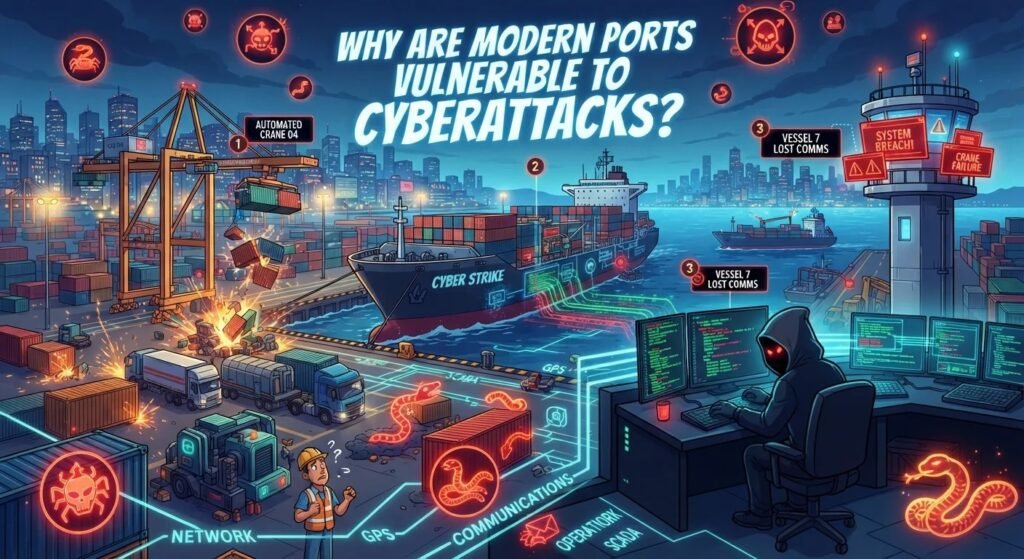
The growing use of automation and connected technologies has expanded the digital environment that port operators must protect. Many facilities use interconnected platforms to manage containers, monitor equipment, process shipping documents, and communicate with external service providers.
However, several factors can increase their vulnerability.
First, outdated software and legacy equipment may contain security weaknesses that attackers can exploit. Second, weak passwords and limited access controls can allow unauthorized individuals to enter important systems. Third, connections with third-party vendors and logistics partners may introduce additional security risks.
Furthermore, insufficient employee training can make phishing and social engineering attacks more successful. Without regular security assessments, organizations may struggle to identify weaknesses before attackers exploit them.
Effective Ways to Prevent Port Cyberattacks
Preventing cyber incidents requires a combination of technical security measures, employee awareness, and effective risk management.
1. Strengthen Network Security
Port operators should use firewalls, network monitoring, and proper network segmentation to protect critical systems. Separating business networks from operational technology networks can help prevent an attack from spreading across the entire facility.
2. Implement Multi-Factor Authentication
Multi-factor authentication adds another layer of protection to employee accounts. Even if attackers obtain a password, additional verification can make unauthorized access more difficult.
3. Update Software Regularly
Outdated software can contain vulnerabilities that cybercriminals exploit. Regular security updates and vulnerability assessments help organizations reduce these risks.
4. Train Employees
Employees should understand how to recognize suspicious emails, protect login credentials, and report unusual system activity. Regular cybersecurity training can reduce mistakes that lead to security incidents.
5. Maintain Data Backups
Regular backups help port operators recover important information after ransomware attacks or system failures. Backup copies should be protected and tested to ensure that recovery is possible when needed.
6. Develop an Incident Response Plan
Every port should have a clear cybersecurity response strategy. It should identify responsibilities, reporting procedures, system recovery steps, and communication processes during an incident.
The Future of Port Cybersecurity
The future of maritime security will depend heavily on how effectively ports adapt to emerging digital threats. Artificial intelligence (AI) can help security teams identify unusual network activity, analyze potential threats, and detect suspicious behavior more quickly.
Advanced monitoring tools, stronger access controls, and improved cooperation between port authorities, shipping companies, and technology providers will also play important roles.
International guidance from the IMO encourages maritime organizations to identify, protect, detect, respond to, and recover from cyber risks. Following these principles can help ports develop stronger and more resilient security strategies.
Conclusion
Port cyberattacks represent a serious challenge for global shipping and maritime operations. As ports become more digitally connected, protecting their networks, cargo management platforms, communication systems, and operational technologies becomes increasingly important.
By implementing strong security controls, updating software, training employees, and preparing effective incident response plans, port operators can reduce cybersecurity risks. Investing in maritime cybersecurity is not just about protecting technology; it is also about maintaining international trade, protecting critical infrastructure, and ensuring the continued reliability of global supply chains.
Frequently Asked Questions (FAQs)
1. What are port cyberattacks?
Port cyberattacks are malicious attempts to access, disrupt, damage, or steal information from the digital systems and networks used by ports and maritime facilities.
2. Why are ports vulnerable to cyberattacks?
Ports can be vulnerable because they depend on interconnected digital systems, outdated software, third-party networks, and automated equipment that may contain security weaknesses.
3. How do cyberattacks affect global shipping?
Cyberattacks can disrupt cargo handling, delay shipments, affect port scheduling, expose sensitive information, and create financial losses for shipping and logistics companies.
4. What types of cyber threats target maritime operations?
Common threats include ransomware, phishing, malware, data breaches, unauthorized network access, and GPS spoofing.
5. How can ports prevent cyberattacks?
Ports can improve protection through network segmentation, multi-factor authentication, regular software updates, employee training, secure backups, and continuous cybersecurity monitoring.