
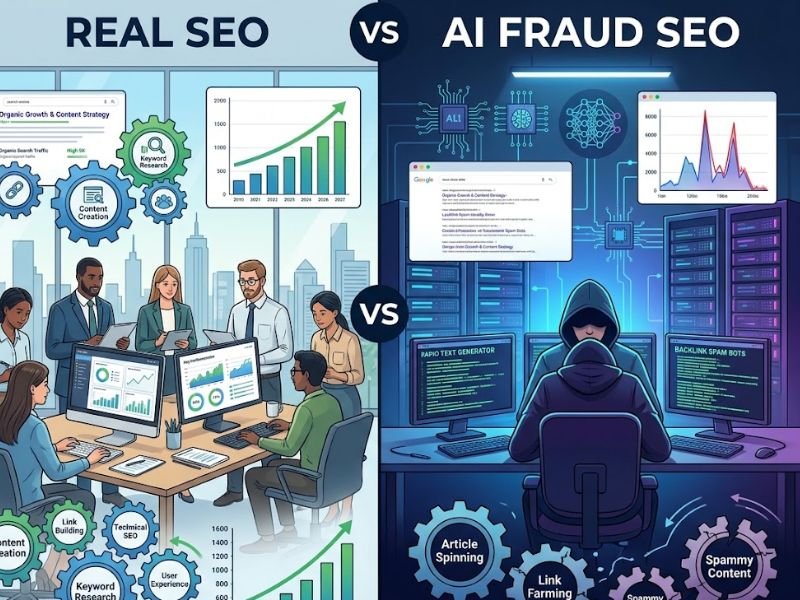

In today’s digital landscape, understanding Real SEO vs. AI Fraud SEO has become essential for every business owner, marketer, and website manager. As artificial intelligence tools become more accessible, a troubling trend has emerged: fraudulent agencies and individuals are using AI to fake rankings, generate spammy content, and manipulate search engines instead of following genuine optimization practices. This has made the debate of Real SEO vs. AI Fraud SEO more relevant than ever, because knowing the difference can save your website from penalties, wasted budgets, and long-term damage to your online reputation.
What Is Real SEO?
Real SEO is a long-term, ethical strategy built on genuine value for users. It focuses on keyword research, high-quality content, technical optimization, natural backlinks, and a smooth user experience. When comparing Real SEO vs. AI Fraud SEO, real SEO always prioritizes sustainable growth over quick, artificial results. It respects search engine guidelines and works to build trust with both users and algorithms like Google’s.
Real SEO practitioners focus on:
- Thorough keyword and competitor research
- Original, well-researched content
- Proper on-page optimization (titles, meta descriptions, headings)
- Natural link building through outreach and quality content
- Mobile-friendliness and fast page load speed
These efforts take time, but they build a foundation that search engines reward consistently.
What Is AI Fraud SEO?
AI Fraud SEO refers to the misuse of artificial intelligence tools to manipulate search rankings through deceptive or unethical means. This is the darker side of the Real SEO vs. AI Fraud SEO conversation. Fraudsters use AI to mass-produce low-quality content, generate fake reviews, create fake backlinks through private blog networks (PBNs), and even simulate fake traffic to trick algorithms into thinking a site is more popular than it actually is.
Common AI fraud tactics include:
- Mass-generated, duplicate, or spun content with no real value
- Fake or bot-generated backlinks
- Artificial traffic and click-through rate manipulation
- Fake reviews and testimonials created using AI writing tools
- Keyword stuffing disguised as “AI-optimized” content
While these tactics may show short-term ranking spikes, they almost always result in penalties once search engines detect the manipulation.
Key Differences Between Real SEO and AI Fraud SEO
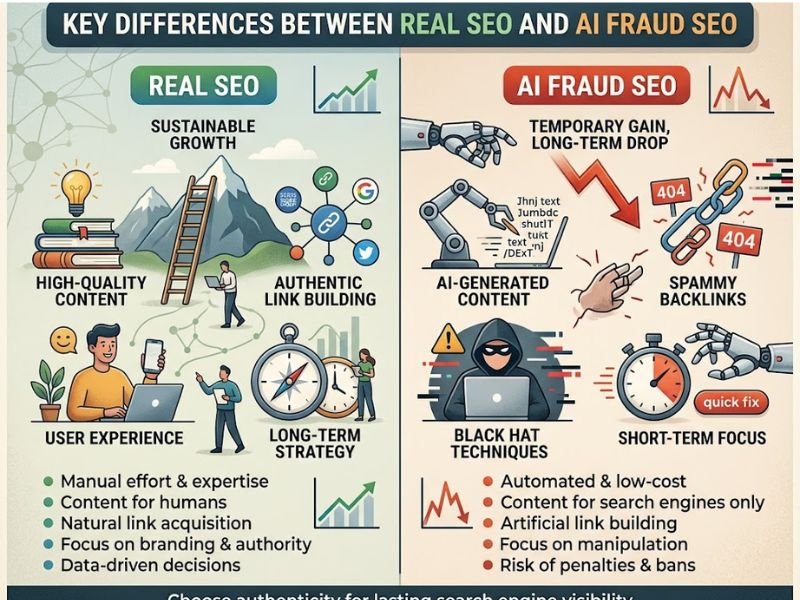
When examining Real SEO vs. AI Fraud SEO, the differences become clear once you look at intent, sustainability, and transparency.
1. Intent: Real SEO aims to genuinely help users find relevant answers. AI Fraud SEO aims to trick algorithms regardless of user value.
2. Sustainability: Real SEO builds authority gradually and holds up over time. AI Fraud SEO often collapses after an algorithm update or manual review.
3. Transparency: Legitimate SEO agencies explain their strategies clearly. Fraudulent operators are often vague, avoid detailed reporting, or promise unrealistic guarantees like “#1 ranking in 7 days.”
4. Content quality: Real SEO content is researched, edited, and valuable. AI Fraud SEO content is often generic, repetitive, or factually incorrect, produced purely to fill pages.
5. Risk level: Real SEO carries virtually no risk of penalties. AI Fraud SEO carries a high risk of deindexing, ranking drops, or permanent bans from search results.
How Google Detects AI Fraud SEO
Google’s algorithms, including updates focused on helpful content and spam detection, are specifically designed to catch manipulation. Patterns like sudden unnatural backlink spikes, duplicate AI-generated text across multiple domains, and abnormal traffic behavior are red flags. This is why the Real SEO vs. AI Fraud SEO discussion matters so much right now — search engines are actively refining their ability to separate authentic optimization from artificial manipulation.
How to Protect Your Website
To stay on the right side of Real SEO vs. AI Fraud SEO, follow these practical steps:
- Work only with agencies that explain their methods clearly
- Avoid any service promising instant, guaranteed rankings
- Use AI tools for research and drafting, but always have humans edit and fact-check content
- Regularly audit your backlink profile for suspicious links
- Focus on real user experience metrics like time on page and bounce rate
Conclusion
The line between Real SEO vs. AI Fraud SEO is ultimately defined by intent and long-term value. Real SEO builds trust, authority, and sustainable traffic through ethical practices, while AI Fraud SEO chases shortcuts that put your entire website at risk. As AI continues to reshape digital marketing, businesses that stick to transparent, user-focused strategies will always come out ahead of those relying on manipulation. Choosing real SEO isn’t just the safer path it’s the only path that delivers results that last.
Frequently Asked Questions (FAQs)
Q1. What is the main difference between Real SEO vs. AI Fraud SEO? Real SEO focuses on genuine, long-term optimization that follows search engine guidelines, while AI Fraud SEO uses deceptive AI-driven tactics to manipulate rankings artificially.
Q2. Can using AI tools for SEO be considered fraud? Not automatically. Using AI to assist with research or drafting is fine, but using AI to fake traffic, reviews, or backlinks crosses into AI Fraud SEO territory.
Q3. How can I tell if my SEO agency is using fraudulent tactics? Watch for vague reporting, guaranteed instant rankings, sudden unnatural traffic spikes, or an unwillingness to explain their exact methods.
Q4. What happens if my website gets caught using AI Fraud SEO tactics? Your website can face manual penalties, ranking drops, or even complete deindexing from search engines like Google.
Q5. Is Real SEO more expensive than AI Fraud SEO services? Often, yes, in the short term — but Real SEO delivers lasting results, while AI Fraud SEO risks total loss of rankings and investment once detected.