
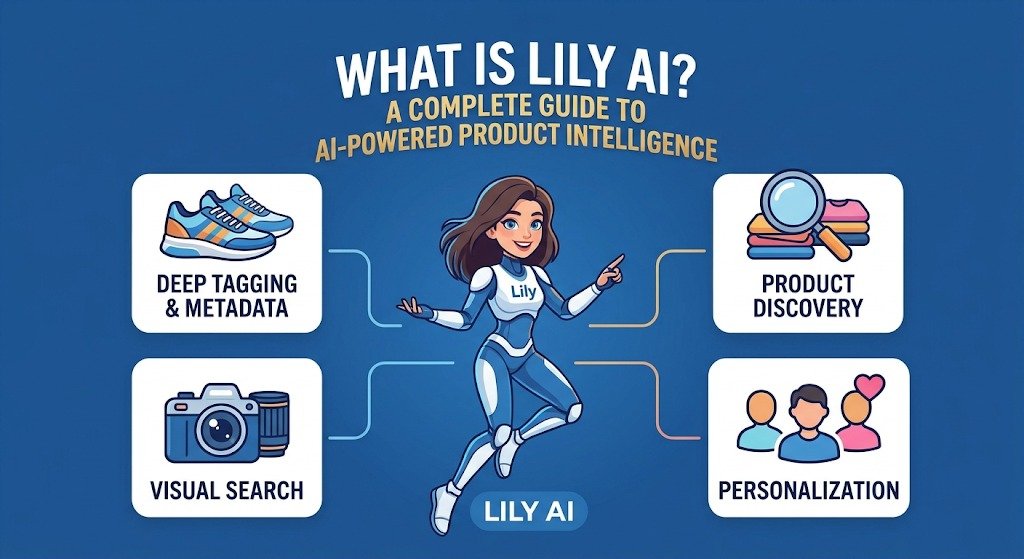

Introduction
Artificial intelligence is changing the way online businesses understand their customers, organize products, and improve shopping experiences. As e-commerce continues to grow, retailers need smarter ways to help customers find exactly what they are looking for. Traditional product descriptions and basic search filters are often not enough to meet modern shopping expectations. This is where Lily AI becomes useful.
Lily AI is an artificial intelligence platform designed to help retailers understand product information in greater detail and connect products with the language customers use when shopping. It focuses on product intelligence, product discovery, and improving the overall online shopping experience. By analyzing product attributes and customer search behavior, the technology can help retailers make their product catalogs more meaningful and searchable.
In this guide, we will explore what Lily AI is, how it works, its main features, and how it can benefit e-commerce businesses.
What Is Lily AI?
Lily AI is an AI-powered product intelligence platform developed for the retail and e-commerce industry. Its primary purpose is to help businesses organize product information in a way that better reflects how customers think, search, and shop.
For example, a retailer might describe a dress using basic details such as color, material, size, and style. However, customers may search for that same dress using phrases such as “comfortable summer outfit,” “casual weekend dress,” or “elegant clothing for a special occasion.”
A conventional product catalog may not connect all these expressions with the correct item. Lily AI aims to bridge this gap by using artificial intelligence to enrich product information with more detailed attributes and customer-oriented descriptions.
This can make product catalogs easier to search and help shoppers discover relevant products without knowing their exact names or technical specifications.
How Does Lily AI Work?
Lily AI uses artificial intelligence and product data analysis to understand the characteristics of products and connect them with customer shopping language.
Although the exact implementation depends on a retailer’s technology setup, the general process can be understood through several stages.
1. Product Data Analysis
The platform analyzes product information supplied by retailers. This information may include product titles, descriptions, images, categories, materials, colors, and other attributes.
AI technology helps identify meaningful details that might otherwise be missing from basic product descriptions.
2. Product Attribute Enrichment
After analyzing the available information, the platform can help enrich product catalogs with more descriptive attributes.
For example, a simple product description might identify a handbag as black leather. More detailed product intelligence could help describe its style, appearance, intended use, and other relevant characteristics.
These additional details can make product information more useful for search and discovery.
3. Understanding Customer Language
Customers do not always use the same words that retailers use in their product catalogs. Someone searching for comfortable office clothing might use different language from a retailer’s formal product description.
Lily AI focuses on connecting product attributes with the language shoppers naturally use. This can help businesses make their product catalogs more aligned with real customer searches.
4. Improving Product Discovery
Once product information becomes more detailed and searchable, retailers can use it to improve product discovery experiences.
Customers may have an easier time finding relevant products through search tools, filters, and product recommendations when the underlying catalog data is more descriptive.
Key Features of Lily AI
Lily AI offers several capabilities that can support retailers in managing product information and improving online shopping experiences.
1. AI-Powered Product Categorization
Organizing thousands of products manually can be time-consuming, especially for large online stores. AI-powered categorization helps businesses identify product characteristics and organize items into more meaningful categories.
For example, clothing products can be categorized by style, occasion, fit, fabric, and other relevant characteristics. This makes product catalogs easier to manage and helps shoppers narrow down their choices.
2. Detailed Product Attributes
Product attributes play an important role in online shopping. Customers often want to know more than a product’s name and price before making a purchase.
Lily AI focuses on enriching product information with descriptive attributes. These details can help retailers provide more useful product data and create better shopping experiences.
3. Better Product Search
Search functionality is one of the most important parts of an e-commerce website. If customers cannot find relevant products quickly, they may leave the website and look elsewhere.
Lily AI helps retailers connect product information with the words and phrases customers use. This approach can make product discovery more intuitive and improve the relevance of search experiences.
4. Improved Product Recommendations
Relevant product recommendations can encourage shoppers to explore additional items. When product information contains more meaningful details, recommendation systems may have better data to identify related products.
For instance, someone browsing casual summer clothing might also be interested in lightweight footwear or matching accessories.
Better product understanding can support more relevant product suggestions and help retailers create a more connected shopping experience.
5. Better Product Data Management

Managing product information across large catalogs can become complicated. Different products may have inconsistent descriptions, missing attributes, or incomplete categories.
AI-powered product intelligence can help businesses improve the consistency and usefulness of their product data. This can reduce some manual catalog management work and make product information easier to maintain.
Benefits of Using Lily AI for E-Commerce Businesses
Lily AI can provide several potential advantages for online retailers, particularly businesses that manage large product catalogs.
1. Enhanced Customer Shopping Experience
Customers want shopping websites that understand their needs. They do not want to spend unnecessary time searching through hundreds of unrelated products.
By making product information more descriptive and searchable, Lily AI can help retailers create more convenient shopping experiences. Customers may discover relevant items more easily, even when they use different words from those found in product titles.
2. Improved Product Visibility
Products with detailed and relevant attributes have more opportunities to match different customer searches.
For example, a customer searching for “minimalist leather handbag” may not find a product if its catalog description only says “women’s black bag.” More descriptive product information can help connect these different expressions.
This can improve product visibility within an online store, depending on how its search and discovery systems are configured.
3. Increased Business Efficiency
Manually reviewing and updating product information requires time and resources. For retailers with thousands of products, maintaining accurate catalog data can become a major operational challenge.
AI-powered tools can support product enrichment and categorization processes, helping teams spend less time on repetitive data-related tasks.
4. More Relevant Shopping Recommendations
Understanding product characteristics can help retailers create more meaningful connections between different items.
For example, a customer interested in outdoor clothing may also be interested in hiking shoes, backpacks, or weather-resistant jackets.
Relevant recommendations can encourage customers to explore more products and potentially increase average order value.
5. Better Understanding of Customer Intent
Customer intent refers to what shoppers actually want when they search for a product. Understanding this intent is important for retailers because customers do not always describe their needs using technical product terminology.
Lily AI focuses on connecting customer language with product attributes. This can help retailers better understand the relationship between shopping searches and their available inventory.
Who Can Benefit from Lily AI?
Although Lily AI is primarily designed for retail and e-commerce applications, different types of businesses may find its capabilities useful.
Fashion and Apparel Retailers: Clothing stores can benefit from detailed product descriptions involving style, fit, fabric, occasion, and other shopping-related characteristics.
Beauty and Cosmetics Businesses: Beauty retailers can use detailed product information to help customers discover products based on their preferences, product types, and intended uses.
Home and Furniture Stores: Businesses selling furniture and home accessories can benefit from better product categorization based on materials, colors, styles, and room types.
Large E-Commerce Marketplaces: Retailers managing extensive product catalogs may find AI-powered product intelligence useful for maintaining consistent product information and improving product discovery.
Digital Retail Teams: E-commerce managers, merchandising professionals, and product data teams can use improved catalog information to support their daily operations.
Lily AI vs. Traditional Product Management
Traditional product management often depends on manually written descriptions, predefined categories, and basic product attributes. While these methods can work for smaller stores, they may become difficult to maintain as product catalogs grow.
AI-powered product intelligence introduces a more advanced approach.
| Traditional Product Management | AI-Powered Product Intelligence |
| Often relies on manual descriptions | Supports automated data enrichment |
| Uses basic product attributes | Can provide more descriptive attributes |
| Depends on predefined categories | Can support more detailed categorization |
| May struggle with different search terms | Connects product data with customer language |
| Requires considerable manual updates | Can help reduce repetitive work |
The biggest difference is the ability to understand products beyond their basic descriptions. However, AI does not eliminate the need for human review. Retailers still need to check product accuracy, maintain consistent information, and ensure that descriptions represent their products correctly.
Obstacles and Considerations Before Using Lily AI
Despite its potential benefits, businesses should consider a few important factors before adopting an AI-powered product intelligence platform.
Product Data Quality: AI systems depend on the information provided to them. If product descriptions, images, or other details are inaccurate, the resulting product information may also require correction.
Integration Requirements: Retailers should evaluate whether a platform fits their existing e-commerce systems, product information management tools, and technology infrastructure.
Implementation Costs: Businesses should understand the pricing structure, implementation requirements, and ongoing expenses before making a decision.
Human Oversight: AI-generated product attributes should be reviewed to ensure accuracy. Human supervision remains important, particularly when product details influence customer purchasing decisions.
Considering these factors can help retailers determine whether Lily AI fits their business requirements.
The Future of AI-Powered Product Intelligence
Artificial intelligence is expected to play an increasingly important role in e-commerce. Customers are becoming more comfortable using conversational searches and personalized shopping experiences to find products.
In the future, AI-powered product intelligence may help retailers understand shopping preferences more accurately, organize larger catalogs, and create more relevant product discovery experiences.
Technologies that connect customer language with detailed product information could also support improvements in personalized recommendations and conversational commerce.
Lily AI operates in this growing area of retail technology. As AI adoption continues, product intelligence may become an important part of how online businesses compete and serve their customers.
Frequently Asked Questions (FAQs)
1. What is Lily AI used for?
Lily AI is an AI-powered product intelligence platform designed to help retailers improve product information, understand customer search language, and support better product discovery experiences.
2. How does Lily AI help e-commerce businesses?
It helps retailers enrich product catalogs with descriptive attributes and connect product information with the language customers naturally use when shopping.
3. Is Lily AI suitable for small businesses?
Its suitability depends on the business’s product catalog, technology requirements, budget, and available integration options. Businesses should evaluate its offerings before choosing a solution.
4. Can Lily AI improve product search?
Lily AI focuses on making product information more descriptive and aligned with customer language. This can support more relevant search and product discovery experiences when integrated appropriately.
5. Does Lily AI replace human product managers?
No. AI can help automate and improve certain product data processes, but human teams remain important for reviewing information, maintaining accuracy, and managing retail strategies.
Conclusion
Lily AI represents an interesting development in the use of artificial intelligence within the e-commerce industry. By focusing on product intelligence, detailed attributes, and customer shopping language, it aims to help retailers make their product catalogs more useful and discoverable.
From improving product categorization to supporting better search experiences, its capabilities address several common challenges faced by online businesses. However, successful implementation depends on product data quality, system integration, and proper human oversight.
As online shopping continues to evolve, solutions like Lily AI demonstrate how artificial intelligence can help retailers create more organized, relevant, and customer-focused shopping experiences.