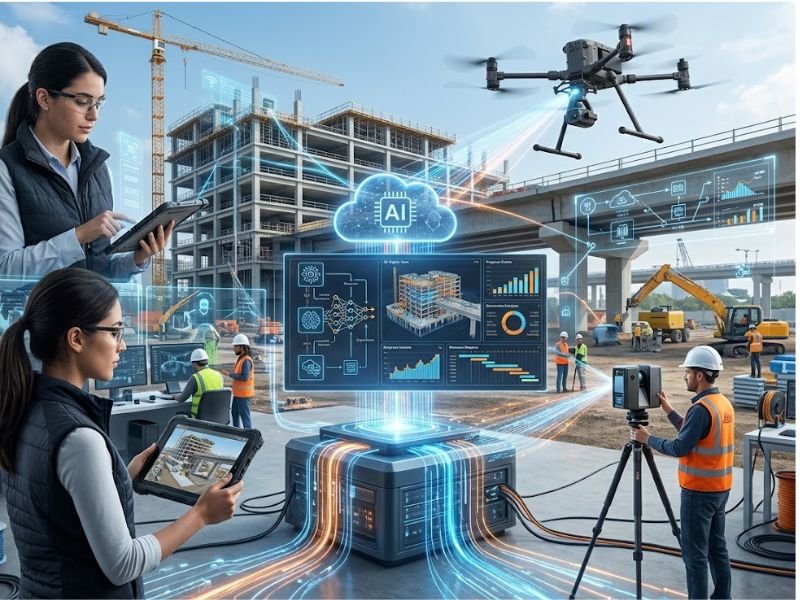

Modern businesses are constantly looking for better ways to collect information, reduce manual work, and improve decision-making. AI and Reality Capture are two technologies helping organizations achieve these goals by combining artificial intelligence with detailed digital representations of physical spaces and objects. Reality capture technologies can collect information using tools such as cameras, LiDAR scanners, drones, and 3D scanning systems, while AI can analyze that information and turn large amounts of raw data into useful insights. Together, these technologies can create faster and more efficient workflows across construction, engineering, manufacturing, architecture, surveying, and other industries.
What Is Reality Capture?
Reality capture means gathering digital data from a real place and turning it into a digital version. In many projects, teams use photos, laser scans, LiDAR readings, drone pictures, or other ways to measure space. After the data is collected, it can feed into 3D models and point clouds. It can also support digital twins, maps, and other digital outputs. This approach reduces the need to depend only on hand measurements and sketches. Instead, a team records what is already there and reuses that record during the work.
This method comes in handy for sites like buildings, roads, industrial plants, job sites, and big outdoor areas. In these cases, having correct details from the start makes the project easier to run.
AI and Reality Capture: How They Work Together
AI plus reality capture can make the data work go faster. Reality capture software can gather huge sets of images and measurements. Still, going through every photo, scan, or point by hand takes a lot of hours. AI can sort through it and make sense of what is there. Systems built with machine learning and computer vision can look for items in the scene. They can spot shapes, group similar parts, and mark areas that changed. They can also flag spots that likely need a closer look.
Say a project team uses this on a construction site. The system can review the new captured data and point out likely structural parts. It can also compare the latest results with an earlier scan. That cuts down on repeated manual checks, so the team can spend more time on the decisions that matter most.
Improving Construction Workflows
Construction is one of the areas where these technologies can provide significant value. Project teams regularly need accurate information about site conditions, measurements, materials, structures, and progress.
Reality capture can create a detailed digital record of a site, while AI can help analyze the captured information. Teams can compare the current state of a project with design models and identify potential differences.
This approach can also improve communication. Architects, engineers, contractors, and project managers can work with the same digital information instead of depending entirely on separate measurements or outdated documentation.
Faster Data Processing and Analysis
One of the biggest challenges with reality capture is the amount of data generated by modern scanning and imaging equipment. A single project can produce thousands of photographs, millions of point-cloud measurements, or large 3D datasets.
AI can help make this information easier to manage. Automated classification and object recognition can reduce the amount of time required to organize captured data. Instead of manually searching through large datasets, users may be able to use intelligent tools to locate specific objects, areas, or patterns.
This can make workflows more efficient and help teams move from data collection to decision-making more quickly.
AI and Reality Capture for Quality Control
Quality control is another important application of AI and Reality Capture. Capturing a physical environment at different stages allows organizations to create records that can be compared over time. AI can assist with identifying potential differences between expected and actual conditions. In construction, for example, captured data may be compared against design information to identify areas that appear different from the planned model.
This does not mean that AI should replace professional inspection. Instead, intelligent analysis can act as an additional tool that helps teams identify areas that deserve closer attention.
Applications Beyond Construction
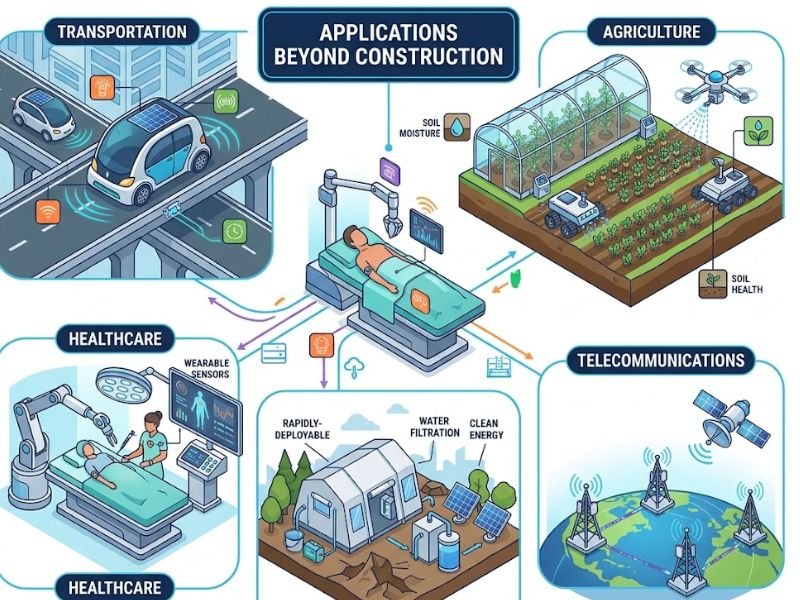
The benefits of AI and Reality Capture extend well beyond construction. Manufacturing companies can use 3D scanning and AI-assisted analysis to inspect components, monitor equipment, or document production environments.
In architecture and heritage preservation, reality capture can create detailed digital records of buildings and historical structures. These records can support renovation, documentation, restoration, and long-term monitoring.
Surveying and mapping professionals can also use drones, LiDAR, and computer vision to collect information about large areas. AI can then help process the resulting data and identify useful features.
Creating Smarter Digital Twins
Digital twins are another area where these technologies can work together. A digital twin is a digital representation of a physical asset, environment, or system that can be updated with relevant information.
Reality capture can provide accurate information about the physical environment, while AI can help analyze data and identify changes or patterns. Over time, this can create a more useful digital representation of a building, factory, infrastructure project, or other physical asset.
Organizations can use digital twins for planning, monitoring, maintenance, and operational decision-making.
Benefits of AI and Reality Capture
The combination of these technologies can provide several practical benefits. Automated analysis can reduce repetitive manual tasks, while accurate digital information can support better planning and collaboration.
Other potential benefits include faster inspections, improved documentation, easier progress tracking, better visualization, and more efficient use of project data.
However, successful implementation requires more than simply purchasing new technology. Organizations need suitable hardware, software, trained employees, reliable data-management processes, and clearly defined goals.
Challenges to Consider
Despite their potential, AI-assisted reality capture workflows can present challenges. High-quality scanning equipment and software may require significant investment. Large datasets also require suitable storage and computing resources.
Data accuracy is another important consideration. Poor lighting, environmental conditions, equipment limitations, or incorrect scanning procedures can affect the quality of captured information. AI systems can also make mistakes when analyzing complex environments.
For these reasons, human expertise remains important. Professionals should review important results and use their knowledge to validate automated findings.
The Future of AI and Reality Capture
As AI, computer vision, LiDAR, drones, and 3D scanning technologies continue to improve, these workflows are likely to become more accessible and automated. Future systems may be able to process captured information faster and provide more detailed insights with less manual intervention.
The long-term value will come from using these technologies as part of a complete workflow rather than treating them as standalone tools. Organizations that combine accurate data collection with intelligent analysis can create more connected and efficient processes.
Conclusion
AI and Reality Capture are changing how organizations collect, understand, and use information about the physical world. Reality capture provides detailed digital data, while AI can help process that information and turn it into actionable insights. From construction and manufacturing to surveying, architecture, and digital twins, the combination can improve efficiency and support better decision-making.
As these technologies continue to develop, businesses will have more opportunities to automate repetitive tasks, improve accuracy, and create smarter workflows. The key is to choose the right tools, maintain data quality, and keep human expertise involved throughout the process.