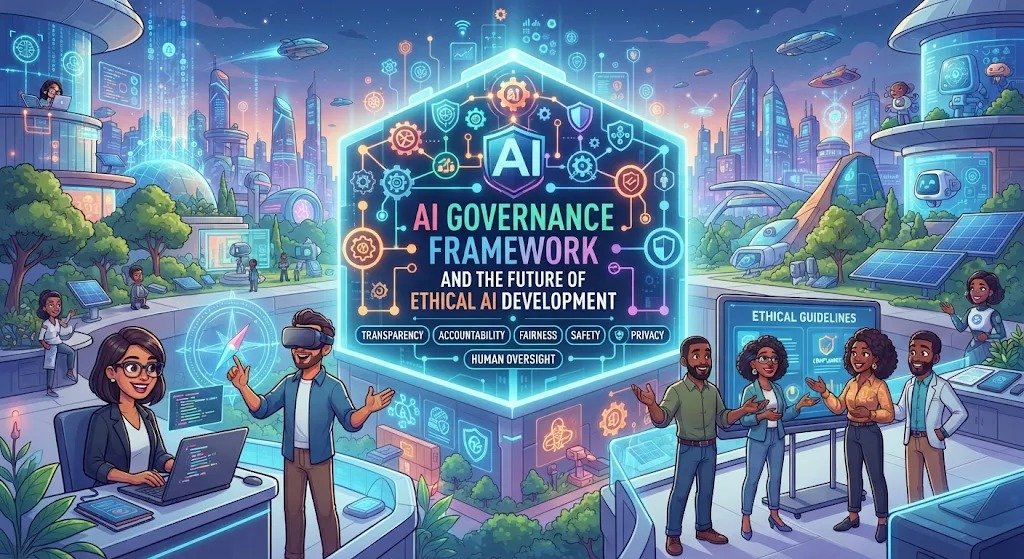

Artificial intelligence is transforming industries by helping businesses automate processes, analyze information, and make smarter decisions. From healthcare and finance to education and digital marketing, AI technologies are becoming an important part of modern life. However, as AI systems become more powerful, concerns about privacy, fairness, transparency, security, and accountability are also increasing. This is where AI Governance Frameworks play an essential role.
AI governance frameworks provide organizations with guidelines, policies, and procedures for developing and using artificial intelligence responsibly. They help ensure that AI systems operate ethically, follow relevant regulations, and protect the interests of individuals and businesses. As AI continues to evolve, these frameworks will become increasingly important for building trust and supporting the future of ethical AI development.
What Are AI Governance Frameworks?
AI governance frameworks are structured approaches that help organizations manage artificial intelligence systems throughout their lifecycle. They establish rules for how AI technologies should be designed, developed, deployed, monitored, and maintained.
These frameworks focus on ensuring that AI systems are reliable, transparent, secure, and aligned with ethical principles. They also help organizations identify potential risks before AI tools are introduced into real-world environments.
An effective governance framework may include policies for data management, risk assessment, human oversight, cybersecurity, accountability, and regulatory compliance. By following these guidelines, organizations can reduce the chances of harmful outcomes while encouraging innovation.
Why Ethical AI Development Matters
Ethical AI development is important because artificial intelligence can influence decisions that directly affect people’s lives. AI-powered systems may be used to evaluate job applications, recommend financial services, detect medical conditions, or analyze customer behavior.
If these systems are poorly designed, they may produce biased results, expose sensitive information, or make decisions that are difficult to explain.
Ethical AI development helps organizations address these concerns by focusing on fairness, responsibility, privacy, and human rights. It encourages developers to consider the potential impact of their technologies on different communities and individuals.
Responsible AI practices also help businesses build stronger relationships with customers, employees, and stakeholders by demonstrating that technology is being used carefully and transparently.
Key Principles of AI Governance Frameworks
Most AI governance frameworks are built around several important principles that guide the responsible use of artificial intelligence.
Transparency and Explainability
AI systems should provide understandable information about how they operate and how they generate results. Transparency helps users and stakeholders understand the limitations of AI and recognize when automated decisions may require human review.
Accountability and Responsibility
Organizations should clearly define who is responsible for AI systems, including their development, deployment, monitoring, and outcomes. Accountability ensures that problems can be investigated and addressed appropriately.
Fairness and Bias Prevention
AI systems should be evaluated for unfair bias that could negatively affect individuals or groups. Developers should use appropriate datasets, testing methods, and monitoring practices to reduce discriminatory outcomes.
Privacy and Data Protection
AI governance should include safeguards for personal and sensitive information. Organizations must handle data responsibly, limit unnecessary collection, and protect information from unauthorized access.
Security and Reliability
AI technologies should be tested for security vulnerabilities, unexpected behavior, and reliability issues. Regular monitoring and updates can help maintain safe and consistent performance.
How AI Governance Frameworks Support Innovation
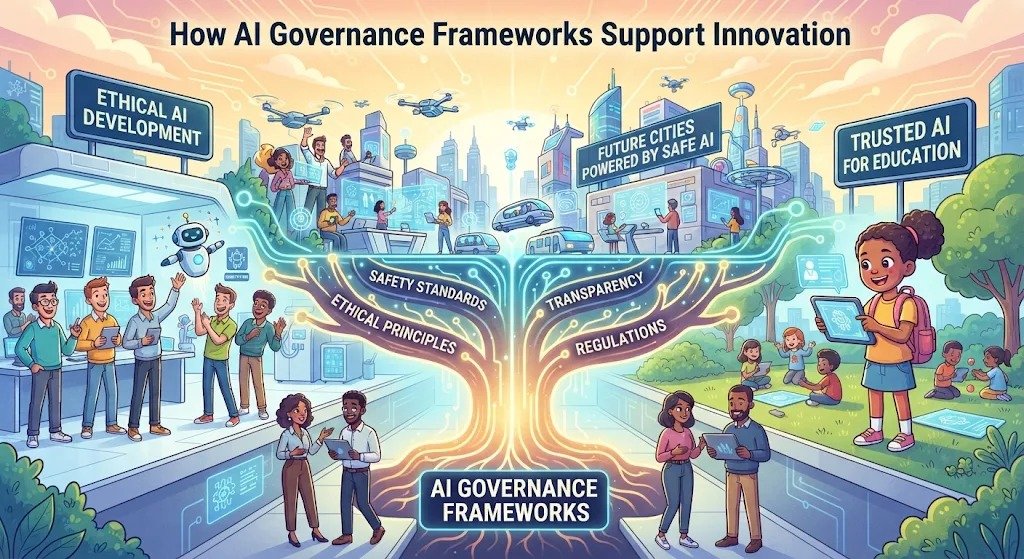
AI governance is not only about controlling risks. It can also support innovation by helping organizations develop AI solutions with greater confidence.
When businesses have clear governance policies, developers can understand their responsibilities and work within established standards. This can reduce confusion, improve collaboration, and make AI projects easier to manage.
Governance frameworks also encourage organizations to identify problems early in the development process. Addressing risks during design and testing may prevent expensive failures after deployment.
For companies adopting AI technologies, responsible governance can improve customer trust, strengthen their reputation, and support long-term business growth.
Challenges in Implementing AI Governance
Although AI governance frameworks offer many advantages, implementing them can be challenging.
One major difficulty is the rapid development of AI technology. New tools, models, and applications appear frequently, making it difficult for organizations to keep policies updated.
Another challenge is the lack of AI expertise within some businesses. Companies may not have enough professionals who understand AI risk management, data privacy, cybersecurity, and ethical development.
Organizations may also struggle to balance innovation with compliance. Strict policies can become difficult to manage if they are not designed according to the company’s size, industry, and level of AI risk.
To overcome these challenges, businesses should establish practical governance policies, provide employee training, and regularly review their AI systems.
The Future of Ethical AI Development
The future of ethical AI development will depend on how effectively organizations combine technological innovation with responsible decision-making. As AI systems become more advanced, governance practices will likely become more integrated into everyday business operations.
Organizations may increasingly use automated monitoring tools to identify risks, evaluate model performance, and detect unexpected behavior. AI governance teams may also work more closely with developers, legal professionals, cybersecurity experts, and business leaders.
International standards, regulatory requirements, and industry guidelines will continue to influence how companies develop and deploy AI systems.
The goal will not be to slow down AI innovation but to make it more sustainable, trustworthy, and beneficial for society.
Conclusion
AI Governance Frameworks are becoming essential for organizations that want to develop and use artificial intelligence responsibly. They provide a structured approach to managing risks, protecting privacy, improving transparency, and ensuring accountability.
Ethical AI development requires more than advanced technology. It also depends on clear policies, human oversight, fairness, security, and continuous evaluation. By adopting effective governance practices, businesses can build trustworthy AI systems while encouraging innovation.
As artificial intelligence continues to reshape the digital world, responsible governance will play a major role in creating a future where AI technologies are both powerful and ethically developed.
Frequently Asked Questions (FAQs)
1. What are AI governance frameworks?
AI governance frameworks are policies, guidelines, and processes that help organizations manage AI systems responsibly, ethically, and securely.
2. Why are AI governance frameworks important?
They help organizations manage risks related to bias, privacy, security, transparency, accountability, and regulatory compliance.
3. What are the main principles of ethical AI governance?
Key principles include fairness, transparency, accountability, privacy, security, reliability, and human oversight.
4. Can AI governance support business innovation?
Yes. Clear governance policies help businesses manage risks, improve decision-making, and develop AI solutions with greater confidence.
5. What challenges do organizations face when implementing AI governance?
Common challenges include limited expertise, rapidly changing technology, regulatory complexity, data quality issues, and balancing innovation with risk management.
6. What is the future of AI governance?
AI governance is expected to become more integrated into AI development, business operations, risk management, and regulatory compliance as artificial intelligence adoption expands.