
Technology has changed the way businesses operate, communicate, and deliver products and services. Traditional automation helped companies complete repetitive tasks faster, but modern technology is moving toward systems that can analyze information, recognize patterns, and support decision-making. Beyond Automation represents this next stage of innovation, where artificial intelligence (AI), connected devices, robotics, and data analytics work together to improve business operations. From manufacturing and healthcare to retail and logistics, smart systems are helping organizations solve complex problems, respond to changing demands, and discover new opportunities for growth.
What Does Beyond Automation Mean?
Traditional automation focuses on completing predefined tasks with limited human involvement. For example, a machine may package products on a production line according to fixed instructions. Beyond Automation takes this concept further by introducing systems that can respond to changing conditions, learn from data, and help people make informed decisions.
Smart systems combine technologies such as AI, machine learning, sensors, and cloud computing. These technologies allow businesses to monitor operations, identify potential problems, and improve processes based on available information. However, the level of intelligence and independence varies between systems. Many still depend on human supervision, accurate data, and clearly defined rules to operate effectively.
The Role of Artificial Intelligence in Smart Systems
Artificial intelligence is an important part of modern industrial transformation. Unlike basic automation, which follows established rules, AI can identify patterns in large datasets and generate predictions or recommendations. Businesses can use these capabilities to improve planning, detect unusual activity, and understand customer behavior.
For example, a manufacturer may analyze equipment data to identify signs of wear before a machine breaks down. A retailer can examine sales patterns to estimate future demand, while a logistics company can use predictive analytics to improve delivery planning.
AI does not automatically guarantee better results. Its effectiveness depends on data quality, suitable implementation, and regular evaluation. Organizations must also consider privacy, security, and the possibility of inaccurate predictions when integrating AI into important operations.
How Smart Systems Are Transforming Modern Industries
1. Manufacturing and Industrial Production
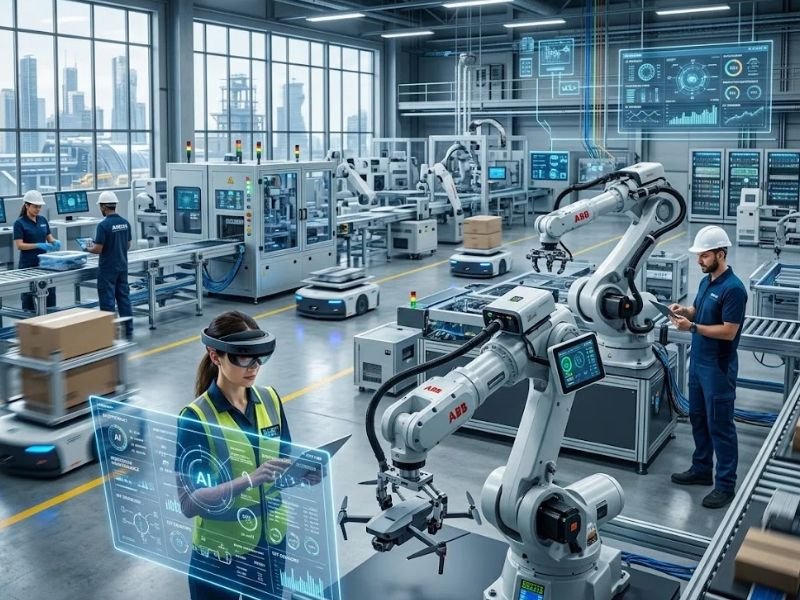
Manufacturing is one of the clearest examples of intelligent technology in action. Connected sensors can monitor machine performance, temperature, vibration, and production conditions. AI-powered analytics can help identify patterns that indicate maintenance needs or production inefficiencies.
These systems can reduce unexpected downtime and support more consistent product quality. Robotics can also handle repetitive or physically demanding tasks, allowing employees to focus on equipment management, quality checks, and problem-solving. Human oversight remains essential, especially when machinery operates near workers or handles safety-critical processes.
2. Healthcare and Medical Services
Healthcare organizations increasingly use digital systems to manage information, coordinate services, and support clinical workflows. AI can assist with analyzing medical images, organizing patient information, and identifying patterns that may deserve further investigation.
Automation can also reduce administrative workloads, such as appointment scheduling and routine documentation. This may give healthcare professionals more time to focus on patient care. However, medical AI must be evaluated carefully, and qualified professionals should remain responsible for clinical decisions. Patient privacy, accuracy, and regulatory compliance are critical considerations.
3. Retail and E-Commerce
Retail businesses use smart systems to understand shopping patterns, manage inventory, and improve customer experiences. Predictive analytics can help estimate which products may be in demand, while recommendation systems can suggest relevant products based on customer preferences.
Automated inventory alerts can also help businesses identify low stock levels before popular items become unavailable. These capabilities can improve efficiency and support better planning, although companies must avoid relying on inaccurate forecasts or using customer information without appropriate safeguards.
4. Logistics and Supply Chain Management
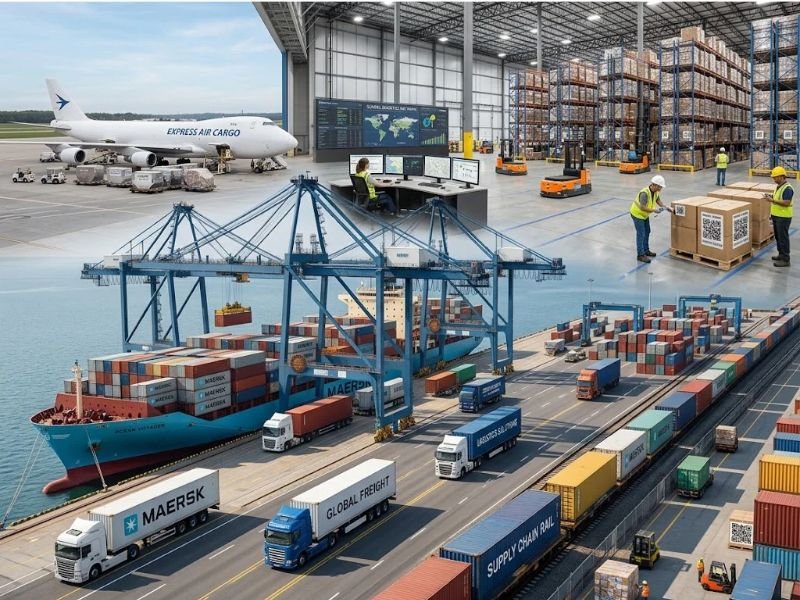
Supply chains involve many connected activities, including procurement, warehousing, transportation, and delivery. Smart systems can analyze traffic conditions, delivery schedules, stock levels, and demand forecasts to help businesses coordinate these activities.
For example, route-planning software may recommend more efficient delivery paths, while warehouse automation can help workers locate and move goods. When combined with accurate data and practical oversight, these tools can reduce delays, improve visibility, and help companies respond more quickly to disruptions.
Workplace Transformation and Human-AI Collaboration
As intelligent systems become more common, workplaces are changing. Employees may spend less time on repetitive administrative work and more time reviewing results, solving problems, communicating with customers, and making strategic decisions.
This shift makes human-AI collaboration increasingly important. AI can process information quickly, but people contribute judgment, creativity, empathy, and an understanding of business context. A marketing team, for example, may use AI to explore campaign ideas while employees evaluate which concepts suit the audience and reflect the company’s values.
Businesses should invest in employee training so workers can understand new tools, interpret their results, and identify mistakes. Clear communication about how technology will affect job responsibilities can also help employees adapt to changing workflows.
Business Benefits of Moving Beyond Automation
Adopting smart systems can provide several advantages. Improved data analysis can help organizations make better-informed decisions, while predictive maintenance can reduce some equipment failures and operational interruptions. Automated workflows may also shorten processing times and allow employees to focus on tasks that require human expertise.
Another potential benefit is adaptability. Businesses that can analyze changing conditions may be better prepared to respond to customer demand, supply chain disruptions, and new market opportunities. Nevertheless, results depend on implementation quality, operating costs, employee adoption, and the suitability of the technology for the specific business problem.
Challenges and Future Trends
Moving beyond basic automation introduces challenges involving implementation costs, cybersecurity, data privacy, and system integration. Older equipment may not work easily with modern platforms, while poor-quality data can lead to misleading recommendations. Businesses must also establish clear responsibilities for monitoring AI decisions and handling errors.
Looking ahead, developments in edge computing, collaborative robotics, digital twins, and more capable AI systems may create additional opportunities. These technologies could help organizations monitor operations in real time, test changes in virtual environments, and coordinate complex workflows. Their value will depend on responsible deployment, reliable infrastructure, and effective human supervision.
Conclusion
Beyond Automation describes a shift from systems that simply repeat tasks toward technologies that can analyze information, adapt to changing conditions, and support more informed decisions. Across manufacturing, healthcare, retail, and logistics, smart systems are creating opportunities to improve efficiency and rethink how work is organized.
However, technology alone cannot guarantee success. Businesses need reliable data, appropriate security measures, trained employees, and clear accountability. By combining intelligent systems with human expertise, organizations can build more flexible operations and prepare for the changing demands of modern industries.
Frequently Asked Questions
1. What does Beyond Automation mean?
Beyond Automation refers to the use of intelligent technologies that go further than repetitive task execution by analyzing data, responding to changing conditions, and supporting decisions.
2. How does AI improve smart systems?
AI helps systems identify patterns, generate predictions, recognize unusual activity, and recommend actions based on available information.
3. Which industries benefit from intelligent automation?
Manufacturing, healthcare, retail, logistics, finance, and agriculture can all benefit from smart systems when the technology is appropriate for their needs.
4. Will smart systems replace human workers?
Some tasks and job responsibilities may change, but many roles still require human judgment, creativity, communication, and oversight. Training helps employees adapt to new ways of working.
5. What challenges should businesses consider?
Key challenges include implementation costs, data quality, cybersecurity, privacy, integration with existing systems, and the need for employee training and human supervision.