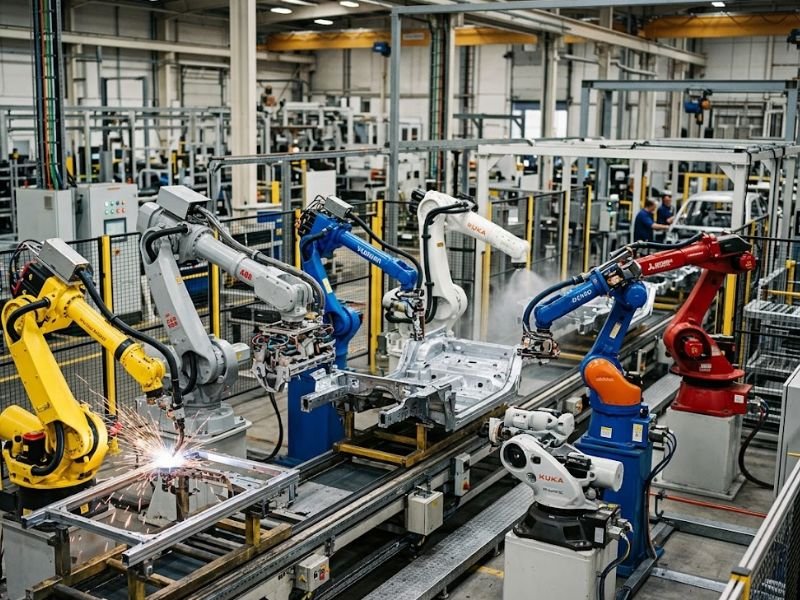

Factories are updating fast thanks to industrial automation. It changes how goods are made, how teams cut waste, and how production work is planned. In many plants, robotic arms show up as a core tool. They can repeat the same steps quickly and with tight control. They also keep results steady from run to run. You can see them in car plants and also in electronics lines.
Using robotic arms often means less hands-on work for people. It can also lower risk on the shop floor, since some tasks are better done by machines. Still, picking a good supplier matters. The arm’s build quality can affect output, repair needs, and how well the system lasts over time. This piece looks at major robotic arm makers, what each one builds, where they are used in industry, and what buyers should check before choosing a robotics provider.
What Are Robotic Arms?
Robotic arms are programmable mechanical machines designed to move materials, tools, and products through a series of controlled movements. They typically consist of joints, links, motors, sensors, and a controller that coordinates their operation. Depending on the design, a robotic arm can lift objects, weld metal, assemble components, paint surfaces, or handle packaging tasks. Some robotic arms are built for heavy industrial work, while others are designed for precise operations in electronics or laboratory environments. Their flexibility allows manufacturers to automate tasks that would otherwise require significant time and manual effort.
Top Robotic Arm Manufacturers in the Industry
FANUC, ABB, Yaskawa, KUKA, and Kawasaki Robotics are well known robotic arm makers. They all sell industrial robots and also work with collaborative robots, plus controllers. Many of them include automation tools too. These options can fit different factory setups.
FANUC focuses a lot on industrial robot lines and factory automation systems. ABB offers robot systems that show up in manufacturing and logistics, and it also serves other fields. Yaskawa is known for industrial robotics and motion control. KUKA builds robotic platforms used in automotive work, healthcare, and regular manufacturing. Kawasaki Robotics supplies industrial robots used in material handling, welding, assembly, and other automated tasks.
FANUC: Industrial Robotics and Automation
FANUC is a common name in industrial robotics. The brand makes robot arms used in manufacturing. You see them in material handling too. They are also used for welding and assembly jobs. FANUC has different robot options. Some models are smaller and fit limited work areas. Other units are built for heavy loads and demanding lines. Each lineup targets a specific kind of production need.
These robots are often found in automotive plants. They are also used in electronics production. Many industrial automation sites rely on FANUC systems as well. FANUC does more than sell robots. It also provides controllers and software. Those tools help teams set up, program, and watch robot work during daily runs. If you are looking at FANUC, do not pick a unit on name alone. Compare the robot model to your use case. Check the payload, the reach, and how you need to program it. Also look at the support services available in your area.
ABB: Smart Robotic Solutions
ABB builds robotic arms and automation tools to help factories run more efficiently and adapt to change. The company makes both classic industrial robots and newer collaborative units. These robots can work on many shop floor jobs. ABB systems show up in assembly lines, painting work, packaging tasks, and moving materials.
ABB also makes digital software aimed at factory teams. These tools help people watch equipment status and keep control of automated output. If a manufacturer wants to link robots with wider factory automation, ABB has options to review with other major robotics vendors.
Yaskawa: Precision and Motion Control
Yaskawa is a well-known maker of industrial robot arms and automation gear. In the MOTOMAN line, you can find robots built for welding, assembly, moving parts, and other factory jobs. A key point with Yaskawa is how it pairs robot control with motion control parts. That pairing helps plants run tasks that must be done the same way each time.
You can also choose different robot setups based on what you handle. Payload size varies, and so do the configurations. This lets teams match the robot to their specific use. If you are picking a Yaskawa robot, start by checking the movement range you need. Then look at operating speed. Next, confirm the workpiece weight. Finally, verify it will work with your current production equipment.
KUKA: Advanced Manufacturing Robotics
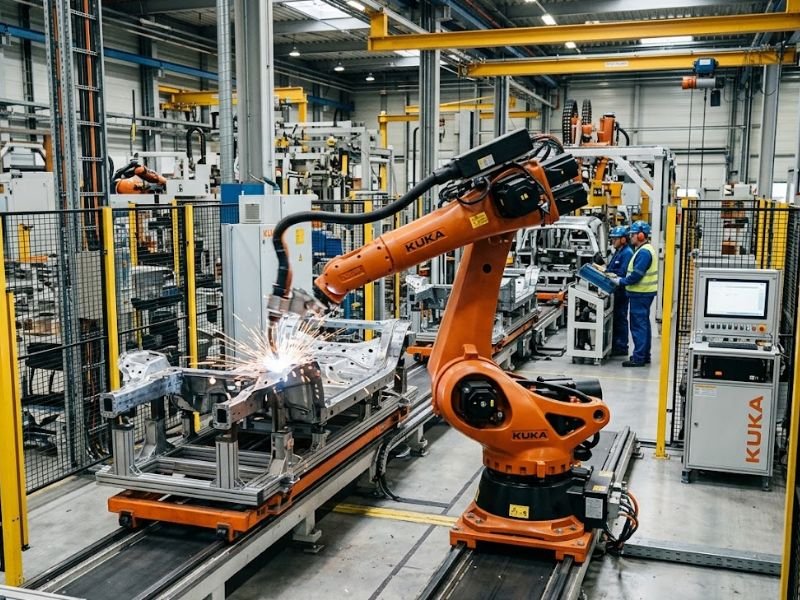
KUKA is known for industrial robots and automation used in factories. They build robotic arms that work in car making, metal work, and logistics.
These robots also fit other factory tasks.
KUKA offers models in different sizes and setups.
That lets a business match the robot to the job it needs done.
The automation features can help with work that uses more than one robot.
It may also involve tools and other shop systems.
Before buying, a company should look at key details.
Check the payload first.
Then review the reach.
Next, look at the software functions.
Also consider how hard the setup is at the site.
Finally, see what help and support KUKA can provide.
Kawasaki Robotics and Other Leading Manufacturers
Kawasaki Robotics is an established manufacturer offering robotic arms for industrial automation, including welding, assembly, packaging, and material handling. Its product range includes robots designed for different payloads and working environments. Other companies, such as Universal Robots, specialize in collaborative robots that can be used for tasks requiring flexible automation and interaction with human workers under appropriate safety conditions. Mitsubishi Electric and Epson Robotics also provide robotic solutions for industrial applications, including assembly, handling, and precision manufacturing. The right manufacturer depends on the production environment, required robot type, and the level of automation a business wants to achieve.
Types of Robotic Arms Used in Industrial Automation
Not every job in a plant needs the same kind of robotic arm. Many teams choose articulated robots. They have several joints, so the arm can reach awkward spots and move in ways that fit real work. SCARA robots are often picked when speed matters. They are good for quick assembly and for moving parts from one spot to another. Cartesian robots travel on straight rails. They work well when the job calls for steady, step by step motion in a set path.
Delta robots are built for quick pick up and fast sorting. You see them in packing lines and in food handling tasks. Collaborative robots, or cobots, are made to share space with people. This is only used when the job meets the needed safety rules. Knowing these common robot types can help a business choose the right equipment for its production needs.
Benefits of Industrial Robotic Arms
Industrial robot arms can help factories in a few clear ways. They repeat the same actions with steady timing. That can lower the strain on workers who would otherwise do the same work all day. They also keep running when a plant needs long shifts or tight delivery timelines. Robots can lift quality in tasks that demand tight control. Welding is one example. Assembly and placing parts are others.
When the robot is set up well, the results tend to be more uniform.There is also a safety angle. If a job is risky or very hard on the body, automation can move that work away from people. The safety gains show up best when the equipment is built right and kept in good condition.Robotic setups can also track what is happening on the line. They can share information with other machines. That can make it easier to see how the work is moving. Still, the real outcome is tied to the details. System design, software setup, upkeep, and how the robot fits into the overall process all matter.
How to Choose the Right Robotic Arm Manufacturer
Choosing a robotic arm supplier takes more than just looking at specs. You also need to check how well the vendor can help you later. Start by writing down what you plan to automate. List the payload you will lift, the reach you need, the cycle speed, and the accuracy level. Also note where the arm will run, since the environment can change the design.
Next, compare the tools each maker offers. Look at how the robot is programmed. Check how it connects with your line and other equipment. Think about upkeep needs and whether parts are easy to get. Also ask what kind of training they provide for your team. The purchase price matters, but it is not the whole story. Installation work, end of arm tooling, software fees, service plans, and operator training can raise the true cost. Plan for those items during your budget.
Conclusion
The top robotic arm manufacturers offer a wide range of technologies that help businesses improve manufacturing efficiency, precision, and automation capabilities. Companies such as FANUC, ABB, Yaskawa, KUKA, and Kawasaki Robotics provide industrial robotic solutions for different production requirements, while other manufacturers focus on specialized or collaborative robotics. Choosing the right robotic arm depends on the application, payload, workspace, budget, and long-term service needs. By comparing equipment specifications and manufacturer support, businesses can select a robotics solution that fits their production goals and supports future growth.