
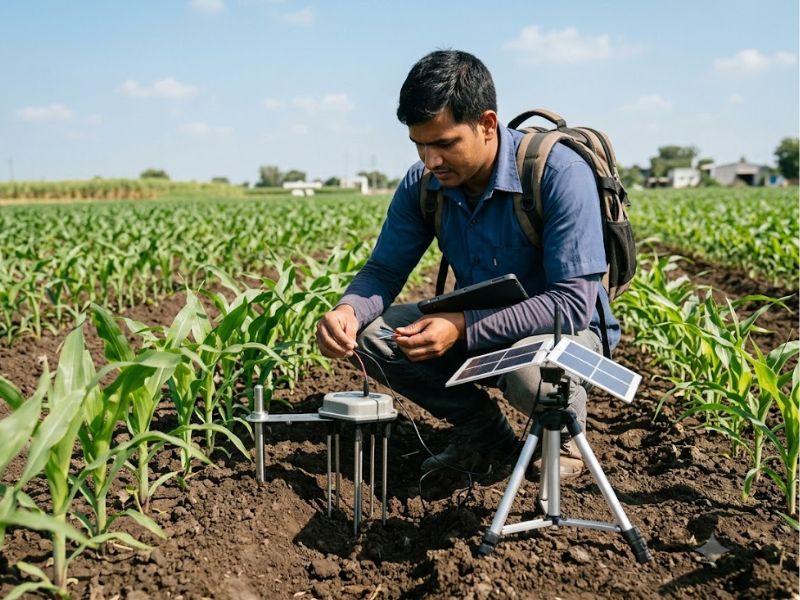

Modern agriculture is evolving rapidly, and Moisture Monitoring Technology for Smart Farming and Precision Agriculture is playing a vital role in improving crop productivity, conserving water, and supporting sustainable farming practices. Farmers are increasingly adopting advanced sensors, wireless monitoring systems, and Internet of Things (IoT) solutions to track soil moisture levels in real time. These technologies help optimize irrigation schedules, reduce water waste, and improve crop health. Whether you’re exploring precision agriculture technology, interested in building a moisture monitoring system, or learning about the latest smart farming technology, understanding moisture monitoring systems is essential for maximizing efficiency and protecting valuable resources.
Moisture Monitoring Technology for Smart Farming and Precision Agriculture
Moisture Monitoring Technology for Smart Farming and Precision Agriculture combines intelligent sensors, cloud-based analytics, and automated irrigation systems to monitor moisture levels in soil and other environments. Instead of relying on guesswork, farmers receive accurate data that helps them make informed decisions about watering, planting, and crop management.
This technology not only improves agricultural productivity but also supports environmental sustainability by minimizing unnecessary water consumption.
What Is Moisture Monitoring Technology?
Moisture monitoring technology uses electronic sensors to measure the amount of moisture present in soil, building materials, storage facilities, or industrial environments. The collected data is transmitted to monitoring platforms, allowing users to track conditions in real time.
Common components include:
- Soil moisture sensors
- Wireless transmitters
- IoT gateways
- Cloud dashboards
- Mobile monitoring apps
- Automated irrigation controllers
These systems provide continuous monitoring, reducing the need for manual inspections.
How Moisture Monitoring Systems Work
Modern moisture monitoring systems collect environmental data using specialized sensors installed in the field or structure.
The typical process includes:
- Measuring soil or material moisture
- Transmitting data wirelessly
- Storing information in cloud platforms
- Analyzing moisture trends
- Sending alerts when moisture levels change
- Activating automated irrigation when needed
This automation helps improve efficiency while reducing labor requirements.
Precision Agriculture Technology
Precision agriculture technology allows farmers to manage crops with greater accuracy by using real-time data instead of traditional farming methods.
Key benefits include:
- Optimized irrigation
- Better crop management
- Reduced water consumption
- Improved fertilizer efficiency
- Higher crop yields
- Lower operating costs
By applying resources only where needed, precision agriculture supports both profitability and environmental conservation.
Benefits of Moisture Monitoring Technology
Implementing moisture monitoring systems offers several important advantages.
Water Conservation
Accurate moisture readings prevent overwatering and reduce unnecessary water usage.
Improved Crop Health
Maintaining proper soil moisture supports healthier root systems and stronger plant growth.
Increased Productivity
Better moisture management often leads to higher crop yields and improved harvest quality.
Cost Savings
Reducing water, energy, and labor requirements lowers overall farming expenses.
Better Decision-Making
Real-time monitoring enables farmers to respond quickly to changing environmental conditions.
Smart Farming Technology
Today’s smart farming technology combines sensors, artificial intelligence, GPS mapping, drones, and cloud computing to create more efficient agricultural operations.
Popular smart farming solutions include:
- Automated irrigation systems
- Crop monitoring drones
- Weather monitoring stations
- GPS-guided equipment
- AI-powered crop analysis
- IoT-connected field sensors
Together, these technologies help farmers increase productivity while reducing environmental impact.
Applications Beyond Agriculture
Although agriculture is one of the primary applications, moisture monitoring technology is valuable in many industries.
Examples include:
- Food storage facilities
- Warehouses
- Greenhouses
- Construction projects
- Manufacturing plants
- Water management systems
Accurate moisture detection helps protect equipment, products, and infrastructure.
Building Moisture Monitoring
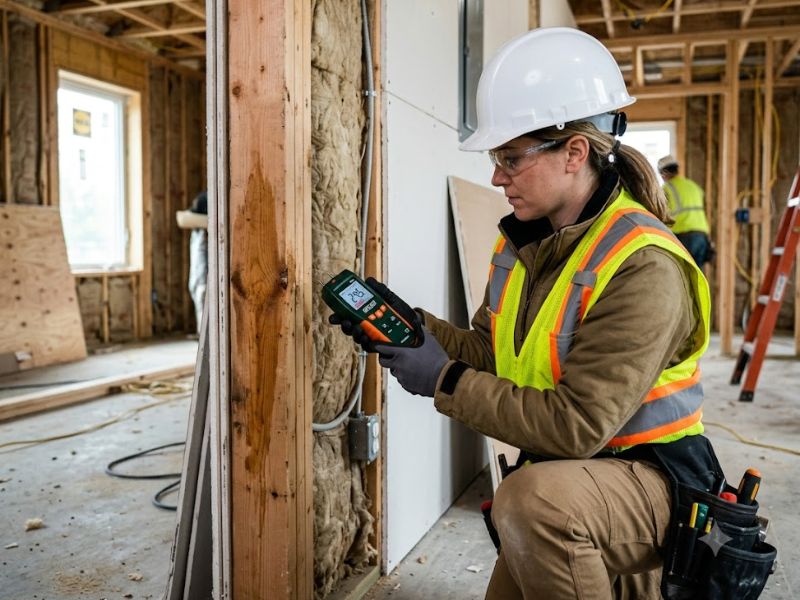
Building moisture monitoring is essential for detecting hidden moisture problems before they become serious.
Monitoring systems help identify:
- Roof leaks
- Pipe leaks
- Wall moisture
- Basement dampness
- Mold risk
- Structural water damage
Early detection reduces repair costs and helps maintain the long-term integrity of buildings.
Wireless Moisture Monitoring
Wireless monitoring systems eliminate the need for extensive wiring while providing flexible installation options.
Benefits include:
- Remote monitoring
- Easy installation
- Real-time alerts
- Cloud-based reporting
- Mobile access
- Scalable deployment
Wireless technology makes moisture monitoring more practical for large farms and commercial properties.
IoT and Moisture Monitoring
The Internet of Things (IoT) has significantly improved moisture monitoring capabilities.
IoT-enabled systems provide:
- Continuous monitoring
- Automatic data collection
- Predictive analytics
- Smart irrigation scheduling
- Device integration
- Remote management
These features help users make faster and more informed decisions.
Challenges of Moisture Monitoring Technology
While moisture monitoring systems offer many benefits, users should also consider certain challenges.
Potential limitations include:
- Initial installation costs
- Sensor maintenance
- Calibration requirements
- Wireless network coverage
- Data management
- Equipment compatibility
Proper planning and regular maintenance help maximize system performance.
Future of Moisture Monitoring Technology
The future of Moisture Monitoring Technology for Smart Farming and Precision Agriculture looks promising as new innovations continue to emerge.
Expected developments include:
- AI-powered moisture prediction
- More accurate sensor technology
- Satellite-assisted monitoring
- Autonomous irrigation systems
- Advanced weather integration
- Improved battery efficiency
- Enhanced cloud analytics
These innovations will further improve farming efficiency and resource conservation.
Choosing the Right Moisture Monitoring System
Before investing in a moisture monitoring solution, consider:
- Farm size
- Crop type
- Sensor accuracy
- Wireless connectivity
- Software compatibility
- Installation requirements
- Maintenance needs
- Budget
- Customer support
Selecting the right system ensures long-term value and reliable performance.
Conclusion
Moisture Monitoring Technology for Smart Farming and Precision Agriculture is transforming the way farmers and businesses manage water resources and environmental conditions. By integrating precision agriculture technology, advanced sensors, and smart farming technology, organizations can improve productivity, reduce water waste, and make better operational decisions. In addition, building moisture monitoring extends the benefits of this technology beyond agriculture by protecting homes, commercial properties, and industrial facilities from costly moisture damage. As sensor technology and IoT continue to evolve, moisture monitoring will remain a key component of sustainable resource management.
Frequently Asked Questions (FAQs)
What is moisture monitoring technology?
Moisture monitoring technology uses electronic sensors to measure moisture levels in soil, buildings, or industrial environments, providing real-time data for improved decision-making.
How does precision agriculture technology use moisture monitoring?
Precision agriculture technology uses moisture sensors to optimize irrigation schedules, reduce water waste, improve crop health, and increase farming efficiency.
Why is building moisture monitoring important?
Building moisture monitoring helps detect hidden leaks, dampness, and water damage early, reducing repair costs and preventing mold growth.
What is smart farming technology?
Smart farming technology combines IoT devices, sensors, automation, AI, and data analytics to improve agricultural productivity and sustainability.
Can moisture monitoring systems save water?
Yes. By providing accurate soil moisture data, these systems ensure that irrigation occurs only when needed, helping conserve water while supporting healthier crops.


