
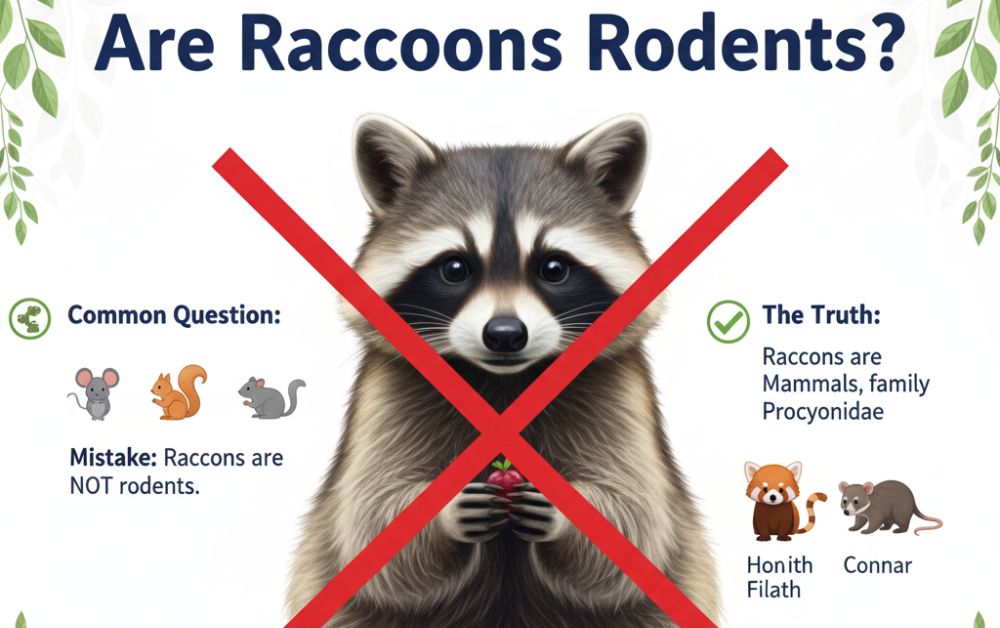

The question “are raccoons rodents” is surprisingly common, and it’s easy to understand why. Raccoons have small, nimble hands, sharp teeth, and a talent for getting into places they shouldn’t, much like rats or squirrels. They often rummage through trash cans, live near human settlements, and display clever problem-solving skills that remind people of rodents. Yet, despite these similarities, the answer is clear and rooted in biology: raccoons are not rodents. To truly understand why, it helps to gently explore what raccoons are, how animals are classified, and where this confusion comes from in the first place.Raccoons are fascinating creatures that sit comfortably at the crossroads of wild independence and urban adaptability. They are curious, intelligent, and remarkably resilient. These traits make them visible and memorable, but they also contribute to misunderstandings about what kind of animals they really are. By looking a little closer, we can appreciate raccoons for what they truly are, rather than what they are often mistaken to be.
Are Raccoons Rodents? A Clear and Simple Explanation
To answer the question directly, raccoons are not rodents. Rodents belong to the scientific order Rodentia, which includes animals like mice, rats, squirrels, beavers, and hamsters. One defining feature of rodents is their continuously growing front teeth, which they must constantly gnaw down to keep manageable. Raccoons do not have these continuously growing incisors, and their dental structure is very different from that of rodents.Raccoons belong to a completely different group of mammals known as Carnivora, specifically within the family Procyonidae. This family also includes animals like coatis and kinkajous. While the word “carnivore” might suggest that raccoons eat only meat, the term actually refers to a broader classification based on skull and tooth structure rather than diet alone. In reality, raccoons are omnivores, meaning they eat a wide variety of foods including fruits, insects, small animals, and human leftovers.The confusion often arises because people tend to classify animals based on behavior rather than biology. Raccoons scavenge, climb, and adapt to urban environments much like rodents do, but these shared behaviors are the result of similar survival strategies, not shared ancestry. Nature often finds similar solutions to similar problems, even among very different animals.Raccoons also differ from rodents in size, lifespan, and physical structure. They are generally larger, have more complex skeletal systems, and exhibit behaviors that are closer to small mammals like bears than to rodents. In fact, raccoons are sometimes described as “little bears” because of their dexterous paws and curious intelligence.Understanding this distinction matters because it shapes how we view and treat wildlife. Labeling raccoons as rodents can lead to misunderstandings about their behavior, health risks, and ecological role. When we recognize raccoons as their own unique animals, we are better equipped to coexist with them respectfully and responsibly.Raccoons play an important role in ecosystems by controlling insect populations, dispersing seeds, and cleaning up organic waste. Rodents also play valuable roles, but in different ways. Each group contributes to the balance of nature, and neither deserves to be oversimplified or misunderstood.
Why People Often Think Raccoons Are Rodents
The belief that raccoons are rodents is rooted more in perception than in fact. Raccoons are active at night, often appear uninvited in human spaces, and are highly adaptable, all traits commonly associated with rodents. Their habit of using their front paws to manipulate objects also makes them look similar to squirrels or rats at a glance.Another reason for the confusion is language. In everyday conversation, people sometimes use the word “rodent” loosely to describe any small or medium-sized animal that causes trouble around homes. Over time, this casual usage blurs the lines between scientific categories and everyday descriptions.Media portrayals also play a role. Raccoons are often shown as sneaky, trash-loving animals, a stereotype long associated with rodents. These portrayals reinforce assumptions without encouraging deeper understanding.
Conclusion
So, are raccoons rodents? The answer is no, but the question itself opens the door to a richer understanding of wildlife. Raccoons are unique mammals with their own place in the animal kingdom, separate from rodents both biologically and behaviorally. While they may share certain habits with rodents, these similarities are superficial and do not reflect true classification.By learning the difference, we not only gain accurate knowledge but also develop a deeper appreciation for raccoons as intelligent, adaptable creatures. Understanding animals as they truly are helps foster respect, coexistence, and a gentler relationship with the natural world around us.
FAQs
1. Are raccoons closely related to rats or mice?
No, raccoons are not closely related to rats or mice. Rats and mice are rodents, while raccoons belong to the carnivore family Procyonidae.
2. Why do raccoons act like rodents in cities?
Raccoons and rodents share similar survival strategies, such as scavenging and adapting to human environments, which can make their behavior seem alike.
3. What kind of animal is a raccoon classified as?
Raccoons are mammals classified under the order Carnivora, even though they eat both plants and animals.
4. Do raccoons have teeth like rodents?
No, raccoons do not have continuously growing front teeth like rodents. Their teeth are designed for an omnivorous diet.
5. Is it harmful to think of raccoons as rodents?
While not harmful in casual conversation, misunderstanding their classification can lead to improper handling, control methods, or assumptions about their behavior and role in nature.
