


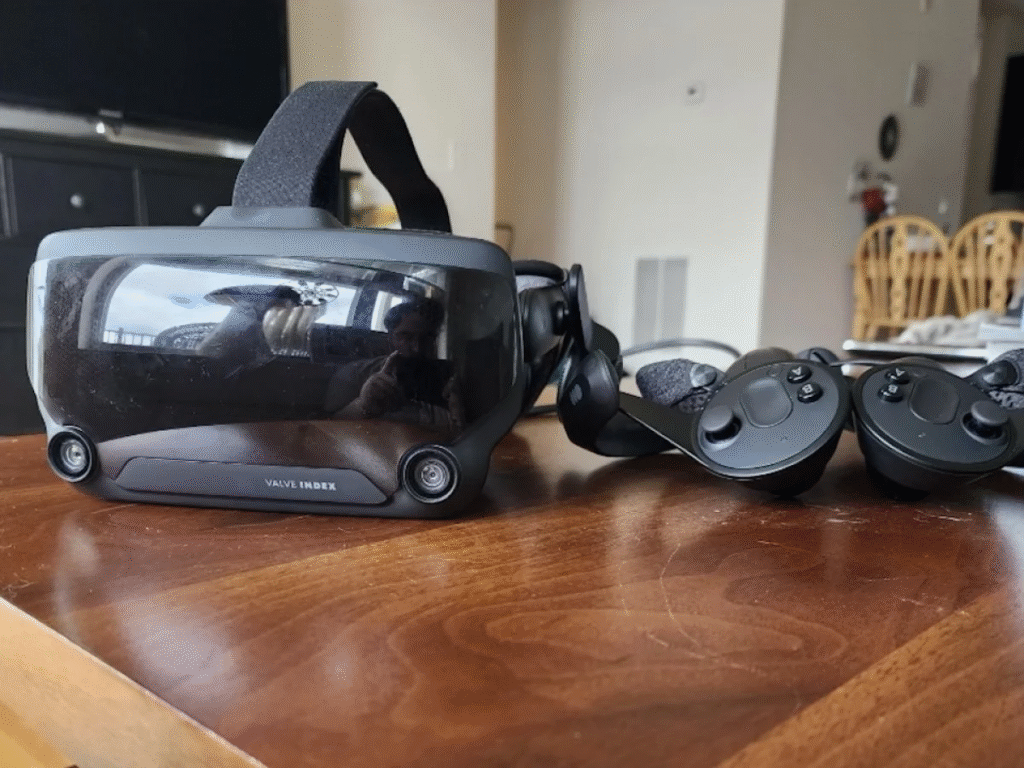
Valve has re-entered the VR hardware race with the Steam Frame, a standalone headset designed to remove the barriers that have kept many players from adopting virtual reality. Unlike the Valve Index, which required a powerful PC and external base stations, the Steam Frame runs SteamOS—the same operating system as the Steam Deck—and streams both VR and non-VR titles directly from your Steam library. Players can now jump into immersive worlds without worrying about cables, drivers, or expensive PC upgrades.
This marks a major shift in Valve’s strategy. While the Index was praised for precision and fidelity, its tethered design limited mainstream adoption. The Steam Frame is wireless, portable, and built for both hardcore VR enthusiasts and casual gamers. Valve’s aim is simple: make VR as easy to pick up and play as a console.
Wireless Freedom and Streaming Power
The defining feature of the Steam Frame is its wireless design. Players no longer need to navigate a maze of cables or be tethered to a PC. The headset streams games directly, offering freedom of movement and a more immersive experience. Powered by a Snapdragon 8 Gen 3 processor and 16 GB of LPDDR5X RAM, the Steam Frame promises performance comparable to PC-connected headsets.
Valve has emphasized low-latency streaming and introduced a Steam Frame Verification system to help players identify which games are optimized for the device. Users can confidently play VR titles like Half-Life: Alyx or non-VR games such as Elden Ring and Baldur’s Gate 3 without compromise.
Comparing Steam Frame to Valve Index
The Steam Frame represents a generational leap from the Valve Index. Unlike the Index, which relied on external base stations for tracking, the Steam Frame uses inside-out tracking built into the headset. Setup is as simple as powering on the device and logging into Steam, lowering the barrier for newcomers and making VR plug-and-play.
Performance remains high, leveraging the Snapdragon chip and wireless streaming. Valve has reimagined VR to combine accessibility with high fidelity, creating a headset that could redefine mainstream VR gaming.
Ecosystem Expansion: Steam Machine and Controller
Valve is also launching the Steam Machine, a compact living-room PC, and a new Steam Controller. Together with the Steam Frame, these devices form a cohesive ecosystem where hardware, software, and services integrate seamlessly. The Steam Machine enables streaming across devices, while the Steam Controller ensures improved ergonomics for both VR and non-VR games.
This ecosystem approach signals Valve’s intent to control not just a headset, but the entire gaming experience. For gamers, this means fewer compatibility headaches and tighter integration across all devices.
Accessibility Meets Innovation
The Steam Frame’s standalone, wireless design removes traditional VR barriers, making virtual reality more approachable for casual gamers. Steam’s extensive library, combined with the Steam Frame’s streaming capabilities, blurs the line between traditional gaming and immersive VR. Players can enjoy VR when they want, without sacrificing access to their non-VR titles, redefining how VR fits into everyday gaming.
Steam Frame Launch in 2026
The Steam Frame is expected to launch in early 2026 in all regions where the Steam Deck is sold. Pricing has not been officially confirmed, but Valve is expected to position it competitively against Meta Quest and other VR systems. If Valve delivers seamless wireless streaming without sacrificing performance, the Steam Frame could set the standard for future VR devices.
The big question remains adoption. Will the Steam Frame become the primary gaming device for mainstream users, or remain a niche product for enthusiasts? Valve is betting that wireless freedom and ecosystem integration will finally make VR a staple of everyday gaming.
